
Politics taz
Nord Stream proceedings continue: confidentiality only applies to Germans
The defense of the defendant Serhii K. had applied for a dismissal due, among other things, to the lack of permission to testify. The court rejected that. more...
Deutsch (original) ·Auto-translated to English
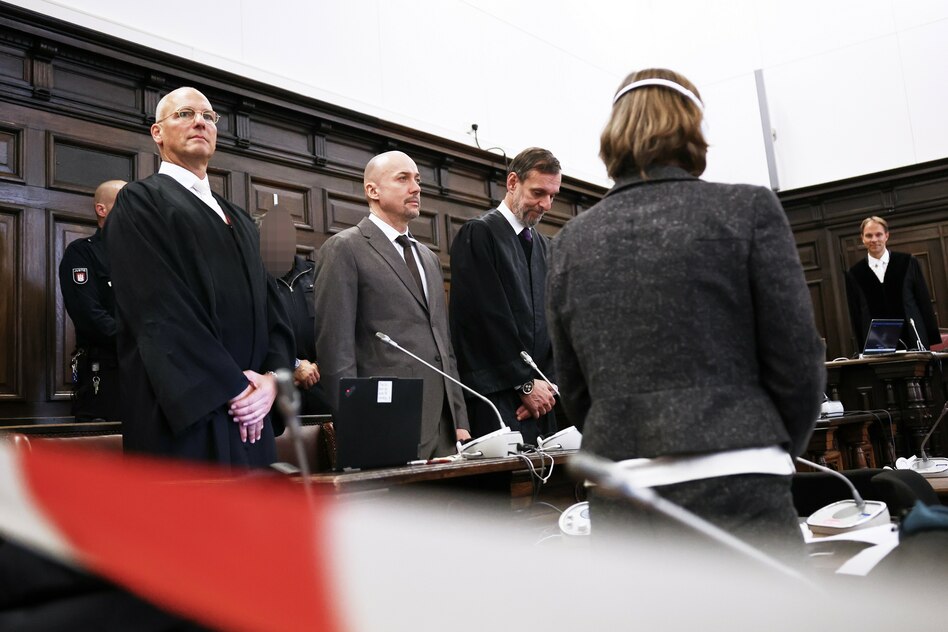
The Hamburg trial surrounding the blowing up of the Nord Stream pipelines continues. The Hanseatic Higher Regional Court rejected a request from the defense to stop the proceedings on Tuesday.
The lawyers of the Ukrainian officer Serhii K., who according to the prosecution was the head of an explosive squad, had claimed serious obstacles to their client's defense.
The main issue was the confidentiality obligation that Serhii K. was subject to as a member of the Ukrainian army. The defense had submitted affidavits from K.'s direct superiors, army colonels Roman Chervinsky and Yurii Semenyuk. Accordingly, the defendant was under their command at the time of the Nord Stream explosion.
The trial before the Hamburg Higher Regional Court is intended to clarify who is responsible for blowing up the Nord Stream pipeline in 2022. Three of the four pipes of the Nord Stream 1 and 2 twin pipelines were so badly damaged that they became unusable. Russia had previously supplied up to half of the natural gas needed for heating energy to Germany.
Even before the explosion, the pipeline was out of operation due to the war in Ukraine. The USA had imposed sanctions on Nord Stream.
The Federal Prosecutor's Office accuses Serhii K., among other things, of war crimes. He is said to have been the head of a Ukrainian secret service commando that set off from Rügen on a sailing yacht to plant the explosive charges in international waters off the Danish island of Bornholm.
Another suspect is currently in custody in Croatia pending extradition.
Both confirm that Serhii K. is subject to a duty of confidentiality. They did not give him permission to testify and are not doing so now. If he nevertheless provides information about the activities of his army special unit, he could face a prison sentence of up to eight years in Ukraine.
Defense attorney Jes Meyer-Lohkamp had argued in his motion to dismiss that in this situation, if Serhii K. had been involved in the commando operation, he could not even explain to his defense attorneys that he had acted on orders. And also not whether he was able to recognize whether such an order was illegal. This means that his defense is significantly limited.
Federal prosecutor Stefan Schmidt countered that the affidavits from K.'s superiors were not very credible because they themselves were the suspected people behind the bomb attack on the gas pipeline in 2022.
It is also not convincing that the two of them are even responsible for approving statements. In Germany, for example, such a decision is made by the Federal Ministry of Defense. And the Ukrainian Ministry of Defense has made it publicly clear several times that it wants to help investigate the attack. Finally, Serhii K. made no apparent effort to obtain permission to testify.
But all of that is irrelevant anyway, according to the prosecutor. According to German law, a duty of confidentiality imposed by German security authorities alone could constitute an obstacle to proceedings. In other words: Only Bundeswehr soldiers could rely on it.
The court agreed with this view. Only if German authorities put a defendant in an unavoidable situation through contradictory actions could this justify a discontinuation of the proceedings. Otherwise, any foreign spy could rely on the lack of permission from their home secret service to testify and thus avoid prosecution in Germany, said presiding judge Anne Meier-Goering - "even the Tiergarten murderer."
The court also did not accept the defense's other arguments for an early end to the proceedings. Meyer-Lohkamp had argued that both his client and his family were in danger of becoming the target of a Russian attack. Meier-Goering did not want to deny that, at least with regard to Serhii K. himself. However, this risk exists regardless of how K. defends himself in court. “His safety must be ensured in other ways,” said the judge.
Finally, the defense had pointed out that the solitary confinement in the Hamburg remand prison, which had lasted for over eleven months, could impair the defendant's cognitive abilities. Federal Prosecutor Schmidt replied that the restrictions on communication - imposed by his office - could only justify a discontinuation of the proceedings if an actual illness caused by the isolation was proven. But that is not the case with Serhii K.
The prosecution also prevailed with this. However, Judge Meier-Goering said: “The Senate is aware of the prison conditions and will endeavor to contribute to improvements.”