
World taz
Nord Stream trial: 23 hours alone in the cell
The accused Ukrainian officer has been in solitary confinement for eleven months. This affects his defense, says his lawyer Jes Meyer-Lohkamp. more...
Deutsch (original) ·Auto-translated to English
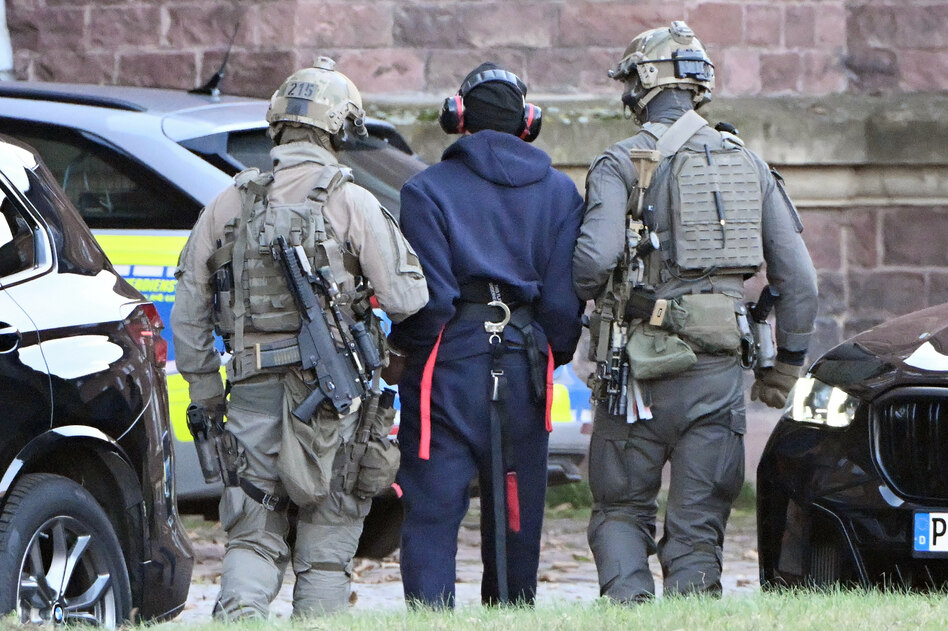
The Hanseatic Higher Regional Court is expected to decide on Tuesday whether the proceedings surrounding the demolition of the Nord Stream pipelines will be continued. At the end of the first day of the trial, the defense of the accused Ukrainian Serhii K. requested that the proceedings be discontinued. Federal Prosecutor Stefan Schmidt should now first comment on this before the State Security Senate decides.
In his application for dismissal, defense attorney Jes Meyer-Lohkamp claimed that there were serious obstacles to a comprehensive defense. On the one hand, his client did not receive permission to testify in his capacity as a Ukrainian soldier. He could not comment on the crime without making himself liable to prosecution in his home country. He wasn't even allowed to talk to his lawyers about it.
On the other hand, Serhii K. has been effectively held in solitary confinement in the detention center for eleven months. This could affect his right to defense.
In fact, Serhii K. has been in solitary confinement in the remand prison at Hamburg's Holstenglacis since his extradition from Italy in November 2025, where he was arrested while on summer vacation. As a rule, he is locked alone in his cell for 23 hours a day.
Exceptions are the one-hour walk in the yard, occasional sports units and German lessons, which are supposed to take place weekly but cannot always be done due to staff shortages; also visits.
The fact that Serhii K. is not housed together with other prisoners on remand is due to a so-called detention statute that the Federal Prosecutor's Office has obtained. His defense attorney Jes Meyer-Lohkamp reports that it stipulates that his entire communication is to be monitored - his letters are read and his phone calls are listened to. Visits, unless they are from his defense attorney, are also monitored.
The consequence of this arrangement is that Serhii. K. could only be accommodated with prisoners to whom the same restrictions apply. Otherwise there would be a risk that he could communicate uncontrollably to the outside world through other prisoners whose communication is not so restricted. In fact, this means solitary confinement for the defendant.
The trial before the Hamburg Higher Regional Court is intended to clarify who is responsible for blowing up the Nord Stream pipeline in 2022. Three of the four pipes of the Nord Stream 1 and 2 twin pipelines were so badly damaged that they became unusable. Russia had previously supplied up to half of the natural gas needed for heating energy to Germany.
Even before the explosion, the pipeline was out of operation due to the war in Ukraine. The USA had imposed sanctions on Nord Stream.
The Federal Prosecutor's Office accuses Serhii K., among other things, of war crimes. He is said to have been the head of a Ukrainian secret service commando that set off from Rügen on a sailing yacht to plant the explosive charges in international waters off the Danish island of Bornholm.
Another suspect is currently in custody in Croatia pending extradition.
Because of the political explosiveness of the Nord Stream process, K. is housed in the so-called security station. And there are only three other prisoners there besides K., whose communication is subject to similar restrictions.
Two of them are men of Iranian origin who have just been convicted of planning assassinations on the chairman of the Central Council of Jews Josef Schuster and the chairman of the German-Israeli Society Volker Beck. Since Iran is allied with Russia, there is apparently fear in the prison that an encounter could lead to an open confrontation between the prisoners.
Only the third man remains with contact requirements, a Pole. With him, Serhii K. can now complete the daily one-hour walk in the yard and the weekly sports lesson. Why they cannot have contact beyond this remains unclear, but it could have something to do with the overload of the pre-trial detention center. The prison has 462 places, but according to the Hamburg justice authority, it housed 502 prisoners at the end of September.
The authority generally does not provide any information about prison statutes for reasons of prison security and data protection. However, she points out that ordered communication monitoring does not fundamentally prevent confinement, i.e. dealing with other prisoners.
In the case of Serhii K., however, it apparently leads to maximum hardship. He is allowed to visit the institution's library - alone - but there is hardly anything for him to read there. Attorney Meyer-Lohkamp was also not allowed to bring him any books. He can now at least order books for him from selected bookstores.
Meyer-Lohkamp also wanted to print out and bring to his client articles from the unsuspicious Deutsche Welle in Ukrainian - about Russia's war against his homeland. “Of course he wants to know what the situation is in Kyiv, whether his family is safe,” says Meyer-Lohkamp. That wasn't allowed either.
So K. has practically no external stimulation to fill the 23 hours that he spends alone in his cell. He puts even more effort into learning German. Between the rare lessons, he practices diligently himself, reports Meyer-Lohkamp.
Serhii K. gets a visit from his wife about every four weeks. She is allowed to see him for two hours at a time, in the presence of an official from the state or federal criminal investigation office. “She comes by train from Kyiv, which Russia now regularly shells,” says Meyer-Lohkamp. “So she is putting her life at risk.” In view of this, he suggested extending the visiting hours and perhaps at least waiving surveillance here - to no avail.
Incidentally, federal prosecutor Stefan Schmidt coolly responded to Meyer-Lohkamp's statement in court that the lack of mental and physical stimulation could have a significant impact on his client's cognitive abilities and thus impair his defense: "We know from the conversation surveillance that the prison conditions are not seriously debilitating. He told his wife that he was fine."