
Germany taz
Nature conservation conference in Yerevan: It is getting too warm for the corals and their allies
Corals are true ecosystem engineers and create entire worlds: The International Union for Conservation of Nature is now warning of a mass extinction of entire ecosystems. more...
Deutsch (original) ·Auto-translated to English
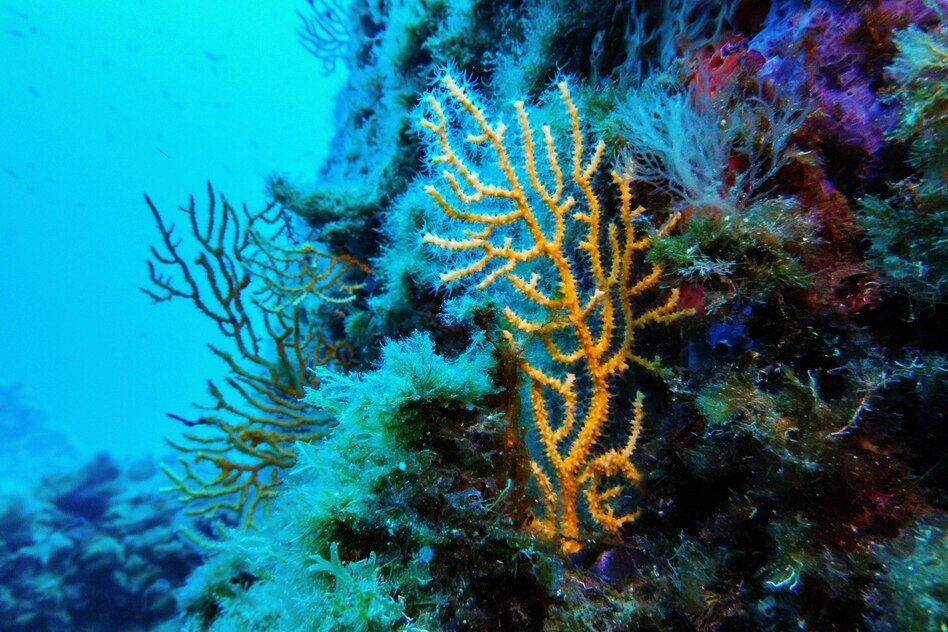
That was it: The International Union for Conservation of Nature (IUCN) assessed the corals' chances of survival this Thursday on the sidelines of the major nature conservation summit in Yerevan. According to an IUCN analysis, 96 percent of shallow-water coral reefs in the world's oceans will die by 2075 due to increasing global warming. “Coral reefs provide habitat for a quarter of all marine species and serve as an early warning system for the state of the oceans,” explained IUCN Director General Grethel Aguilar: “We know what is necessary: ambitious emissions reductions.”
According to the laws of physics, heat radiation from the sun reaches the oceans much more easily than, for example, sand or concrete. By 2019, a research team led by atmospheric physicist Lijing Cheng determined that the world's oceans had absorbed the unimaginable amount of 228 zettajoules: the prefix “zetta” stands for a 1 with 21 zeros. In order to make this amount of energy clear to laypeople, the team converted it into the energy of the Hiroshima bomb. Result: In the last quarter century, as much energy was released into the world's oceans as the 3.6 billion Hiroshima atomic bombs. Statistically, this corresponds to about four atomic bombs per second.
Science has long been warning that this is not without consequences. For example, according to the Intergovernmental Panel on Climate Change (IPCC), between 70 and 90 percent of all coral reefs will be lost if the global temperature rises by 1.5 degrees Celsius. Last year, according to the World Meteorological Organization (WMO), this temperature was 1.55 degrees above pre-industrial times, and in 2024 the concentration of greenhouse gases rose more than ever before. The “Global Tipping Points Report” concluded in 2025 that the Earth has reached its first climate tipping point: all the corals in the world will die. The report was addressed to the COP30 global climate conference in Belém, Brazil. If man-made global warming reaches an average of 2 degrees, 99 percent of the corals will be gone. Humanity is currently on a 2.8 degree course.
Corals are not colorful underwater plants, but cnidarians that mostly live in symbiosis with microalgae. This coexistence has been their recipe for success for around 500 million years. The algae carry out intensive photosynthesis and thus provide the corals with the energy they need for growth and the formation of the limestone skeleton. When people talk about corals, they usually mean hard corals. There are around 2,500 different species of them and they are true ecosystem engineers who build entire worlds. Their limestone shells created limestone formations millions of years ago, the largest animal-made structures on Earth. The Thuringian Basin between Hainleite and Erfurt, for example, is such a landscape, as is the Hohenloher Plain in Baden-Württemberg or the Kalbenstein in the Franconian Main Valley.
At high water temperatures, however, this symbiosis breaks down and the microalgae simply can't do it anymore. This leads to so-called coral bleaching, and the colorful underwater worlds then turn into monotonous skeletal landscapes. The corals are not dead yet, just very weakened. However, if the temperature remains too high for a longer period of time, the algae will no longer come back and the death of the corals is then inevitable. And man-made greenhouse emissions continue to rise, which is why water temperatures cannot be expected to drop.
According to scientific surveys, a third of all reefs are already dead. “Another 40 percent are seriously endangered, and only about the last remaining third is still in a comparatively good condition,” explains Christian Wild from the University of Bremen. In some places, scientists are tracking coral death in real time, for example in the Great Barrier Reef off the east coast of Australia: There, scientists are recording mass deaths using drone monitoring. Corals are not only found in tropical waters, they are also native to colder sea regions, such as in the Irish Sea between England and Dublin or in the sea off Norway.
For its analysis, the IUCN examined reef ecosystems worldwide in warm, shallow waters over an area the size of Syria: The increasing heat waves would cause mass bleaching, which would increasingly lead to large-scale coral deaths. In addition, ocean acidification and overfishing would harm ecosystems. “The risk of coral reef collapse is increasing,” said Mishal Gudka, scientific director of the project. “But this should wake us up, not despair: coral reefs have a remarkable ability to recover from bleaching.”