
Politics · taz · · 2h
After the election in Marzahn-Hellersdorf: “It’s a catastrophe for us in the district”
Deutsch (original) · Auto-translated to English
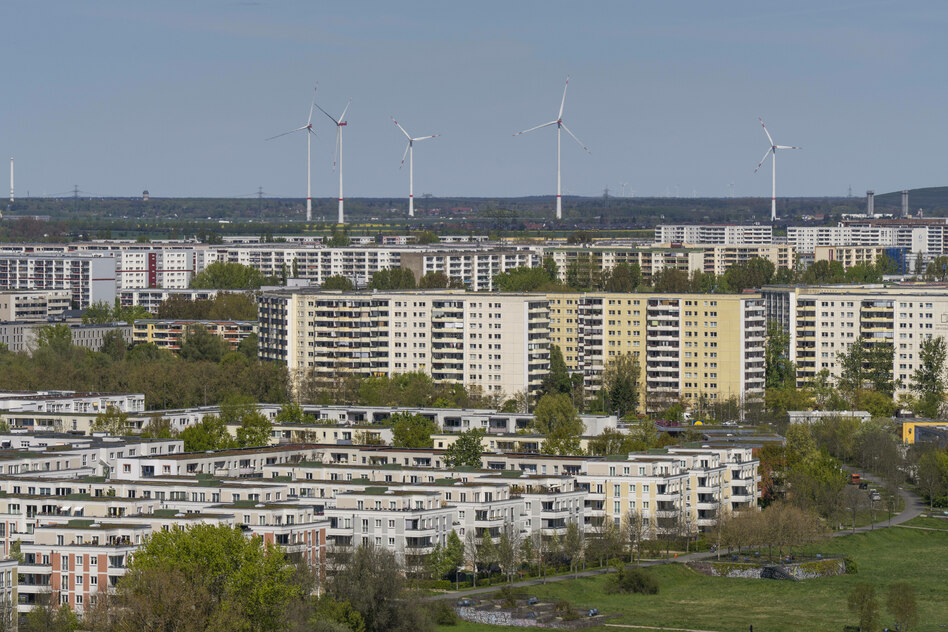
The morning after the elections in Berlin, Mika Warkentin (name changed) looks soberly at the results in her home district of Marzahn-Hellersdorf: "The high AfD values do not come out of the blue. Nevertheless, it is a catastrophe for us in the district. Right-wing violence has increased massively here, we have been living with our fear for years," she says to the taz.
Warkentin is part of M6-Antifa, a queer feminist group from Marzahn-Hellersdorf. She paints a dark picture of the situation in the district: "Queer and migrant people in particular are met with hatred. Those affected report that they experience attacks at any time in their everyday lives - for example when they go to the supermarket or the savings bank."
These are conditions that are reflected in the election results from the district. The extreme right-wing AfD won direct mandates in five out of six constituencies in the Berlin House of Representatives election, in some cases with scores of up to 44 percent.
What sounds like Saxony-Anhalt is reality in the north-east of Berlin. This is also evident at the district level. In the election for the district assembly (BVV), the AfD was by far the strongest force with around 34 percent, followed by the Left with 20 percent and the CDU with 18 percent. After the last election in 2023, the CDU was the winner with 31 percent, ahead of the AfD, which got almost 20 percent.
The party achieved particularly high results in areas bordering Brandenburg. At a polling station in the northeast of Marzahn, around 60 percent voted for the AfD. Only in the south of the district, where the sprawling single- and two-family house settlements of Kaulsdorf, Mahlsdorf and Biesdorf are located, was the CDU able to keep up to some extent.
For the future BVV with a total of 55 seats, this means: The AfD will receive 20 seats, the Left 12, the CDU 11. This is followed by the SPD and the BSW, which achieved its best result in Marzahn-Hellersdorf, with 4 seats each. Also represented are the Greens with three seats and the Animal Welfare Party with one.
Marzahn-Hellersdorf is the only district in Berlin where the AfD won the most seats in the BVV. This has serious consequences for the composition of the future district office. According to the proportional representation system, the AfD is allowed to nominate three candidates, the Left two and the CDU one.
That doesn't mean that the AfD's proposals will be voted on. In the last legislative period, the AfD was already entitled to a city council position in Marzahn-Hellersdorf and in other districts. However, the other factions always voted against the nominees, so the positions remained vacant.
But while an unfilled position in the district office was not a problem, things are different with three seats. Legally this would probably be possible, but it is not realistic. So there is a dilemma: accept the AfD candidates - or cause a blockade by the administration.
The AfD's top candidate in Marzahn-Hellersdorf, Michael Adam, has already claimed the office of district mayor for his party. The right to make proposals “clearly” lies with the AfD. However, the AfD does not have an absolute majority and would have to form a counting community with another faction to elect the district mayor, which is considered unlikely.
At the same time, however, the Left and the CDU would have to work together in order to achieve a majority for a candidate from their ranks. However, it remains to be seen whether this will work given the incompatibility conclusion in the CDU.
Especially since it is completely unclear how the BSW group is positioning itself. Its district association had shown itself open to working with the AfD on “factual issues”. Because a simple majority applies to elections and votes in the BVV, a few abstentions could sometimes be enough to get proposals passed.
Mika Warkentin from M6-Antifa says she fears “fatal consequences for the social infrastructure” in Marzahn-Hellersdorf. A district office or at least district parliament dominated by the AfD could cut funding from important offers for queer and refugees. “These are places of refuge,” says Warkentin. Social providers are afraid that their jobs will disappear.
The Antifa group wants to continue to fight outside parliament to improve the living conditions of the people in the district. Their hopes for a possible red-green-red government are very limited. Warkentin criticizes that the outskirts of Berlin are hardly taken into account by parties and civil society actors. And says: "It's like this anyway: You can only choose capitalism. But only when we overcome capitalism will the circumstances change for the better."
Read the full story at the source
Source: taz