
Politics · taz · · 2h
After the election in Latvia: clear victory with empty coffers
Deutsch (original) · Auto-translated to English
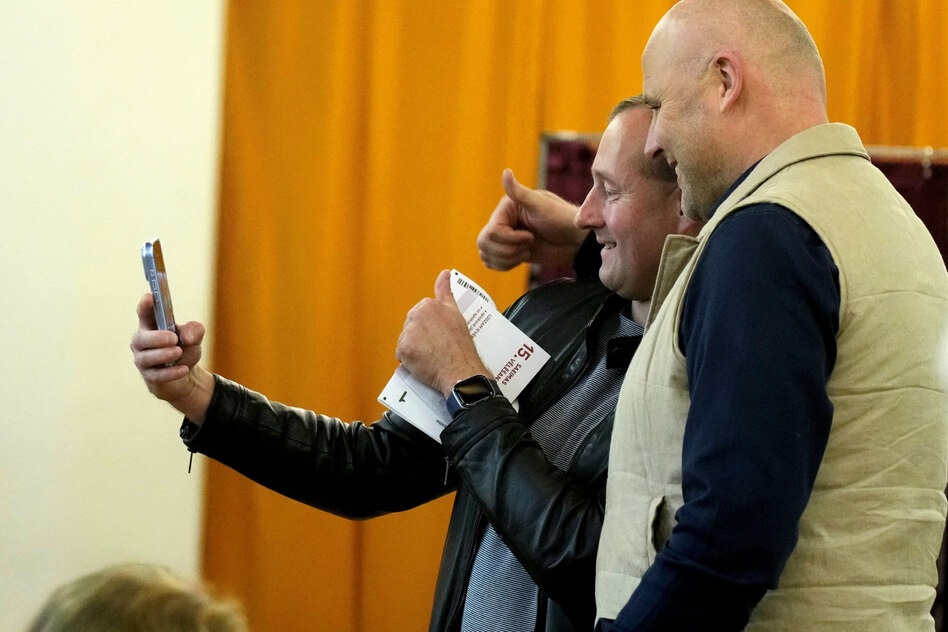
In Latvia, the United List party led by incumbent Prime Minister Andris Kulbergs won a landslide victory in the Saeima (parliamentary) elections, breaking the country's previous electoral record.
The prime minister's center-right party was supported by 35 percent of voters. The parties “Latvia First” (13 percent), “Sovereign Power/Union of Young Latvians” (12 percent), “National Alliance” (9 percent), “The Progressives” (8 percent) and “New Unity” led by President Edgars Rinkēvičs (6 percent) will also be represented in the 15th Saeima.
However, the election also set an “anti-record” – the lowest voter turnout ever recorded in a Saeima election. Only around 800,000 people, or around 52 percent of those eligible to vote, took part. Sociologists explain this, among other things, with a lack of trust in political parties and the feeling that they cannot influence decisions anyway.
On the evening of the election, the Prime Minister stated that he would first talk to the current coalition partners – “New Unity” and the “National Alliance” – about forming the next coalition. All three together would have 60 of the 100 seats in parliament.
The “United List” (AS) has more than tripled its result compared to 2022. Latvian political scientists mainly attribute the success to Prime Minister Kulberg, who scored points with his friendly communication with voters via the media and social networks.
At the same time, the Prime Minister, who took office only four months ago after the resignation of the then Prime Minister Evika Siliņa (New Unity), now faces numerous challenges.
Kulbergs campaigned on promises to cut taxes, make life more affordable and continue Latvia's strong stance in resisting Russia and supporting Ukraine. All of this will be very difficult to achieve within the given budgetary framework.
According to the Ministry of Finance, the 2027 budget is already missing 28 million euros to fulfill all of the government's promises. In addition, a further 421 million euros must be raised in order to implement measures that have already been decided by the government and the Saeima - for example, increasing teachers' salaries and providing additional funds for the healthcare system.
Work on the complex railway project “Rail Baltica”, the costs of which have continued to increase over time, must also continue, while the national airline “airbaltic” has still not recovered from its financial difficulties.
In Latvia, as in many other places, fuel prices have increased due to the war in the Middle East; In addition, the country continues to face hybrid threats from its neighbor Russia - including the increase in illegal border crossings from Belarus, drones involved in the Russia-Ukraine war and invading the country's airspace, the sabotage of underwater communication cables in the Baltic Sea, and disinformation spread by the Kremlin. September also saw a sharp increase in grain transit from Russia and Belarus through Latvia, sparking heated debates in both public and political circles about its origin of this grain and the future of such a trade.
A month before the elections, the Saeima passed amendments to the Railway Law, imposing a 300 percent import duty on the transit of Russian grain until the end of this year; However, calls for a complete ban on transit were also voiced in the Saeima.
Read the full story at the source
Source: taz