
Politics · taz · · 4h
After the election in Berlin: Still the others
Deutsch (original) · Auto-translated to English
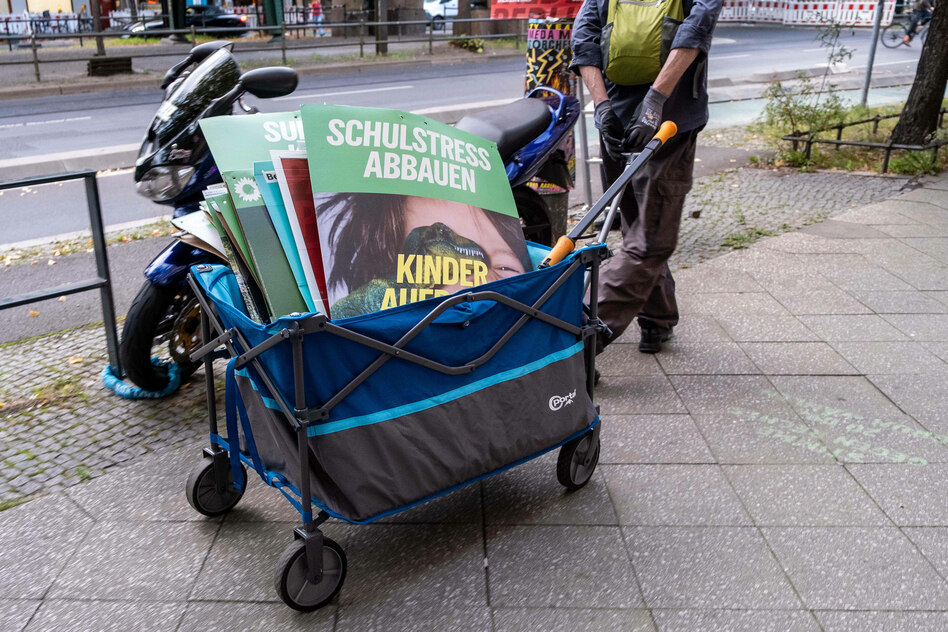
One of the first texts of my journalistic career, which began almost exactly 38 years ago with an internship in a feminist press agency, is about an experience that today would probably be called “othering”.
I had been sent to a “Turkish girls' center” (as they called it in the 1980s), where a group of young women between the ages of 14 and 18, almost all of whom were born in Germany and none of whom were German citizens, were waiting for me. They were looked after by social workers who themselves came from Turkey: that was still a rarity in 1988 and the reason for my visit.
While we sat in a circle and talked, a latecomer greeted everyone with kisses on the cheek, including me, but then started. “Excuse me!” she said, and to my “What for?”: “You’re German! But we always do it like that.” Today I believe that the foundation stone was laid for the question that has concerned me throughout my entire professional life ever since: Who is actually “we” – and who is allowed to have a say?
The "othering", the exclusion in this encounter, was not aimed at me, but at the young woman herself and the "we" to whom she was referring: She apologized for having violated rules that did not apply in her "Turkish girls' center", her place of refuge, but in the world around it - in the only later so-called "majority society" (which apparently hardly treated her favorably if she thought she had to apologize for such a friendly approach.)
This text first appeared in wochentaz, our weekly newspaper from the left!
Every week, wochentaz is about the world as it is – and as it could be. A left-wing weekly newspaper with a voice, attitude and the special taz view of the world. New every Saturday at the kiosk and of course by subscription.
Almost four decades later, I feel that we are not much closer to an answer to this question - at least not a democratic and inclusive one. For the German Chancellor, even Jewish Germans are actually "foreigners", and I cannot help but suspect that Markus Söder's change of heart towards cuts in the state financial equalization - which he rejected after the AFD victory in Saxony-Anhalt as a "punishment for certain voting behavior", but considers to be justified for a left-wing Berlin - also has something to do with the "We Germans, you foreigners" issue.
Because the AfD gained its vote from (according to the prevailing discourse) many more Germans than the Left. In Berlin, with a top candidate and many other candidates with an immigration background, they also brought many first-time and first-time voters with a migration background to the polls.
In the Berlin election in September, 16-year-olds were allowed to vote in the state parliament for the first time. Among voters up to 24 years old, the Left received 43 percent of the vote. That's a pretty big group of young citizens who want to exclude Söder and others from participation. And it may be exactly the one that could finally succeed in finding a democratic and inclusive answer to the question of who actually is “we” here.
In Berlin, over 55 percent of young people have a so-called migration background. In my work I get to know many of these young people; some of them call themselves Turks, Arabs or simply foreigners: a “we” that is similar to the one described at the beginning, a safe space. Or they are simply smarter than “us” and see through the othering that is still at work despite ever-changing markers like “migration history” today. Oh, how happy I would be if at some point they were granted a migration past! But as the saying goes: “The past is never dead. It is not even past” (William Faulkner).
Read the full story at the source
Source: taz