
Politics · taz · · 2h
Diary from Russia: The choice was agony
Deutsch (original) · Auto-translated to English
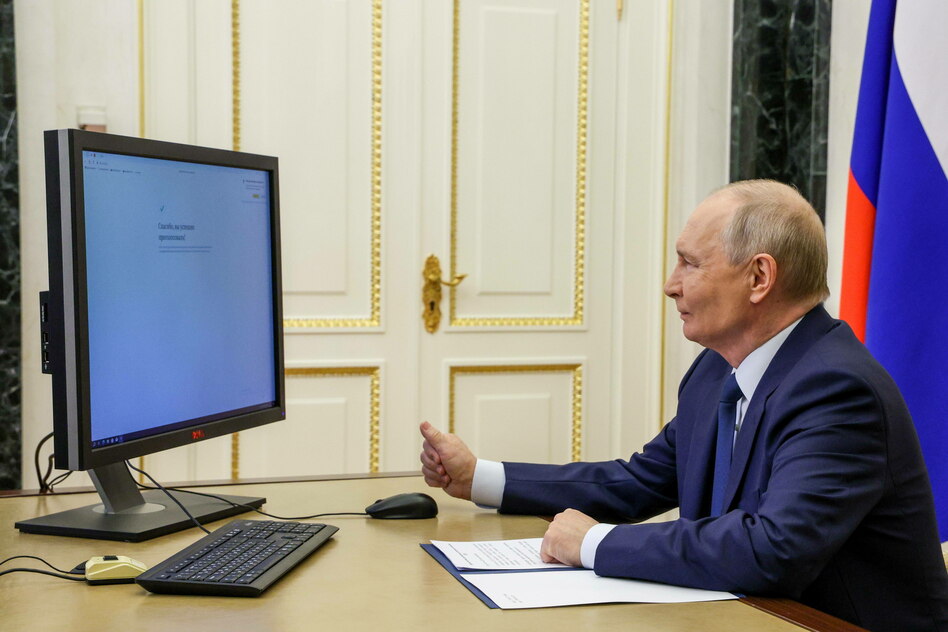
I n September of this year, the first elections to the State Duma took place in Russia for the first time since the beginning of the large-scale invasion of Ukraine. The official result: Vladimir Putin’s “United Russia” party received 349 of the 450 mandates – more than ever before. The party will therefore control 77.6 percent of the seats in parliament. This majority is by far enough for possible constitutional changes.
In other words: elections in Russia have finally become a mere backdrop. They used to be, at least in part, a kind of plebiscite about people's trust in Putin. Today they are just a tool for mobilizing the regional bureaucratic apparatus - and nothing more.
At the same time, they lose their most important public function: the demonstration of a “Putin majority”. It is clear that after almost five years of war, there are significantly more dissatisfied people in the country than the Kremlin's official figures indicate.
Donations to the taz panter foundation provide financial support for independent and critical journalists. The taz panter foundation promotes young talent, international exchange and moral courage.
Navigating a system in which the official image differs so greatly from what people see around them in their everyday lives is becoming increasingly difficult. At some point, this gap between representation and reality will cause the backdrop to collapse. What will emerge behind it, however, remains to be seen.
During the election campaign, Vladimir Putin explicitly stated that votes for the so-called parties loyal to the system would be support for Russian soldiers and a “contribution to victory” in the war against Ukraine. But it certainly won't be just votes. The Russians will continue to be reminded that war is, in the truest sense of the word, the business of each and every individual.
Rumors have been circulating for several months that a new wave of mobilization for the front is being prepared. The recruitment of contract soldiers is slowing down, and the Russian army is lacking the personnel to advance further. So far these rumors have not been confirmed. A final decision may not have been made yet. However, some Russians are already buying tickets and looking for apartments in neighboring countries so that they can leave at short notice in an emergency.
The Russian Ministry of Finance is also conducting its own form of mobilization: immediately after the election, the authority announced new taxes and duties for the population, which are expected to bring in around 1.1 trillion rubles to the state budget. This money is needed to finance the war: defense and security account for 40 percent of government spending, and the government is using the additional revenue to try to get the record deficit under control.
The bill for the governing party's record results was immediately presented to the Russians. With a Russian economy teetering on the brink of recession and a government budget that is becoming increasingly difficult to balance, it is clear that this will not be the last increase in the tax burden.
It is enough to remember what “election gifts” the people of Russia have already received this year: the blocking of Telegram, widespread internet outages across the country, daily drone strikes, mass flight cancellations and long queues at gas stations. What will happen once the officials can breathe deeply and have received their bonuses for the “record results”? It is very likely that we will see a further tightening of the regime and a decline in living standards.
In addition, there are geopolitical processes taking place in Vladimir Putin's head, the nature of which we can only speculate about. He recently stated that he “knows” of violations of the rights of Russian-speaking people in Estonia, Latvia and Lithuania. The same rhetoric was used to justify the invasion of Ukraine. On the same day, RIA Novosti published an article saying that Russia was facing “another special military operation” in Lithuania – a short operation using nuclear weapons.
One can assume that this is another bluff and an attempt to stoke fears in the context of the hybrid war with the West. But the scenario of a direct Russian attack on a NATO country is no longer considered completely unimaginable. Such a move could give Putin the opportunity to justify a new mobilization at home and demonstrate that the alliance would be unable to quickly apply Article 5 and protect its members at a critical moment.
At a moment like this, would anyone even ask the Russians – those people who have just returned from the polling stations – their opinion?
Arnold Khachaturov is a sociologist and editor of the independent Russian exile media Novaya Gazeta Europe. Khachaturov was a participant in the taz panterstiftung's 2025 Exile Workshop.
Donations to the taz panter foundation provide financial support to independent and critical journalists on site and in exile as part of the “Diary of War and Peace” project.
Read the full story at the source
Source: taz