
Politics · taz · · 2h
After the state elections in Saxony-Anhalt: Civil society is preparing for the AfD
Deutsch (original) · Auto-translated to English
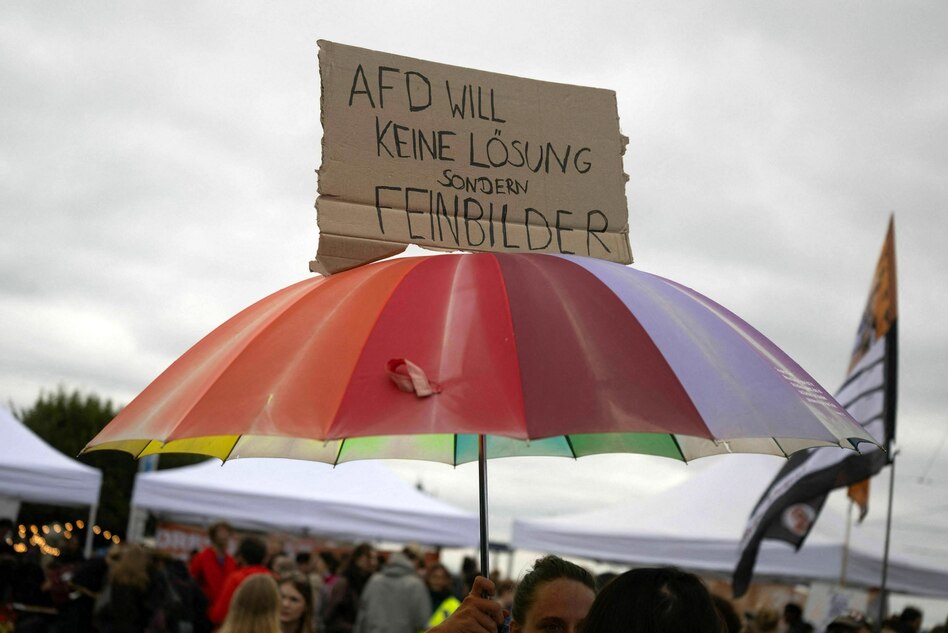
Since the evening of the election, the phone at the state network of migrant organizations in Saxony-Anhalt (Lamsa) has been ringing constantly. People with a migration background are unsettled by the AfD's victory, said Undra Dreßler, managing director of the network, on Tuesday at a press conference in the state parliament of Saxony-Anhalt. Fear and uncertainty spread. Every day the question is whether people with a migration history still have a future in the federal state. Lamsa has therefore set up a pastoral care hotline.
In addition to Dreßler, representatives of the welfare associations Diakonie and Arbeiterwohlfahrt (AWO) as well as the Evangelical Church of Central Germany and the Verdi union will be sitting at the press conference this Tuesday. All five reported a changed social climate in Saxony-Anhalt since the state elections.
Annett Flachshaar, deputy managing director of the northern Verdi district in Saxony-Anhalt, reported, for example, that there was silence in the companies in Saxony-Anhalt. “Everyone is suspicious whether the colleague next to them has voted for the party that no longer wants them.”
A little over a week ago, the AfD received 43.8 percent of the vote in Saxony-Anhalt. In its program, the party warned right from the start that immigration would bring with it many problems. Saxony-Anhalt should refrain from employing “culturally foreign specialists”; in the nursing sector they are, among other things, a danger to patients.
It was still unclear on Tuesday who would form the state government in Saxony-Anhalt in the future. The election results are not enough for the AfD to govern alone. The CDU, SPD, Greens and Left have ruled out holding exploratory talks with the national authoritarian party. The BSW, on the other hand, is holding talks with the AfD, but so far without any results.
Barbara Höckmann, President of the AWO regional association in Saxony-Anhalt, explained that the past few months have shown that a “vocal and creative civil society” is opposed to the AfD’s goals. "This resistance is unbroken. We will continue." Höckmann emphasized that the AWO has a “social advocacy position” and stands up for the interests of vulnerable groups.
At the same time as the press conference in the state parliament, the “Recht Solidarisch” website went online. When civil society actors come under pressure, they can find legal reports and contacts there. This includes, for example, a “legal check” as to whether the children of refugees can be permanently taught in special classes. This is what the AfD demands in its program. “Law Solidarity” explains in detail why this is legally inadmissible and what options those affected have.
At the press conference in the Magdeburg state parliament, the question was also whether there were already layoffs due to the strong AfD result. “It is still too early,” replied Christoph Stolte, chairman of the board of Diakonie Mitteldeutschland. However, he is hearing that more and more people are asking for interim certificates. From this he deduces that some are thinking about applying elsewhere in Germany.
Johann Schneider, regional bishop of the Evangelical Church in Central Germany, said that he used to receive applications from all over Germany. “That has decreased dramatically.” Recently, an applicant from Slovakia declined because she had “heard so many bad things about this country”.
AWO President Höckmann said: If people with a migration history do not see a future in Saxony-Anhalt, this will soon have consequences for the care sector. 40 percent of trainees in this sector have a migration background. “We urgently need appreciative cooperation.”
Read the full story at the source
Source: taz