Germany · taz · 40m
After the elections in Zambia: first in prison and then stateless
Deutsch (original) · Auto-translated to English
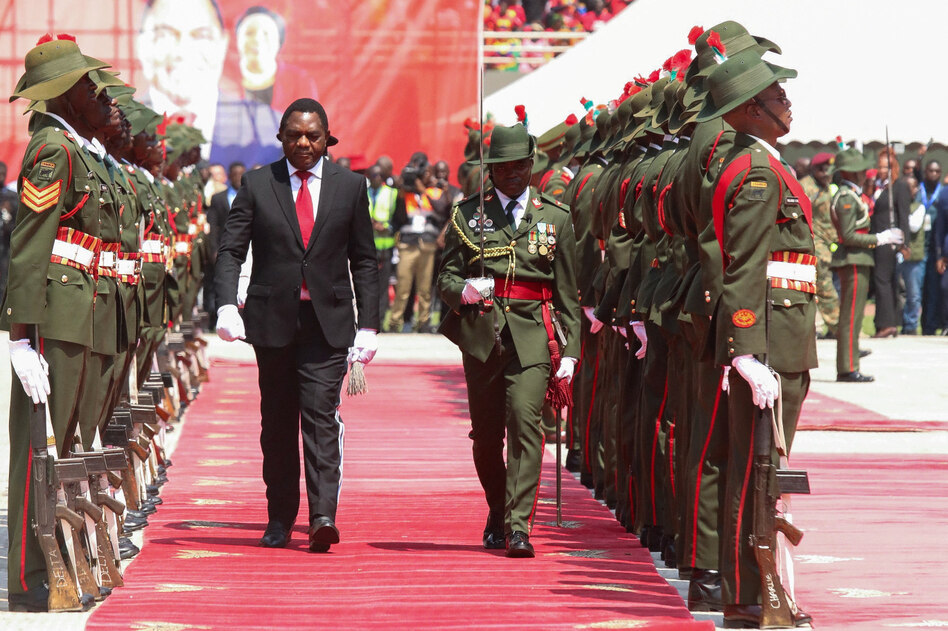
As Zambian President Hakainde Hichilema begins his second term in office last week following highly contentious August 13 elections, the government is resorting to a tried-and-tested tool to silence critics: revoking citizenship.
Authorities have revoked the passport of Celestine Mukandila, general secretary of the opposition Tonse Alliance (Coalition), and canceled his identity card. The documents were obtained through fraud and Mukandila was actually Congolese, the Interior Ministry said late last week.
The 36-year-old politician and lawyer was arrested by immigration officials on August 20, a week after the controversial election. The opposition does not recognize the result of the election. The cancellation of his papers now leaves Mukandila effectively stateless while he remains in custody. It is illegal to use the documents now, said Dickson Matembo, State Secretary in the Ministry of the Interior.
The fact that the opposition politician has been in custody for several weeks without being brought before a judge is already a violation of his rights. The opposition leader Brian Mundubile, who was defeated in the elections, is also in custody on charges of treason. He is accused of preparing an armed uprising.
In Zambia, these events are reminiscent of how Frederick Chiluba, the country's first freely elected president after the end of the one-party system, had his predecessor and long-time autocrat Kenneth Kaunda expatriated in 1999 because his parents came from Malawi. During her lifetime, Malawi and Zambia were both neighboring British colonial territories.
With this measure, Chiluba's MMD (Movement for Multi-Party Democracy) wanted to prevent Kaunda from returning to politics. Several of Kaunda's party friends were also declared Malawians, and some had to go into exile there. This is called “foreigning” in Zambia.
“Using citizenship as a weapon has become a familiar and threatening script,” says commentator Daves Kunda. Since the time of Chiluba, Zambia's presidents have repeatedly used the security apparatus and legal tricks to restrict democratic freedom.
“The Interior Ministry’s revocation of Mukandila’s citizenship feels less like a single punitive measure than a disturbing echo of the past.”
According to his own information, Mukandila was born in 1990 in Lubumbashi, capital of the Katanga region in the Democratic Republic of Congo, which borders Zambia. His father was Congolese and his mother was Zambian with roots in the northern Zambian province of Luapula. “The fact that I was born outside Zambia does not make me a foreigner,” Mukandila said in a statement distributed over the weekend.
According to Article 36 of the Zambian Constitution, one is a citizen of Zambia if at least one parent is a citizen at the time of birth. "I received Zambian citizenship at birth through my Zambian mother. I was neither naturalized nor applied for citizenship."
He received his Zambian ID card when he was around 16 years old. "I was a child. I did not write my own family history, choose my citizenship or create the circumstances of my birth myself." Chief Sokontwe from the Ushi ethnic group, from which Mukandila's mother comes, has publicly supported the politician and confirmed his Zambian nationality.
President Hichilema's ruling party UPND (United Party for National Development) sees it differently. The cancellation of his papers makes Mukandila a foreigner and he should go back to “his country,” the party said. She also rejected dialogue with the opposition. “When we talk about national unity, let us talk about the unity of Zambians, not the unity of Zambians with foreigners in politics.”
Read the full story at the source →
Source: taz