
Politics taz
After the election victory: Now Serbia's student list has to deliver
After exuberant election parties, more and more questions arise about the political direction and the future government. Which names are being discussed? more...
Deutsch (original) ·Auto-translated to English
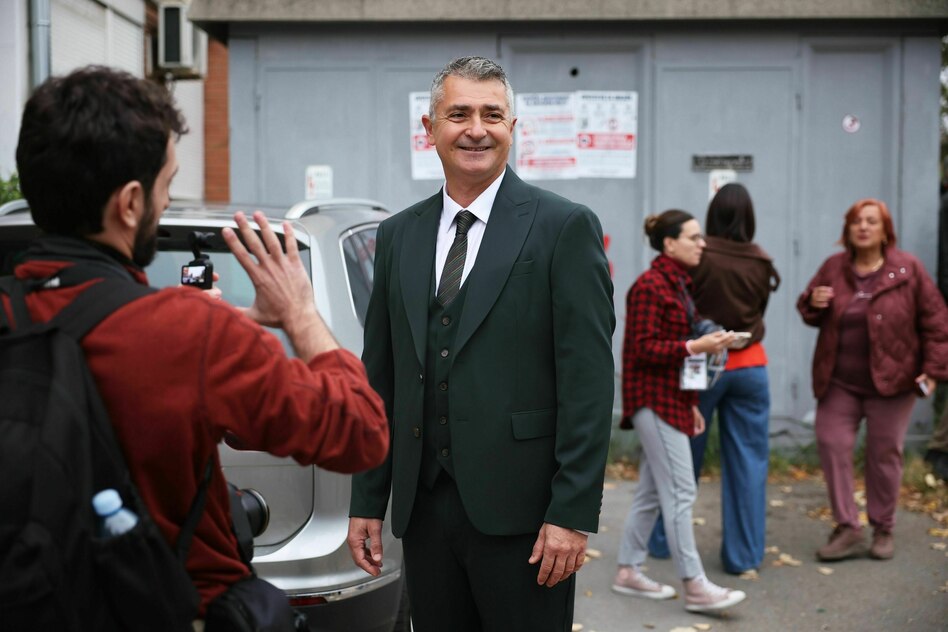
It almost seems like Belgrade is a different city. Since the student list's victory in the Serbian parliamentary election, it has hardly been recognizable. Many young people say they have been waiting for this for 14 years and now a huge burden has been lifted from their shoulders.
The student movement is now faced with the task of moving from resistance to government responsibility. Amid the euphoria, critical minds ask themselves the first questions. The student list deliberately chose not to have a leading figure. What a government will look like and who will be at its head is still unclear.
With 52.7 percent of the vote and provisionally 140 of 250 seats, she can govern alone. The 250 candidates are professors, doctors, artists and other personalities such as actor Tihomir Stanić and basketball legend Dejan Bodiroga. Students themselves are not on the list.
The name of former National Bank governor Dejan Šoškić is circulating as a possible prime minister. He is one of the few to have already held an important public office. Top candidate Ilija Srdanović is also mentioned. Nothing has been decided yet. Society's expectations of the possible new government are huge.
One of the priorities will be the media. Over the past 14 years, Aleksandar Vučić's regime has brought large parts of the Serbian media landscape into line. Critical journalists were put under pressure, and pro-government broadcasters defamed the protest movement.
How great the anger is about this was shown on Monday evening in Belgrade. Demonstrators broke into the building of the pro-government broadcaster Informer and confronted editor-in-chief Dragan J. Vučićević. Clashes broke out and the police intervened. Aleksandar Vučić is already being quoted as “opposition leader” in pro-government media. It is feared that he will continue to attack his political opponents.
Meanwhile, different scenes are happening at the public broadcaster RTV Vojvodina. Some of the staff apologized to viewers for years of one-sided reporting and the silence on topics. The editor-in-chief resigned. The political upheaval is evident in the media, but a scenario like that in Hungary, where entire editorial teams are fired and replaced after Orbán is voted out, is not to be expected here.
In terms of foreign policy, the change of power is likely to bring less change than one might hope in Brussels. Commission President Ursula von der Leyen congratulated the student list. Dejan Šoškić wants to accelerate the EU accession reforms and ultimately have a referendum decide on membership. At the same time, Jovo Bakić, professor at the Faculty of Arts and student list candidate, rules out sanctions against the Putin regime. “We respect Russia as a great power and as a partner, in many cases as a protecting power,” he told the Russian state broadcaster RT Balkan. Serbia's dependence on Russian natural gas is likely to play a role in this.
Since the beginning, the student movement has brought together conservatives and nationalists alongside liberals and leftists. Flags claiming Kosovo as Serbian territory also appeared at the celebrations after the election victory. Pictures of Chetnik leader Draža Mihailović were also visible at the protests. Such symbols are not new to the movement. However, students distanced themselves from right-wing extremists.
"It's a catch-all movement. And that was probably the only way to overthrow autocrats like Vučić," says Gazela Pudar Draško from the Institute of Philosophy and Social Theory. The student movement focuses primarily on domestic issues in order to repair the institutional damage that Vučić has caused.
The political sociologist also calls for people to be patient - especially during the transition period from the old to the new government. "Democracy is a slow process, and if we want to have sustainable, democratic institutions, we have to do it right. So don't expect anything overnight," said Draško. The election victory of the student list only laid the foundation for change.