
Climate taz
After the record summer: How the climate crisis is damaging mobility and transport
The federal government knows little about the consequences of the hot summer for Germany's transport routes. However, the numbers that do exist offer cause for concern. more...
Deutsch (original) ·Auto-translated to English
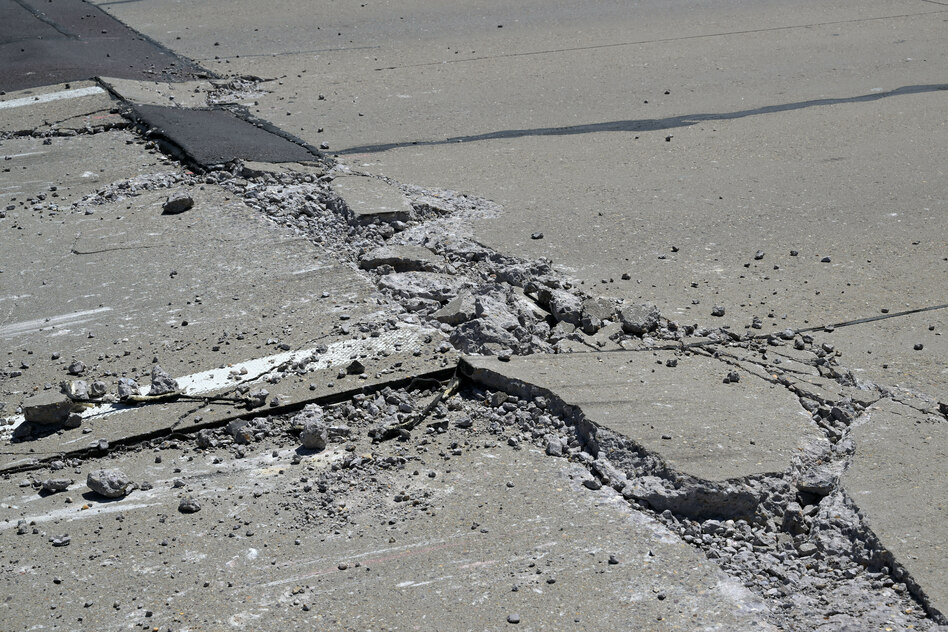
The extremely hot summer has damaged railways, roads and waterways in many places and made them unusable. However, the federal government does not know how much the damage will cost the German economy. This emerges from the response of the Federal Ministry of Transport to a small question from the Green Party member of the Bundestag Swantje Michaelsen. The answer is available to the taz.
In the first half of the year alone, the heat damaged 42 sections of motorway due to bulging or breaking off of the concrete. That is 32 jobs more than in the previous record year of 2019. Until 2012, there was no damage at all due to heat.
The Ministry of Transport does not know how expensive the repairs will be or what economic consequences the interruptions will have on freight transport, for example.
“When it comes to building new motorways, the federal government always argues that they are beneficial to the national economy,” says Michaelsen. But if it is unable to take heat damage into account, “it cannot price in the consequences of the climate crisis for new roads.”
Instead of sticking to new and expansion plans for highways, the federal government must clearly prioritize, says Michaelsen: “The existing infrastructure must be preserved and renovated and upgraded so that roads, rails and bridges can withstand extreme heat.”
The federal government does not want to answer at all how many points in the German rail network disruptions occurred due to heat or embankment fires. “As a result of balancing the information rights of the German Bundestag with the interests of the state, the requested information is classified as ‘classified, confidential’,” writes the Ministry of Transport.
“I don’t understand what’s supposed to be relevant to safety,” says Michaelsen. After all, she didn’t ask about particularly vulnerable rail sections, but only about the number of incidents. “We are seeing a pattern of classifying responses as security-related when the ministry does not want to respond.”
According to DB InfraGo, the railway's infrastructure division, switches in certain sections were not adjusted due to temperature reasons on particularly hot days, which resulted in delays. According to InfraGo, this procedure is intended to “prevent a heat-related defect from occurring while the switch is being changed, which would completely preclude driving on it.”
The German waterways also suffered from the hot and dry summer. By mid-September, low water levels were measured on 70 days at the Kaub Rhine gauge, and even on 111 days at the Hohensaaten Finow Oder gauge. Here, too, the federal government does not record the resulting economic damage. At low tide, cargo ships are forced to sail less loaded or not at all. According to the consulting institute Prognos, this leads to losses of almost 1 billion euros on the Rhine alone.
“The federal government’s data is scarce, but it provides an indication that important parts of the German infrastructure do not function reliably in hot weather,” says Michaelsen. In addition to adaptation measures, the federal government must finally invest consistently in climate protection. “It is up to us not to allow the damage to become even greater.”
According to the German Weather Service (DWD), the summer of 2026 was hotter than all summers since weather records began, with the exception of the hot months of 2003. The average for Germany was over 30 degrees on 22 days and over 35 degrees on 5 days - the DWD calls the number of extreme days “unprecedented”.