
Germany · taz · · 3h
Anti-Muslim sentiment after 9/11: Suddenly we were all included
Deutsch (original) · Auto-translated to English
W hen the attacks happened on September 11, 2001, I was nine years old. Another child who understood for the first time what it meant to be afraid for the life of someone you love. Maybe it was then that I understood for the first time what death actually means. And that people are capable of killing other people.
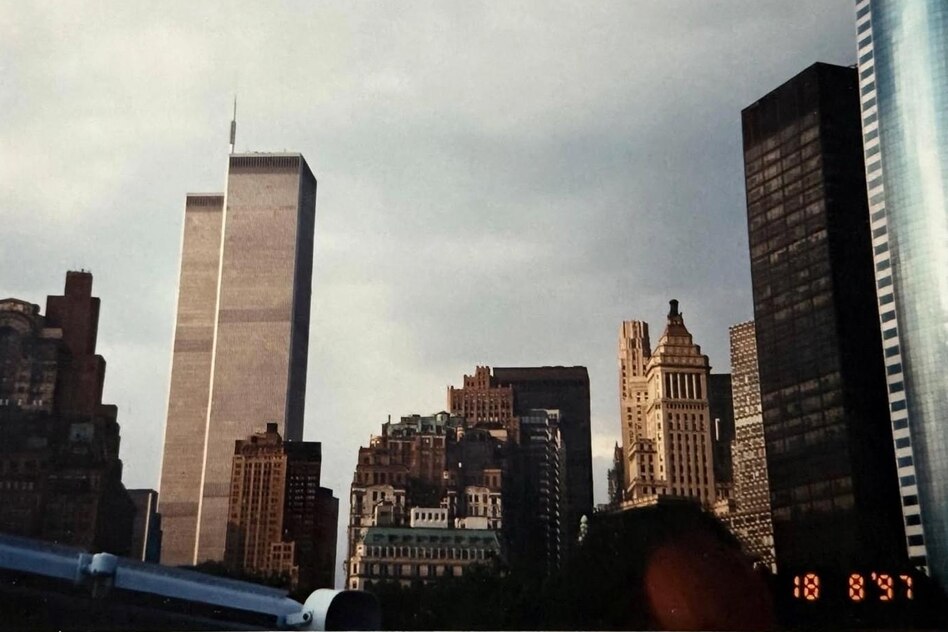
In 1997, four years earlier, I visited my uncle in the USA with my family. He lived in New Jersey, but for me back then it was all New York City. My absolute highlight was standing on the observation deck of the World Trade Center on the 107th floor of the South Tower of the Twin Towers. I remember the city lights below me and how spectacularly beautiful I found the view. And how scary at the same time. I had never been this high up.
On September 11, 2001, I saw these towers again on the news. The black smoke over Manhattan. People running through the streets in panic and people jumping out of the towers into the depths. The same images played over and over again. I was slow to understand that the planes hadn't accidentally crashed into the towers.
People planned this. They wanted to kill other people. I didn't understand why. Nor what Islamism was or what religion should have to do with it. For me at that moment there was only one question: Where was my uncle?
The taz is an independent, left-wing and opinionated daily newspaper. We have been arguing in our comments, essays and debate texts since the taz was founded in 1979. We often cannot and do not want to agree on an opinion. That's why you'll find some completely opposing positions here - all part of the very broad left-wing spectrum of opinions.
I thought he might be one of the people seen dying there. My parents had already spoken to him on the phone and told me he was safe. They then called him again. It wasn't until I heard his voice and he confirmed that he was okay that I believed it.
In 2006 we flew to him again. This time to say goodbye to him because he was dying after a long illness. My father was grieving. You could see that on his face. His hair was longer than usual and his beard was no longer a stubble. When entering the USA, he was pulled out of the queue and taken to a separate room. He only returned hours later. He was very quiet and said nothing. I was 14. I understood what was happening. But we didn't say it out loud.
September 11th created a new enemy image in the West: the Islamist terrorist. In the years that followed, it was shaped by one name: Osama bin Laden. The leader of the al-Qaeda terrorist network responsible for the attacks was omnipresent in the news with his beard and turban. His images shaped the idea of what a dangerous Muslim man looked like.
And Murat Türkmen, my father, also fit into this picture. Turkish passport. Black hair. Beard. He had nothing to do with al-Qaeda. At that moment no one cared how religious he was.
In Germany there was more and more talk about “Islam”. About terrorism, but also about headscarves. About Islamism, but also about mosques. About security, but also about integration and parallel societies. About whether “Islam” even belongs to Germany. Terms that didn't mean the same thing came together.
This was followed by attacks in Madrid, London, Paris, Brussels and Berlin. People were murdered. The threat of Islamist terrorism was real. But the reaction also changed the lives of people who had nothing to do with this ideology.
The fact that people like my father came under suspicion more quickly was not just the result of individual prejudices. The general suspicion also had a political dimension. The USA and its allies declared the “War on Terror”, attacked Afghanistan and later waged war in Iraq. Security laws were tightened and surveillance and powers of the security authorities were expanded. Germany also took part in the war in Afghanistan and expanded its security architecture.
This general suspicion was not only evident at airports or national borders. I also encountered him in everyday Germany, where I grew up. My family was a Turkish family, without “Muslim” being an essential description for me. But suddenly we were also meant when people talked about “the Muslims”.
I noticed it in the questions I was asked. What I think about the Islamist attacks. Why I don't have to wear a headscarf. How my family feels about Islam. Whether I pray. And how was that again with “Allahu Akbar” and blowing yourself up – will you then go to heaven? To those who asked me such questions, it all seemed to go together.
Racism against people with a migration background was not new. Mölln and Solingen happened long before September 11th. The image of the supposedly “poorly integrated foreigner” was now joined by that of the potentially dangerous Muslim. You didn't have to have done anything to fit into this picture. That's exactly what I experienced with my father.
For me, this is one of the most momentous shifts after September 11th: Islamism and Islam became so close together in the collective perception that being Muslim alone could become a cause of suspicion.
I don't know what it was like before. I then grew up in a time in which terrorism, religion, origins and integration were repeatedly negotiated together. I have hardly known any other political reality.
This is one of the reasons why, 25 years later, after every violent act that is reported on, I still catch myself having a thought that I actually don't want to have. I hope: please no Islamist motive. Not because that would make the crime any less serious. But because I know what comes next. Again, we are not just talking about Islamism and Islamists, but about “Muslims” and “Islam”.
And every year on September 11th, I don't just think about the images of the collapsing towers. I also think of my father at the airport back then. Of a man who was treated as a potential terrorist when he was actually just on his way to visit his dying brother.
Read the full story at the source →
Source: taz