
Germany · taz · · 2h
Everyday life after September 11th: Constantly under suspicion
Deutsch (original) · Auto-translated to English
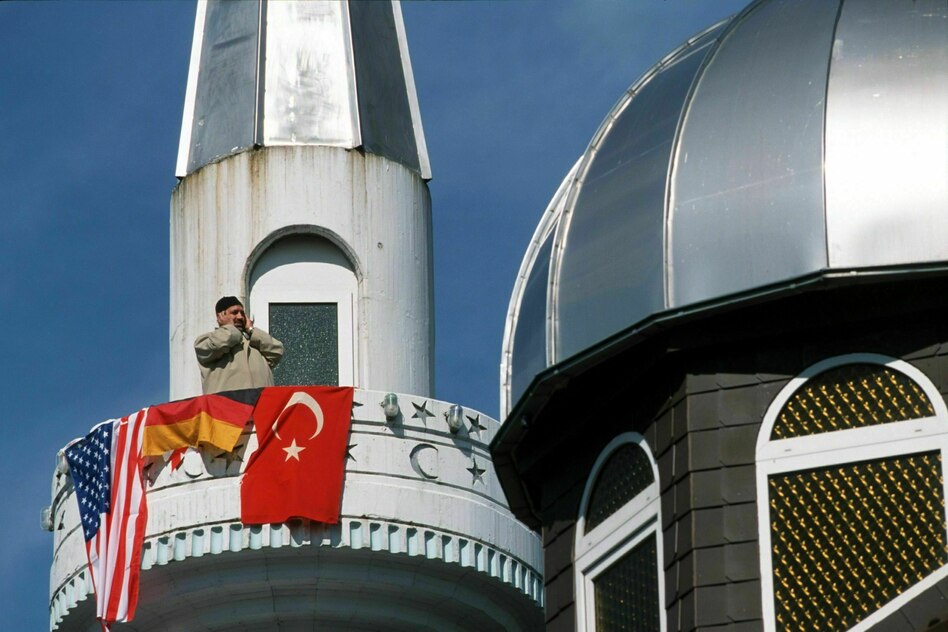
There was a very brief moment in which I had the feeling that we were all equally aware of the horror of the attack. I can still remember September 12th well. I was 14 years old and, as usual, I walked to school with my friend from our Duisburg-Marxloh district. It was a quiet conversation. “Did you notice what happened yesterday?” "Yes." Then we walked side by side in silence again. For us it was totally absurd that we had to go to school. Everyone there was completely distraught. We were afraid that World War III would break out.
There was also emotional chaos in our district. There was disbelief as to what actually happened; Entsetzen darüber, wie viele Menschen gestorben sind, und Angst, dass Amerika nun womöglich mit einem Rundumschlag im Nahen Osten – von der Türkei bis Pakistan – eine Atombombe abwirft und alles plattmacht. Und es würde nicht lange dauern, bis ich Menschen im Bus hörte, die genau das für eine gute Idee hielten – „einfach eine Atombombe drauf“. There was this clip of people somewhere in the Middle East cheering after the attack and chanting “Death to America.” Somehow I knew right away that now everyone thinks we're celebrating what happened. Instead of talking about the terrorists, the media coverage soon focused on Islam as a major threat to the West.
Burak Yılmaz is an author, host of the podcast “Brennpunkt” and works as a theater teacher with young people on racism and anti-Semitism.
After September 11th, Marxloh was no longer the “Turkish Quarter” but the “Muslim Quarter”. Suddenly there was graffiti “Islam equals terror” on the house walls in the district. Magazines were about how Germany is being Islamized. The question was never asked what this actually does to the communities. It all scared me.
At first my friends and I thought we had to educate the Germans and show them what our religion really means. Then the defiance came and we argued with each other. Because there was also the feeling that it doesn't give a shit how we behave anyway. The Germans hate us anyway.
My one teacher was always cutting out newspaper articles. Als irgendwann ein Anschlag in Pakistan folgte, legte er mir den Artikel dazu vor die Nase und sagte: „So, erklär mal bitte der ganzen Klasse hier: Warum machen das deine Glaubensbrüder?“ In such situations I was no longer perceived as Burak; suddenly I became the foreign minister of Islam. No matter what I said, there were no right answers. And when I said I didn't want to have the conversations, people assumed I had secret sympathies.
At the time, a friend told me how some people in his class made bomber jokes about him. Others in my circle of friends also found themselves in similar situations. But we didn't tell each other about how we were bombarded with questions, how we couldn't keep up with our teachers' intellectual language, how we eventually stopped saying anything at all - that's not the story you tell your boys. We preferred to tell each other when we answered with rhetorical skill.
This text first appeared in wochentaz, our weekly newspaper from the left!
Every week, wochentaz is about the world as it is – and as it could be. A left-wing weekly newspaper with a voice, attitude and the special taz view of the world. New every Saturday at the kiosk and of course by subscription.
My German friends asked: Is it true that Islam is dangerous? Is it true that you all learn to hate unbelievers? Is it true that you all want to destroy the West? For them I was the constant enlightener. And at the same time, some of their parents became radicalized and forbade their children to see me. I noticed back then that there were huge changes and a lot of racism here. But no one ever had to comment on it.
Our parents noticed that something was going on with their kids. But because of all the shift work, it was really a problem for her to talk to us about it. They often said that we shouldn't let ourselves get down. But we shouldn't give the Germans any reasons to hate us even more. That tore me apart.
I didn't want to just put up with it. But part of me thought, if they want terror, then let's give it to them. For example, my friends and I started using Arabic phrases and terms like “Mashallah” on the bus. At the time it was provocative, people immediately panicked, some of them called the police - today it's youth language. Oder als so ältere Typen im Bus sagten: „Jetzt kommt die ganze Molukkenscheiße zu uns“, haben mein Kumpel und ich so getan, als würden wir mit Waffen auf die schießen. That was our way of saying: we won't let ourselves get down. But there were also more blatant things: I got into the front of the bus and said “Allahu akbar!” called, my boys went in the back and called back. Everyone ran out of the bus and the bus driver said he would call the state security. Dann sind wir abgehauen.
Later in my work as an educator with young people, I saw similar dynamics after October 7th. Da gab es Meldungen vom Schulministerium, dass Lehrer doch bitte explizit mit den muslimischen Schülerinnen über den Nahostkonflikt sprechen sollten. A stigmatization from the very top. I have also done workshops in schools on anti-Semitism and racism. An einer Schule wurden wirklich nur die muslimischen Kinder zur Veranstaltung bei mir verdonnert – so nach dem Motto, ich soll die jetzt mal geradebiegen.
Was ich aber eigentlich am tragischsten finde ist, dass der ewige Generalverdacht gegen uns und die immer neuen Forderungen nach Abschiebungen, auch ein Angriff auf unsere Imaginationskraft ist. It is difficult for us to imagine a different reality, with different narratives, different debates, different media.
The images from September 11, 2001 were surreal for me. At the time, I was a 17-year-old secondary school student in Stadthagen, Lower Saxony, with no prospects. When the planes flew into the Twin Towers and over our living room television, I initially thought the whole thing was a trailer for a blockbuster.
The next moment the news came: an attack. I was used to attacks in Turkey. It wasn't until the next day at school that I realized that this wasn't going to be an attack like many others before. In class we should stand for a minute of silence. I refused.
I couldn't explain it clearly at the time, but the severe consternation that had suddenly gripped the whole of Germany seemed hypocritical to me. Around 100,000 people died in the Bosnian War. The US killed tens of thousands in Iraq in the 1990s. There were no minutes of silence in Germany for any of these victims.
Bilal Bahadır is a film director and screenwriter. In 2024 he released the award-winning ZDF series “Uncivilized”.
I am a guest worker child. My parents came to Germany in the 1960s. Even before 9/11 there was a lot of racism. Once a teacher sat on my desk during recess. He had a salami roll in his hand, took a bite with relish and held it in front of my nose with his mouth full. “Here, pork.” Such things were everyday life. And somehow you had learned to ignore them.
But after September 11th things changed. I couldn't ignore it anymore. A “terror expert” came to our school and spoke about Islam and “jihad.” All that was talked about on television was martyrdom and 72 virgins in paradise. About the attack on the civilized world. Everything was flattened. Our entire identity, our culture, our religion have been forced into a single pattern. It was almost impossible to defend yourself against it. And there was hardly anyone in public who painted a more nuanced picture.
All I remember is that everything in my chest was squeezing at the time. It felt completely wrong. For a long time I tried not to remember a lot of things.
When I started talking to other Muslims in Germany for the ZDF series “Uncivilized,” I had to remember. It was only then that I realized that almost all of us felt the same way back then. And that many, just like me, didn't stand up during the minutes of silence for 9/11.
Wir wollten unbedingt eine eigene Serie machen, um uns von den Filmen und Serien zu befreien, die unsere Kultur, unsere Identität und unsere Religion stigmatisierten. We had to tell our own stories. Criticism alone is not enough. Denn wenn Muslime oder Migras etwas kritisieren, heißt es schnell: Wenn du dich darüber aufregst, haben wir offenbar einen wunden Punkt getroffen.
The tipping point came at some point in the 2010s. Maybe in 2009, when a German colonel ordered an attack on two fuel trucks in Afghanistan, killing dozens of innocent civilians. Reporting on the war became increasingly critical. I thought the German public understood what went wrong after 9/11: how the West, in a general terror panic, allowed itself to be seduced into a war that cost hundreds of thousands of people their lives in Iraq and Afghanistan - and in the process fueled the very vicious circle that kept producing new extremists and attacks.
After a job as a druggist, I finally made it to the art college in Cologne. There I was the only “kanake” in a left-liberal milieu. I deliberately write “Kanake” here and not “migrant”. The school had many people with a migration background, but no Kanaks. The racism at the university was less obvious. And yet he was present.
I was suddenly the face of the Kanak, where you change sides of the street at night. For the “kind” of people who you have never come into contact with out of fear. The macho, the gangster, the aggro who needs to be educated.
In one class, a lecturer said to me: “I know literature isn’t your thing, but we’d still be happy to have you join us.” He didn't even know my name. Als ich Akkus für die Kamera transportierte, sagte ein Kommilitone zu mir: „Lass dich nicht kontrollieren, sonst denken die Leute noch, dass du dich in die Luft jagst.“ Nach dem Anschlag auf Charlie Hebdo Anfang 2015 fragte mich eine Dozentin vor der ganzen Klasse: „Warum warst du gestern nicht auf der Solidaritätsveranstaltung auf der Domplatte?“
I first had to learn their language and their mindset in order to be able to defend myself. Still, I had hope in the 2010s. Christian Wulff said: “Islam now also belongs to Germany.” With the summer of migration, a different, friendlier Germany seemed to emerge in 2015. Many seemed to be serious about Germany as a country in which people from different cultures find their place. But I was wrong with that impression.
I had underestimated that history only begins for the West when it itself is affected. That was the case with 9/11. And as of October 7, 2023, things were no different. The idea that the civilized world is at war with the uncivilized has since flourished again. And the West has still not understood that its arms deliveries and military interventions repeatedly create a breeding ground for new attacks.
I no longer trust Germany. Just as many people later understood that the invasion of Iraq and Afghanistan was a mistake, they will one day see the genocide in Gaza as a mistake.
Sollte Israel Palästina irgendwann vollständig besiedelt und alle Menschen getötet oder vertrieben haben, wird man im Westen darüber trauern. The stolen land will still belong to Israel. The displaced will remain displaced. And the murderers will remain among us. And ten or twenty years later we will see the same thing happening again in another country.
The truth is: I know how to defend myself, at least rhetorically. But my hard-working friends are openly told in their companies: “Next election and then it’s time to leave.” Just like back then, today I try not to remember a lot of things. But I won't forget anything.
And yet there is also a development that gives me hope. When I work with young Migras today, I experience people who confidently stand up for themselves. My parents still told me: "This is not your country. Don't mess with the teachers. Shut up!" But today these young people know that they are part of Germany.
Two men are standing next to me in the ICE when one of them says this sentence: “Shit, the Taliban have advanced to Hamburg!” I remember well. It was 2013 and I was on the way home from the Federal Ministry of Economics. I had appointments for the federal government’s “Make it in Germany” welcome initiative, which I helped coordinate at the time. Welcome culture live. In my home country Germany.
The train episode was not a unique experience. After September 11, 2001, such incidents were commonplace, especially when Osama bin Laden was reported in the media. "Fucking Taliban!", "Terrorist! Take cover!" or “The bomb is about to go off!” was the answer.
Such statements were also aimed at people who try to live the wisdom-oriented Sikhi way of life. Like me. In the United States, Sikhs experienced more than just verbal violence. On September 15, 2001, gas station owner Balbir Singh was shot and killed in Arizona.
Khushwant Singh is a founding member of the Frankfurt Council of Religions. He publishes and speaks at schools, universities and on podcasts on ethics, wisdom and sustainability.
As the child of asylum seekers, I learned the hard way to set boundaries. When I hear a degrading statement, I politely say, "I have big ears under my turban. Why did you say that?" Das Staunen ist groß. Meistens wird geleugnet. I've already said: "It's fine. It's always carnival here."
Rarely does anyone apologize. Or ask myself what it feels like to be excluded in your own homeland. Germany is a beautiful and rich country with many great people. And yet I often experience grumpiness. The lack of moral courage also makes me think. Selbst in einem Zug, der aufgrund von Verspätung Raum für Dialog ohne Ausweg bietet, habe ich nie (!) erlebt, dass sich jemand an meine Seite stellt. As is often the case in life, I had to come to terms with being part of the Homo Turbanus species.
Sikhs do not wear the turban to advertise. We also wear it at home. Wir missionieren nicht. The turban represents the protective hand of the divine. It reminds us that there is something higher above us. That we are little lights in the universe. That we as humanity belong to one family. Wenn ich den Turban morgens binde, inspiriert er mich bescheiden, die höchste Vision meiner selbst zu leben – würdevoll, mutig, gemeinwohlorientiert und im Einklang mit der Natur. He also calls to mind experiences of violence and transgenerational trauma that we as a religious minority have known since around 1606.
On September 11th I was in the student dormitory in Heidelberg. I was in the final stages of my studies in anthropology and educational sciences. My little Robotron television from the GDR was on. I saw the Twin Towers collapse. When it became clear that it was an attack, I suspected: This will change a lot, including for us Sikhs.
Things get serious when the abstract takes shape. Especially for people who are uninvolved. I got my master's degree with 1.0. I wasn't even invited to an interview. I received repeated insults. I went to London.
Before 9/11, we Sikhs were perceived as exotic. I heard, “Where’s your magic carpet?” I replied: “It was in a no-parking zone and was towed away.” A man once shouted: “There is a ban on masking in Germany!” In the swimming pool, a senior citizen said to me: “You shit Arafat, get out!” Even then, I didn't think I looked like Yasser Arafat. Her?
9/11 shows me how little we reflect before we speak out. And how strongly we are guided by visual impressions. With less social media, this has gotten worse. Wir reagieren sofort. Thumbs up. Thumbs down. Solidarity. Empört. Our senses set the pace - our soul can't keep up.
Sikhi reminds us to transcend the ephemeral. Not identifying with every stimulus and feeling. To become aware that we are all mentally alienated in a foreign country.
It's human to find someone strange. This can lead to curiosity. We can learn to ask open-ended questions: “Would you like to tell me what’s behind your hat?” A dialogue is already emerging.
Since 9/11 it has become increasingly clear to me: we need less expertise and specialization. AI can do that. Especially in a country of material abundance, we need more social and emotional intelligence. That's why I volunteer, including through the Sikhi Council, to ensure that such skills are cultivated across generations. If I can help strengthen empathy, dialogue, respect, community spirit and complementarity, this also helps to classify complex processes such as colonialism in a differentiated manner and to reflect on the long-term effects of our actions. This is a social task. It begins in our families and continues in our educational institutions, communities and clubs, at work and in politics.
We are all in the boat of transience. No prejudice can save us. But a helping hand, a clear attitude and orientation can support us. In everyday life and crossing the sea of diaspora, the eternal mystery we call life.
The Sikhi sages remind us: “We are strangers to ourselves. We have come to know ourselves, to heal and to become one” – ਯਾ ਜੁਗ ਮਹਿ ਏਕਹਿ ਕਉ ਆਇਆ ॥, GGS, 251, M.5.
Read the full story at the source →
Source: taz