
Germany taz
Martin McDonagh on “Wild Horse Nine”: “I thought of that while eating cheese”
Martin McDonagh's "Wild Horse Nine" is a late-night agent film. The director talks about guilt and regret and the greenery of Ireland and Easter Island. more...
Deutsch (original) ·Auto-translated to English
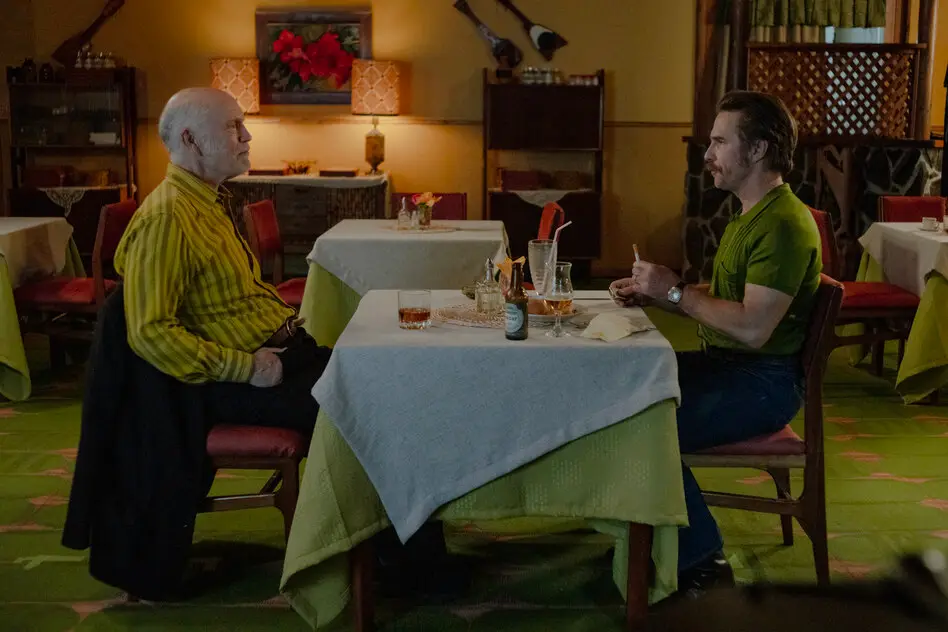
Irish director and playwright Martin McDonagh has been writing plays since the 1990s. His debut short film with Brendan Gleeson, made in 2004, was awarded the short film Oscar, and four years later he also made his feature film debut with Gleeson, “See Bruges... and Die?” and 2022’s “The Banshees of Inisherin.” McDonagh's award-winning black tragicomedy "Three Billboards Outside Ebbing, Missouri" in 2017 dealt with justice and forms of protest in public spaces: It is about a woman who, in light of the murder of her daughter, expresses her criticism of the actions of the local police chief on billboards. “Wild Horse Nine” tells the story of CIA agents Chris and Lee, who are sent to Rapa Nui shortly before the military coup in Chile in 1973. The terminally ill Chris doesn't care about secrecy or conventions, speaks loudly about the CIA's tactics to supposed students and approaches the rest of his life with bilious humor.
taz: Mr. McDonagh, in “Wild Horse Nine” John Malkovich plays the cynical Chris, who has become just as indifferent to his loyalty and covering up professional misconduct as he is to the well-being of other people. What interests you about the character?
“Wild Horse Nine.” Directed by: Martin McDonagh. With John Malkovich, Sam Rockwell and others. UK/USA/Chile 2026, 118 mins.
Martin McDonagh: It probably has something to do with my fear of becoming a bit like Chris myself. Above all, I like his outrageousness - as a screenwriter, it's quite liberating to write a character who is diametrically opposed to my own thoughts and feelings. You can have them do and say things that you would never say in real life because you have to stay true to that character. The challenge is not to judge them.
taz: Where does this character's bitterness come from?
McDonagh: Out of disappointment - deep within Chris there is a man with strong feelings, in whose quiet moments you can hopefully perceive these feelings. The film is essentially meant to be a treatise on guilt and regret, about someone knowing at the end of their life that they couldn't do everything right. It strangely brings me joy to write something like this.
taz: Malkovich and Sam Rockwell play colleagues and close friends. There are often depictions of male friendships in your films – how important is friendship to you?
McDonagh: That's right, since "See Bruges... and Die?" I talk about male friendships. I think this comes from my own experience, I feel safe doing it. In Hollywood films, the focus on male friendships is rather underrepresented; they prefer to show either superficial “buddies” or competitors. But going deeper into the male psyche and portraying this kind of masculinity fascinates me. In both “Bruges” and “Wild Horse Nine,” the friendship borders on a love affair between men. And my film “The Banshees of Inisherin” was basically about the end of such a male love relationship.
taz: Can a disillusioned character like Chris help you believe in something again in a generally not very hopeful time full of violence and misogyny?
McDonagh: I hope so. Even if both men are not heroes, and are probably even misogynistic and politically on the dark side themselves, there is something decent about them - making the CIA's machinations known is the right thing to do. And the friendship between the two is real, it was important to me to show that.
taz: In one scene, Chris analyzes the peoples of the world based on their types of cheese - countries with openly gay people therefore produce better cheese. Where does that come from?
McDonagh: I actually thought of that while eating cheese. And there is some truth in that – to make good cheese you have to be happy.
was born in London in 1970. He began working as a playwright in the 1990s. His first feature film was “See Bruges… and Die?” (2008). “Three Billboards Outside Ebbing, Missouri” screened in competition at Venice in 2017, where “The Banshees of Inisherin” also premiered in 2022.
taz: What does Sam Rockwell's character Lee stand for?
McDonagh: In the relationship she represents the caring, loving part, which I personally identify with more. He was of course supposed to be the counterpart to John. But John's bravado is only an act anyway - his gentle moments predominate towards the end of the film.
taz: Malkovich has a special way of speaking in the film that is both artificial and distant, yet convincing - did you develop it together?
McDonagh: The lines themselves are all in the script - but Sam Rockwell, John Malkovich and I rehearsed together for a week or two before shooting. John is a very skilled actor who can make anything you write sound naturalistic - they both have a theater background, they can speak any line as if it just came to them.
taz: Why do you set the story on Rapa Nui, Easter Island?
McDonagh: I traveled to Rapa Nui for the first time 15 years ago, hoping to use the island as a character in a story. I had thought of various plots, none of which worked - until the idea of the US intervention in Chile through the CIA came along, which wanted to prevent Allende from being elected president. This outrageous story has bothered me since I was a teenager. Bringing the two things together was the beginning of the film. Originally, however, it was supposed to be a terminally ill father and son who take a final trip to Easter Island together - a few characteristics of which can also be found in the characters of Rockwell and Malkovich.
taz: So the setting existed before the story?
McDonagh: Yes, I liked the mystery surrounding the sculptures, the Moai, and the island itself is very pretty anyway with its volcanic rock and lush greenery that reminds me of Ireland's Arainn Islands. But what surprised me most were the wild horses that roam freely on the island - so I included them.
taz: How did you deal with the conservation risk of making a film close to these historical figures?
McDonagh: We worked closely with the community there and presented them with the script beforehand and explained how we wanted to film the characters, where in the picture they would appear. To make sure that the Moai were respected and that nothing happened to them, we were careful not to get too close to them, you always had to be at least one meter away from them and you weren't allowed to touch them anyway.
taz: The CIA's seriously unlawful behavior in Chile is more or less known, but was there a reaction from the CIA to your film?
McDonagh: Not yet - and I'm not really interested in how people find the film there. You don't know if the CIA is listening in anyway. I'm not even sure that such people who feel guilt and remorse for their politically motivated, wrong activities at the end of their lives actually exist there. Sometimes I'm surprised that we don't hear something like this more often - where are the public statements from ex-CIA agents who feel guilty, who regret their behavior or that of their agency? This part of my story is actually based on pure invention.
taz: Are CIA employees bad people in your eyes?
McDonagh: Well, I think it's mostly people. But I don't want to forgive them. And I would honestly love to hear more about their doubts and regrets.