
World taz
Poetry by Asiye Müjgan Güvenli: Hearty doubts about the word
From natural motifs to Turkish exile poetry and back: New poems by the poet and dissident Asiye Müjgan Güvenli. more...
Deutsch (original) ·Auto-translated to English
German volumes of poetry in which the cosmos, wind, weather, birds and bushes are described are usually anything but apolitical and accompany an exceptionally restorative attitude to life. One of the better known of these local bards is Jörg Bernig. People like to see themselves as victims of narrowing corridors of opinion and emphasize a vague “own”.
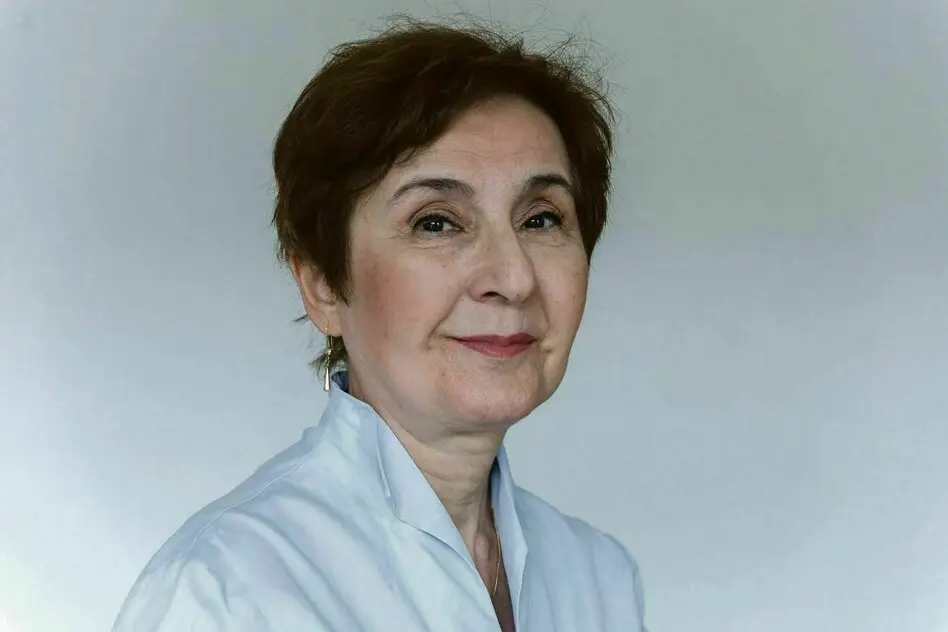
Without resorting to contemplative and nationally schmaltzy self-mystification, the poet Asiye Müjgan Güvenli, who lives in Winterthur, writes using a similar natural motif: “Weeds, steubs, rock hens are sleeping / tiredness hugs my body / too tired to get a piece of the starlight / I slowly lie down on the hard earth”.
Güvenli's poetic debut “Before the Curtain” (“Perdenin Önü”) was published in 2018 as a bilingual edition in conjunction with the Basel poet and philologist Wolfram Malte Fues in Edition Hohweg. What predominated there were boldly displayed shards of memory, in Fues's adaptation: "Wind in the leaf/ Ash residue. No way out. / Fluttering voice seeks / its echo in the silence." The current volume of poetry “before yesterday - after today” does not leave out the archaic, but the poet is joined to a more noticeable extent by the political person, which Güvenli is as a PEN member and journalist, who published the life stories of inmates in Turkish prisons under the title “Are always as guilty” (2024).
Asiye Müjgan Güvenli: "before yesterday - after today. Poems. With 12 illustrations by Brigitte Boller". Edition 8, Zurich 2026. 110 pages, 24 euros
Güvenli, who has lived in Winterthur since 1997, described her exile in Switzerland, her status as a dissident, the repression in her old homeland as well as the phrases and hypocrisies of a supposedly cosmopolitan and liberal milieu in Switzerland under the catchy title “How I (did not) integrate myself”, title addition: “mistakes of skill” in stories rich in experience.
Since her arrival in Switzerland, she has worked on socio-cultural projects and most recently in the social department of the city of Zurich. This context probably gives rise to urgencies for the studied sociologist that are passé among middle-aged poets (not to mention young talent and their text workshop leaders): “to warm myself / I look for verses / there are none, whether / poetry is dead?”
One is most pleasantly reminded of the edgy manner of younger Swiss authors such as Walter Fabian Schmid (“The Lost Places are still twitching”, 2025) or early poems by the (unfortunately also religious-sociological) performative author Jürg Halter. Both formulate their poetics in magazines and on the Internet; Güvenli writes what she does, how and why, without any fuss, in a poem that only shares the title with Hermann Hesse's textbook tearjerker "Steps": "I have to find a language like that / it speaks a text // I have to write a text like that / it has an image in it (...) I have to build a space like that / it contains a feeling // I have to feel a feeling like that / it frees me."
The 90 poems, some of them only a few lines long, indulge in heartfelt doubts about the word, almost dissolving in brooding: "Contempt/lust // under bright lantern light / I sit on the corner / without shyness and remorse / without moral order (...)". This makes "The Trial in the Castle", which is dedicated to the philanthropist Osman Kavala, who was subject to state repression, all the more weight: "Waiting without end / what comes first / death or rosebuds / wait without complaining / all alone in the castle / read Kafka again / just be there reading (…)”.
It may seem frivolous that this shocked speech is followed by “Cat and I”. But here too: If two, German Neobiedermeier and Turkish exiled poetry, say the same thing, the scope is very different: Güvenli's cat is, contrary to what is familiar from German cat calendar poetry, a symbol of ungovernability; “Cat and I” as well as other similarly constructed poems aesthetically collage Turkish history of violence; in a footnote we read: "In memory of the cellars of Cizre (2015-16). During the curfews, people were locked in cellars and killed". In the poem you can read: “the smell of the cellar / mixed with gunpowder / everything too loud / in the corner / a pair of eyes / a cat is nursing / her kittens (…) I stare into the void / she stares into the void / the void will swallow us at some point”.
Illustrations by graphic designer Brigitte Boller accompany the laconic, melancholic poems. In rich turquoise, burgundy red and putrid yellow, torn clods of earth can be seen, some of which are reminiscent of a festering wound. Asiye Müjgan Güvenli's activism with style also seeks intensity here.
At the very end, a joke rolls through the book, the titles of the last poems are: “Eye, Eyes”, “Empty Looks”, “Overlook”, “Longing”, “Invisibility” and finally: “Sea Air”, in which the attractive lines: “softly touch me / the waves / a street dog licks / my wet hand / out of thirst? / out of love?”