
Germany · taz · · 3h
Logistics company remains in German hands: Federal government bans sale of freight forwarding company to China
Deutsch (original) · Auto-translated to English
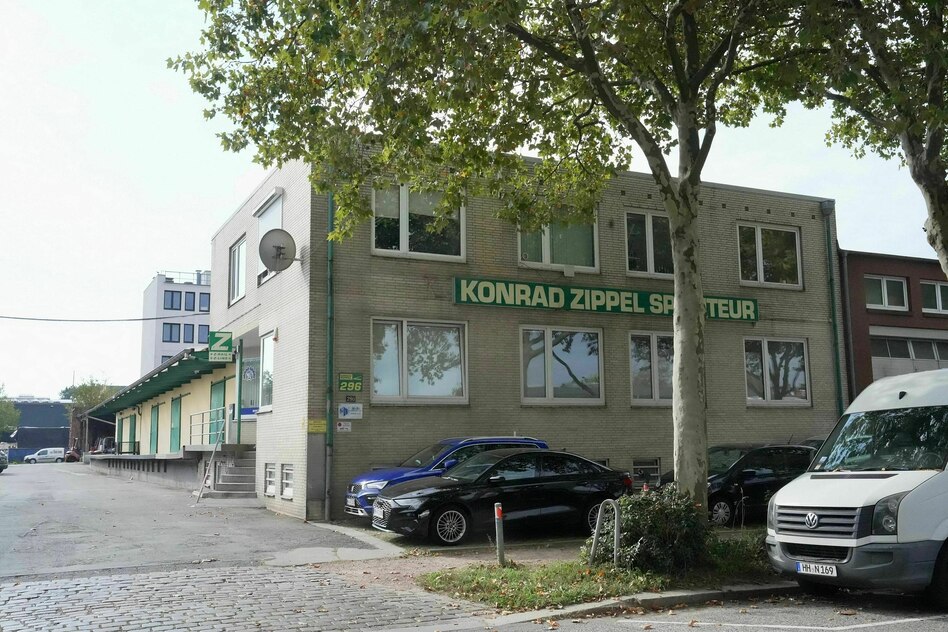
It is a relatively small shipping company with 350 employees. And yet the world's fourth largest shipping company, China's state-owned company Cosco, wanted to take over 80 percent of the Hamburg-based Zippel Group. Nothing will come of it.
The reason: Due to “significant security concerns,” the federal cabinet rejected the purchase request on Wednesday. Not only the Ministry of Economic Affairs, but also the Ministry of Foreign Affairs, Defense, Interior and Finance were against it. The Federal Office for the Protection of the Constitution and the EU Commission had already warned about the deal. The Federal Cartel Office, however, approved the deal from a competition law perspective in February.
The federal government apparently wants to prevent China from gaining access to transport to Eastern Europe that is important for the Bundeswehr and NATO in the event of a conflict. “The acquisition would have deepened dependencies and endangered the resilience of supply chains in Germany and the EU,” said a spokesman for the Ministry of Economic Affairs.
There is a risk of strategic dependencies that “could be used as a means of pressure in the event of political upheaval,” says an internal government letter from which the Handelsblatt quotes. The danger: “Elements of the European transport infrastructure influenced by China would not be available, or at least not fully available, in the event of a conflict or crisis.”
Zippel specializes in transporting containers to eastern Germany by truck and train, primarily from the ports in Hamburg and Bremerhaven. This geographical focus is apparently the reason why Germany is resisting the quasi-takeover. At the container terminals in Berlin, Schkopau and Elsterwerda, Zippel's share of throughput is between 35 and 90 percent. Despite small market shares, Zippel is an established player with decades of market knowledge, according to the government paper: “This information is very interesting for Cosco and for China.”
The case shows how much China's aggressive behavior has "changed the perspective on foreign investments," writes Patrick Gehringer, an expert on security policy at the management consultancy FTI Consulting, on Linkedin. “Competition and capital inflows are not the only deciding factor. Supply chains, data and flows of goods, strategic dependencies and the availability of critical infrastructure in the event of a crisis are increasingly becoming questions of national security themselves.”
Germany welcomes foreign investments - but at the same time there could be investments "that endanger the country's security," explained the spokesman for the Ministry of Economic Affairs. “The Federal Government can therefore examine the acquisition of a German target company by a foreign investor in individual cases on the basis of the Foreign Trade Act and the Foreign Trade Ordinance.” Last year there were 339 checks, in 8 cases “the purchase was prohibited,” explained the spokesman. Most of these involve takeover requests in the area of armaments and defense technology.
Berlin and Brussels are watching the purchasing spree of Chinese state-owned companies in Europe with suspicion. The focus is, among other things, on European ports such as those in Duisburg or Piraeus, Greece - and now increasingly on logistics companies.
Just a few days ago, SPD-led federal ministries pushed for the government to take tougher action against China. “China’s economic and trade policies are based on a web of government subsidies, administratively controlled overcapacity and economic coercion,” says one paper. Chinese companies would therefore have competitive advantages that would not be possible to achieve using purely market-based means. Germany must counter these distortions more robustly.
With a takeover, Cosco would have expanded its position along the supply chain: from sea transport to hinterland logistics. Because: In Hamburg, the shipping giant is already involved in the Tollerort container terminal of the port operator HHLA.
The takeover plans led to a dispute in the traffic light government in 2022. While the then Federal Chancellor Olaf Scholz (SPD) approved Beijing's request, the FDP and the Greens were against it. In May 2023, Berlin allowed participation, but limited the shares to less than 25 percent.
Zippel is relatively small. According to its own information, the forwarding company generated sales of around 75 million euros last year and moved a good 110,000 standard containers. Zippel managing director Axel Plaß explained in an interview in June that the audit by the authorities focused, for example, on the question of how Zippel was “positioned in terms of software” and whether it was operating with sensitive data. Finally, Plaß said: “Zippel with around 1.5 percent market share is not worth the public excitement.”
Read the full story at the source
Source: taz