
Germany · taz · 2h
Literary evening about slaughter: The desire for meat
Deutsch (original) · Auto-translated to English
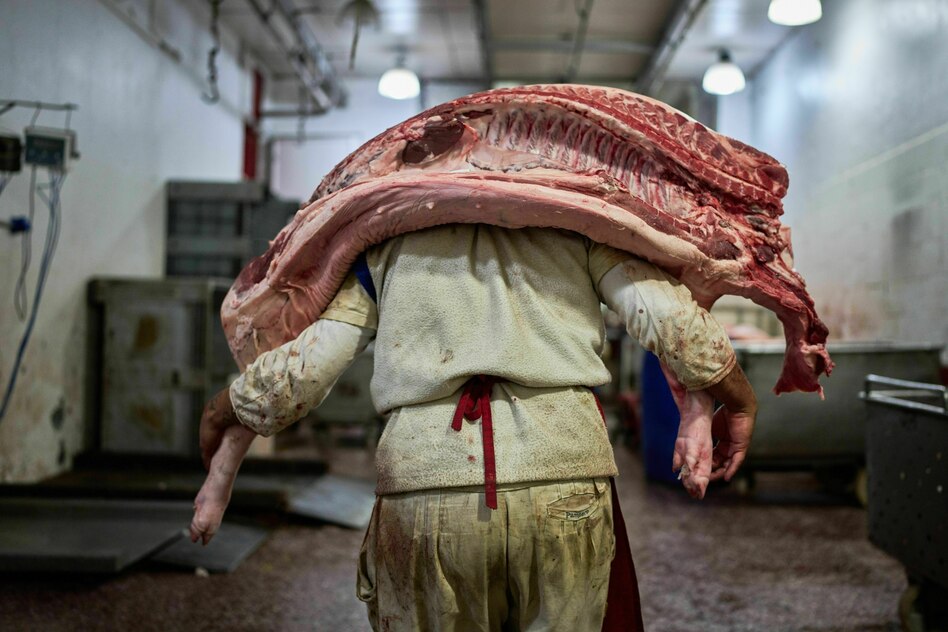
A confrontation with the production conditions of the meat industry usually leads to a loss of interest in its products. With large advertising budgets, the meat companies conjure up the image of the cozy village butcher with chubby cheeks, who is one of his best customers, because the fatal consequences of our love of meat for the environment and climate are well known.
The capitalist misery is clearly visible in the human relationship to those species that are unlucky enough to belong to the category of farm animals. This term alone manifests the victory of our species over all others in language and testifies to the maximization of profits in all areas of life and death. But if the entire absurdity of an economic system comes to a head in the act of slaughter, then the figure of the butcher who turns the animal into meat automatically has great literary potential.
The evening “Battles: New European Voices” at the Berlin International Literature Festival explored this potential. Three authors and translators spoke about their debuts, all of which deal with meat and its production in the broadest sense and who understand the figure of the butcher in very different ways, as the act of slaughter is surrounded by a multitude of metaphors and meanings.
In “Living Things,” the Spanish writer Munir Hachemi describes his experiences as a seasonal worker in a French poultry factory in diary style, combining precise depictions of work processes with poetological questions about the possibility of literature. How can the horror of those exploited there and of the animals become, linguistically, for a moment a universal horror? However: He decidedly did not want to write an activist book with proselytizing aims, says Hachemi.
It's not just because of the French setting that one inevitably thinks of the impressive long poem "Am Running Band" by Joseph Ponthus or Heike Geißler's Amazon diary "Seasonal Work", which in their own way try to wrest meaning from the degrading activity.
Meanwhile, Finnish author Mariia Niskavaara invokes the desire for meat. “Esther, the Butcher” is about a woman who finds a key to herself and her body through the sensual experience of warm flesh. Cutting cartilage and tendons gives her sensual comfort in a digitalized and aseptic world. Contrary to the well-known narrative that meat consumption will ultimately be our downfall, slaughter here becomes a feminist awakening moment.
The protagonist Esther elicits the most laughs of the evening from the audience with her deadpan delivery. The author herself points out that this probably simply has to do with the short sentence structure of the Finnish language, but in fact Esther scores points above all with her rudeness.
The entertaining evening is concluded by the Dutchman Manik Sarkar, who has so far worked primarily as a translator and with “Ochsenkopf” tells a story that comes across as an artist's novel because the protagonist can fillet animals with great skill, but is at odds with his human counterparts. Sarkar was inspired to create the character of the otherworldly butcher Rensing by the common fate of invisibility that the butcher's profession shares with that of the translator, he says.
Like all three debutants, Sarkar also sees the butcher as a universal literary image in which many contemporary lines of meaning converge. Whether one is on the trail of a new literary trend here remains to be seen, but if this evening could not always be about innocent carnal desire due to capitalist conditions, the desire for the text was at least often invoked.
Read the full story at the source →
Source: taz