
Germany · taz · · 2h
Left Party in Mecklenburg-Western Pomerania: “None of us are in favor of having arguments”
Deutsch (original) · Auto-translated to English
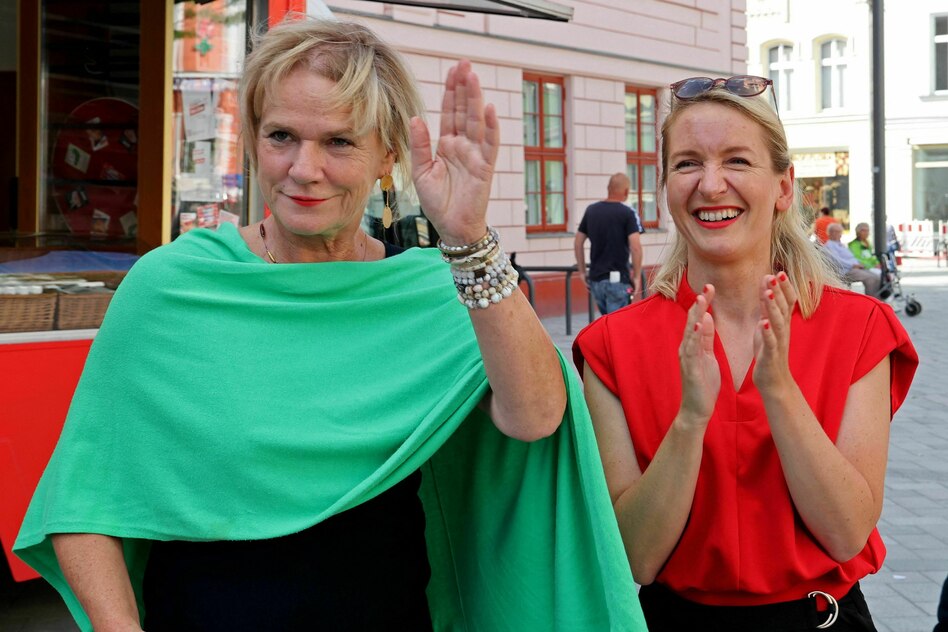
Simone Oldenburg, the Left's top candidate for the state elections in Mecklenburg-Western Pomerania, prefers not to set a specific election goal. Just this much: “I would be very happy about a double-digit number.” In the most recent polls, the party is at 9 to 11 percent. “One or two little points” may be added this Sunday. Then that's good.
Five years ago the party got 9.9 percent, its historically worst result in Mecklenburg-Western Pomerania. Nevertheless, she has since ruled as a small partner alongside Prime Minister Manuela Schwesig's SPD. Oldenburg herself is the state's education minister. The Left also appoints Jacqueline Bernhardt as Justice Minister.
Critics – including those on the left – complain that the party has hardly managed to set its own course in the past five years. A regional newspaper therefore vilified her as Schwesig's “no-go-lucky dachshund”. That means: Boss Schwesig sets the tone, the left follows dutifully.
“That’s nonsense,” says Oldenburg to the taz. “We were and are equal in the coalition.” And without the left, many social successes would not have happened. For example in the education sector, where 1,500 additional teaching specialists have been hired at schools. Or Women's Day on March 8th, which is now a public holiday. Or the senior citizen and trainee ticket: “These are all elements with a particularly strong left handwriting.”
Like almost all leading East German leftists, Simone Oldenburg is a real politician through and through. In Mecklenburg-Western Pomerania, not even political opponents question this. In the taz interview, CDU top candidate Daniel Peters attacked the left as much as he could. The party seeks “salvation in radicalism,” which is why he sees it “as a suspected case for the Office for the Protection of the Constitution.” Only: “The top candidate Simone Oldenburg is certainly a pragmatist.”
The 57-year-old teacher from near Wismar doesn't say anything about the coalition with the SPD. “We governed with a very calm and constructive hand.” This also means that compromises were reached internally. “But we’ll sort it out smoothly.” Without argument. Oldenburg says: "None of us are in favor of having arguments. Arguments are paralyzing. Especially in a government."
Hennis Herbst, head of the Left Party for two years, reports on government meetings “in which we are fighting hard with each other”. With Schwesig's SPD, "not everything that we as the left want to implement is a given here." However, this usually doesn't leave the room, Herbst told taz. During door-to-door conversations, he is told that this is also well received by voters: “Finally, a government that doesn’t insist on talking all the time.”
Conflicts that take place publicly are actually rare. This is how the left got excited in 2024 after Schwesig visited Ukraine. The Prime Minister then declared that the country invaded by Russia had to win the war. Parts of the coalition partner were then upset because: “A ‘victory’ inevitably means disgrace for the defeated.”
In general, war and peace. Unlike the regional associations in West Germany and in Berlin, which is also campaigning for the election, whose foreign policy focuses primarily on Gaza and “genocide”, this topic plays almost no role for the left in Mecklenburg-Western Pomerania. Instead, at party conferences, a small but loud group rails against “Russophobia”, the “swamp of bourgeois bellicism” or “the little poisonous dwarves of the Baltic states”, as before.
The allegations are also aimed directly at Simone Oldenburg. She is still resented today for having, as part of the red-red state government, voted in the Federal Council in March 2025 to weaken the debt brake, which made unlimited defense loans possible.
At that time, the Berlin Left Youth called for Oldenburg to be kicked out of the party because the approval had damaged the “fight for socialism”. The fact that the easing of the restrictive debt regulations not only affected the special funds for the Bundeswehr, but also gave the states a little more financial freedom - it doesn't matter.
A party exclusion procedure that was applied for against Oldenburg and lasted over a year has now been taken off the table. During this time, however, she had some disagreements with her party, said the top candidate. “The tone, the manner, the way it was handled: it totally hurt me.” Many critics “didn’t want to listen at all, but were completely finished with their judgment”.
Today, says Simone Oldenburg, she would make a different decision than she did back then in the Federal Council: "It wasn't right that we voted for it. That was a poisoned gift." There was too little time for consideration. And ultimately the votes of Mecklenburg-Western Pomerania were not important at all. Or as Left leader Hennis Herbst says: “The money would be there anyway.”
It is undeniable that the structurally weak federal state can put the money to good use. The reform of the debt brake will allow loans amounting to 1.92 billion euros to be taken out in the coming years. Schwesig's SPD also highlights this in its program, thereby underpinning its promise of a “strengthened, active investment policy”.
The left also wants to invest everywhere. Of course, the fact that the annual millions for this can be spent on the Federal Council's decision at the time is not mentioned in its program. The money is there. So when it comes to finances, the party's focus is on the big picture: the complete abolition of the debt brake. “That has always been our position,” says state boss Herbst.
Read the full story at the source
Source: taz