
Germany taz
Left alliance in Mecklenburg-Western Pomerania: Not a model, but an opportunity
The coalition negotiations for a red-red-green state government were quietly concluded in Schwerin. It's not easy to imitate. more...
Deutsch (original) ·Auto-translated to English
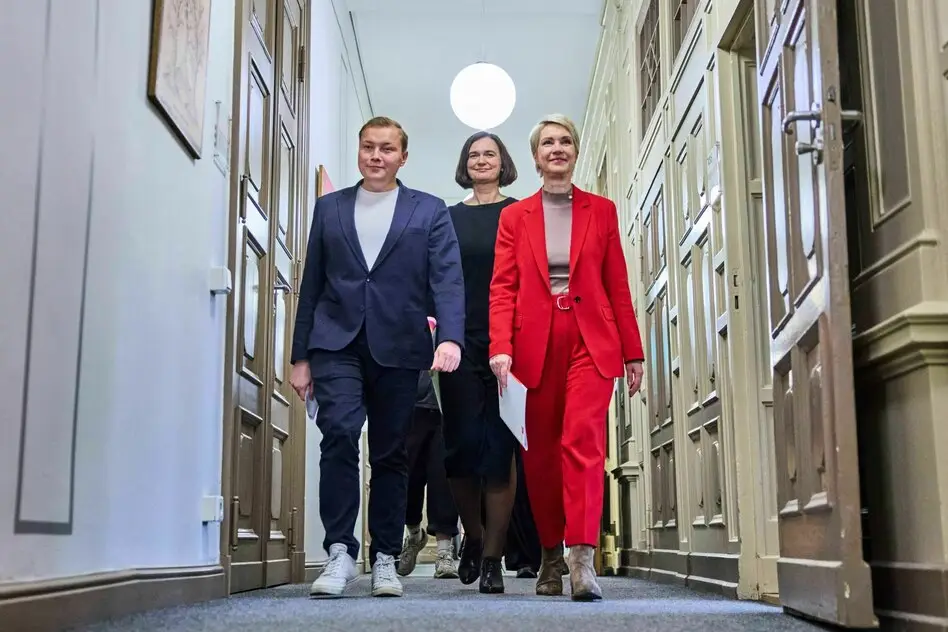
Imagine it's red-red-green - and nobody goes crazy. It's hard to imagine given the sometimes crazy debate about a possible government in Berlin, but that's exactly what Manuela Schwesig has now achieved in Mecklenburg-Western Pomerania. Is the northeast an exception – or a role model for the federal government?
First of all, the differences are noticeable. In the Schwerin state parliament there is no alternative for red-red-green, the parties are condemned to govern. In addition, the balance of power is clear. The SPD is almost three times larger than the Left and Greens combined. To paraphrase Gerhard Schröder: It is clear who is the cook and who is the waiter.
This is reflected in the coalition agreement. It has a pleasantly humane tone and contains small advances: train travel should be cheaper for young people, deportations from schools should be “avoided”. Other green and left-wing demands, such as a more ambitious goal for climate neutrality, are missing. As is the case everywhere: savings must be made.
The taz is an independent, left-wing and opinionated daily newspaper. We have been arguing in our comments, essays and debate texts since the taz was founded in 1979. We often cannot and do not want to agree on an opinion. That's why you'll find some completely opposing positions here - all part of the very broad left-wing spectrum of opinions.
Anyone who is now making Schwerin a beacon may be doing so out of political nostalgia: Oh, if the SPD were still a people's party, if the Left and the Greens just joined in without complaining, then an alliance wouldn't be a problem. But it probably won't be that easy anywhere else. It remains to be seen which of the three parties will be strongest after the next federal election. If something is to happen with a left-wing alliance, three chefs would have to agree.
The obstacles are also greater in terms of content. No compromise is currently conceivable when it comes to supporting Ukraine. However, one could probably agree on redistribution. The zeitgeist is not just right-wing; the parties have come closer on this issue.
Otherwise, the parties are likely to draw different conclusions: Schwerin is hardly a suitable model for the left. It cannot be sold anywhere else as cheaply as it is there. She owes her election victory in Berlin to more radical demands. For the SPD and the Greens, on the other hand, every red-green-red alliance is an opportunity: they can prove that they are not clinging to the Union for better or for worse. In current surveys, a left-wing alliance is the only alternative. Even if the political differences are ultimately too great, the SPD and the Greens should work to keep this possibility open. Otherwise they will lose voters who do not want the Union to “business as usual”.
Because the new coalition in Schwerin also shows this: If the so-called center is shrinking, a left-wing alliance can mean stability. For the Union, see Saxony-Anhalt, this has not yet been decided.