
Germany · taz · 8h
State election in Saxony-Anhalt: Voting tactically works – but is it enough?
Deutsch (original) · Auto-translated to English
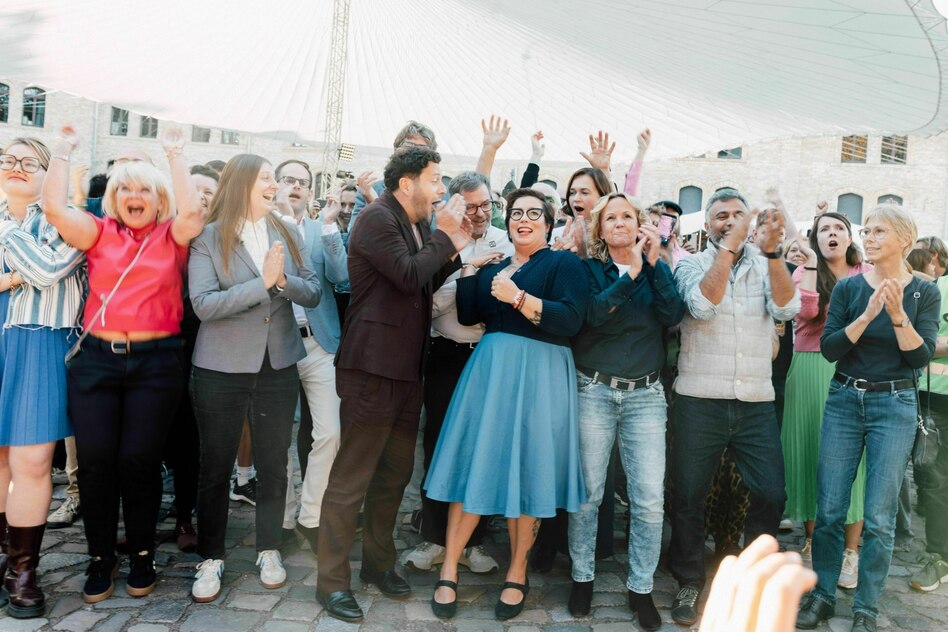
On election night, the SPD was the first to celebrate, and a little later the Greens. Before the election, both parties were close to the 5 percent threshold in polls. Now they were able to improve their results compared to the 2021 state election, both getting around 9 percent of the votes. But the overall result tells a different story. In recent weeks, several initiatives have called for tactical voting. If the Greens and the SPD were to get into parliament, the story goes, the AfD would not get an absolute majority. But it's not that simple - that's also evident at the election parties.
At the Green Party on Sunday at 6 p.m., the full range of human facial expressions can be observed within a few seconds. In the front row in front of the TV screen, a crowd has gathered around top candidate Susan Sziborra-Seidlitz and federal party leader Felix Banaszak. Open mouths and the first wrinkles of concern when the ARD broadcasts the CDU's bitter losses. Furrows of horror at the value of the AfD. Relieved faces celebrating their own result. Then wrinkles again as the math begins: What does that mean for the seating conditions?
When the first television interview with AfD top candidate Ulrich Siegmund begins a few minutes later, the technician turns down the sound. Banaszak enters the stage. Second cheer of the evening when he spoke of “probably the best election result of all time” for the Greens in Saxony-Anhalt. Then back to the wrinkles as the party leader added: "There will be at least two hearts beating in your chest. We also have to give space to the heart that is full of fear."
These are ambivalent moments for the Greens: here the incredible success of the AfD and the majority, which is still unclear, at least at this point. Their own result of around 9 percent, which hardly anyone would have thought possible. Until recently, they had feared that they would be thrown out of the third East German state parliament in a row - to Thuringia and Brandenburg in 2024.
On the other hand: When and where should it have worked if not here and now? Even though the Greens traditionally have little support in Saxony-Anhalt, the general conditions suited them this year. The great popularity of the AfD in particular has helped the Greens. The risk that, similar to 2024, parts of their electorate would migrate to the CDU for tactical reasons in order to prevent the right-wing extremists from becoming the strongest force was manageable: the Union was already too far behind.
Conversely, the Greens were able to warn that it would be enough for the AfD to gain an absolute majority in the state parliament if they themselves failed at the five percent hurdle. The tactical argument was on their side - and the CDU's unexpectedly high losses can actually be explained by the fact that this time it was the Greens in particular who sucked away votes from them.
Top candidate Susan Sziborra-Seidlitz doesn't want her result to be explained by this alone. “We went into this election campaign with an offer that was clearly substantive,” she said in her address to the party. With the “hot summer behind us” we were able to convince people that “a voice for climate protection is needed” in the state parliament.
In fact, it's not just the external factors that have been right in the last few weeks. Sziborra-Seidlitz herself ran a flawless election campaign and, as a trained nurse, was able to sell herself as down-to-earth, contrary to common Green Party clichés. The rest of the party has also invested all sorts of things. There is appreciative talk among the Greens that the current federal leadership is doing more for the regional associations in the East than almost anyone before them. The party base supports this: in recent weeks, members from other state associations have traveled to Saxony-Anhalt in large numbers as campaign workers.
And of course the members of the regional association themselves also got together for the election campaign. Outside Magdeburg and Halle, many of them are active in small district associations. There they have experienced one electoral defeat after another in recent years. This Sunday, the Greens not only made gains in the big cities, but also across the country. Those who came from the country to the state capital for the election party can see the satisfaction: Fortunately, it wasn't completely in vain. Despite everything that is now threatening the strong AfD.
A few kilometers away, at the Millennium Tower in Magdeburg, the Social Democrats cheer in three waves at the first forecast at 6 p.m. For the first time, when the red SPD bar climbed to 9 percent. For the second time, the Greens also ended up at 9 percent. And for the third time when the BSW bar remains below 5 percent.
Then Juliane Kleemann, SPD leader in Saxony-Anhalt, climbs onto the stage in front of the comrades. After praising the election campaign, she said: “When we look at the election results, we know that there are difficult weeks and months ahead of us.” Whether a democratic majority will come together remains to be seen.
In any case: There is an alert civil society in Saxony-Anhalt, praises Kleemann. She doesn't mention tactical voting. But she speaks of new “methodologies” that are necessary to bring people in Saxony-Anhalt together. “We can all become more emotional, never inhumane, never wrong in the facts.”
Two hours later, top candidate Armin Willigmann is leaning on a bar table with both arms at the SPD party. The buffet was already well plundered. Willingmann jumped from interview to stage to interview. According to current projections, his party is the third strongest force in Saxony-Anhalt.
“Against the background of the almost obsessive interest from outside in whether the SPD fails here at the five percent hurdle, this result is of course a very nice success,” says Willingmann. Has he already thanked tactical voting? He shakes his head. “Choosing tactically was a factor, but that shouldn’t be overestimated.” The SPD election campaign was extremely committed. After all, the regional association only has 3,000 members. In the future, it is important to put your own strengths in the foreground. The successes that the SPD has achieved in government for Saxony-Anhalt require “an internal image campaign”.
But what tomorrow will bring? Wait and see, says the SPD top candidate. “I expect the result to change tonight.” But no matter what happens, the SPD is there.
Read the full story at the source →
Source: taz