
Germany · taz · · 3h
State election in Mecklenburg-Western Pomerania: From I to We
Deutsch (original) · Auto-translated to English
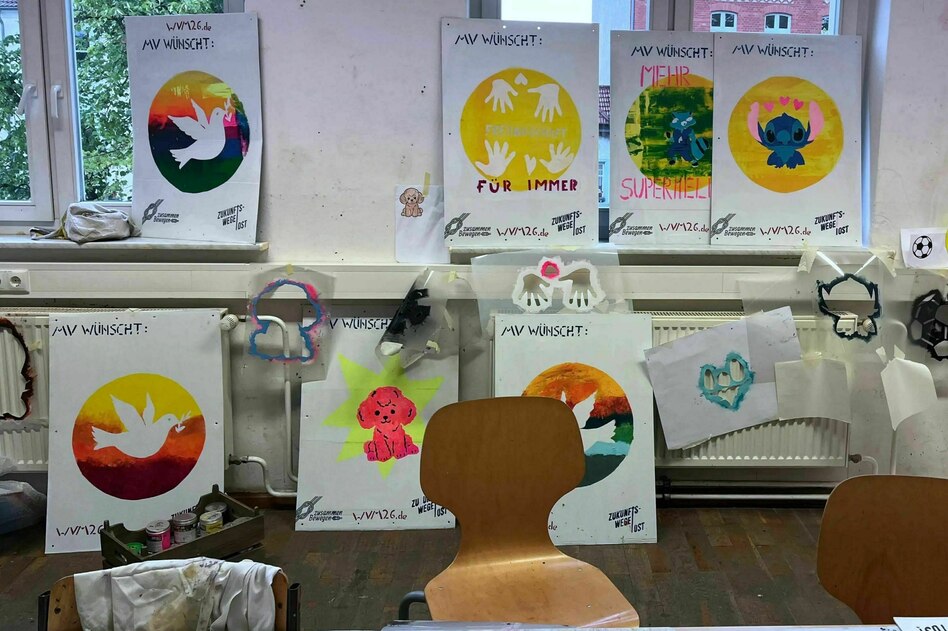
Cables protrude from the wooden box, which is over two meters high. A pipe is attached to it, a table, a few hooks. Antje Kesten and Anett Simon, together with other activists from the region, have built a wish visualization machine and are touring with it from supermarket parking lot to weekly market, from festival to flea market to bus stop. Across Mecklenburg-Western Pomerania. It is your contribution to the state elections on September 20th.
The machine actually works quite simply: you put in a wish, the machine “illuminates” it together with the wisher and at the end the revised wish is printed out on paper so that the person can take it home. In addition, Kesten and Simon invite you to print your wishes together on posters at workshops and hang them up at the place where you want your wishes.
Antje Kesten is a qualified landscape architect. With her husband she runs the Krebsow barn with a small village shop, a café and open workshops. There are exhibitions, dance and cinema. The barn also includes the Atelier zwo.7, which Kesten runs with Anett Simon. Children and adults can try out painting, printing, drawing and bookbinding in the studio's ceramics workshop.
In the state elections in Saxony-Anhalt and Mecklenburg-Western Pomerania, a right-wing extremist party could come into government for the first time since 1945. But there is also a lively civil society on site that has not yet given up losing the elections. In the “Really Good People” series we will be introducing them throughout the summer.
Kesten and Simon not only want to promote creativity, but also social skills and cooperation. In order to reach people in other places in Mecklenburg-Western Pomerania who don't come to Krebsow, they came up with the wish visualization machine. “Especially these days we want to bring people together with humor but also seriousness, to bring them into contact with themselves and others,” Kesten tells taz on the phone. The first step is “judgment-free listening”.
Children, says Kesten, often want something specific, like a cat or a soccer ball. Using the machine – and in dialogue with those wishing – Kesten and Simon then work out what is behind it. A cat? Maybe the desire for closeness, affection, security. Football? Maybe shared enthusiasm. By letting people tell stories, the creators support them in exploring themselves.
“Completely different people – that’s the highlight – have very similar wishes,” says Kesten. For example, security. Or health. Or peace. “They often start with themselves and then end up on the social level.”
Kesten and Simon don't want to offer quick solutions, but rather start from the beginning: create places where people come together and think about what they actually want. “The three Cs: consumption, church, pub no longer exist in most villages.” In these places, different people used to automatically come together and talk. But gradually more and more of these rooms were closed. “That’s why we don’t talk to each other anymore,” says Kesten. And that alienates.
The desire visualization machine should break with this. In a humorous way. It has four departments: wish acceptance, wish lighting, visualization support and wish output. “You can’t really take it seriously,” says Kesten. Humor as a bridge – and then something serious comes out.
Even if Kesten and Simon don't offer any solutions: Together with the local people, they think about how their wishes can perhaps be realized. An example: “The need for security can be created through interaction,” says Kesten. “In a village you have to stick together.” If they could help strengthen this idea again, that would be a good result of their work.
Read the full story at the source
Source: taz