
Germany taz
Art show about friendship in Mainz: Where the spark ignites
The Mainzer Kunsthalle is showing a group exhibition about “friendship”. Due to the uncertain future of the house, the topic is doubly relevant. more...
Deutsch (original) ·Auto-translated to English
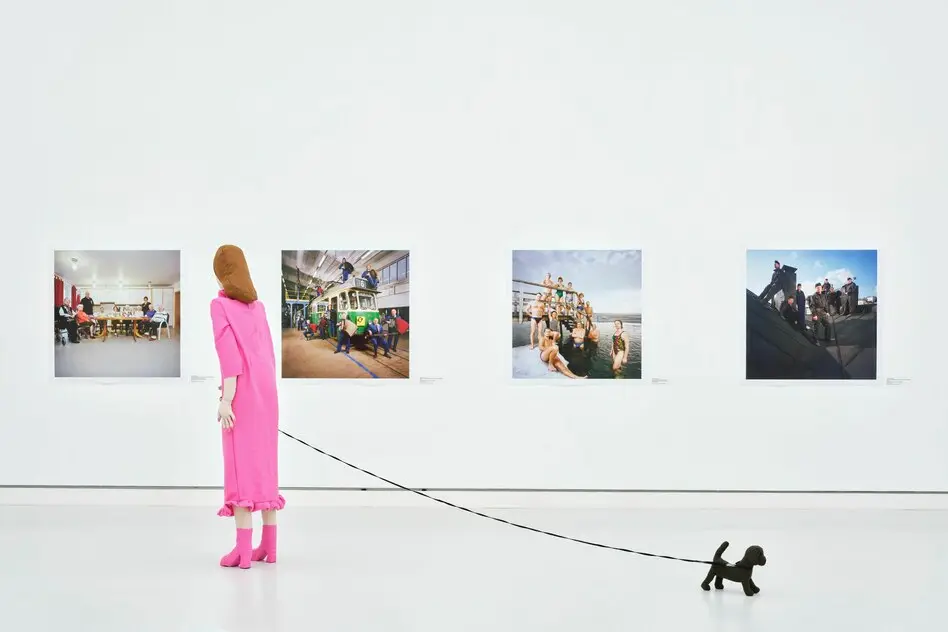
At first glance, the ice swimmers from Helsinki in Tuomo Manninen's photograph give a rigid image. Tense, awkward – no wonder, after all, some of them are standing in ice-cold water. Some of them grin shyly and a little proudly into the camera, others have their arms crossed, one is dangling from the railing of a wooden walkway.
If you take a closer look, the eleven people in this photograph are very different: some younger, some older. Some of them are unusually tanned for the gray, cold weather, some are pale. At first glance, however, they form a group. They look very similar in their colorful swimsuits and Speedo swimming trunks, in their posture, their expression, and the way they look into the camera together.
The Finnish photographer has been photographing groups in his “We” series for 30 years. Chimney sweeps from his hometown Helsinki, posing bodybuilders from Kathmandu or a Nordic walking group from Recklinghausen. His groups radiate solidarity, but the question quickly arises as to whether the individual group members also feel it. At what point does similarity become community? And when does community become friendship?
“Friendship”. Kunsthalle Mainz, until January 10, 2027
Manninen's photographs form the start of an exhibition in the Mainzer Kunsthalle about “friendship”. Nine international contemporary artists approach the topic; the show was put together by Marlène Harles, curator of the house. Harles conveys friendship as a complex, individual but also universal relationship, which is sometimes seen as an antidote to a society in which people are increasingly isolating themselves from one another.
In the show, Tuomo Manninen is not the only one who asks which spaces allow friendship to develop. Roxane Mbanga creates such places for herself with “Le Salon”: She installed a meeting room in the art gallery. Colorful, inviting, with different textiles, cushions, games and books. A space that is safe and accessible to everyone. And this brings up the thought of who actually has access to such spaces and such friendships.
This question is also impressively asked by the photo.circle collective, which shows a selection from its “Nepal Picture Library” archive. In the ten “Photographs of Friendship” on display, women from Nepal’s Kathmandu Valley present themselves in similar clothing and jewelry or with the same expression. They question the image of the submissive, socially isolated Nepalese woman tied to tradition and the household and instead show her as one who celebrates and maintains her friendships, in mutual solidarity.
The exhibition approaches the topic with different questions and many forms of representation. We hear friendship in a laboriously distorted zoom call of Hanne Lippard's sound installation, where the artist presents ambivalent, interpersonal situations in which quiet compromises are negotiated and injuries are quietly forgiven. We see them in Eva Koťátková's hanging children's jackets, decorated with mouths, spines and tentacles. Or with Asta Gröting's electrical cables, between which sparks fly not only in romantic relationships.
The desire for community and solidarity is almost symbolic of a house whose future existence depends on the question of who is prepared to take responsibility for it. Since 2008, the Kunsthalle Mainz at the old customs port in a former machine house that belongs to the municipal utilities and was converted into a cultural building by the office of architect Günter Zamp Kelp has been an exhibition space for aspiring and international artists. It is an important institution for contemporary art in Rhineland-Palatinate.
However, the Mainzer Stadtwerke, which contributed a large amount to the financing of the Kunsthalle Mainz Foundation, canceled their involvement a few months ago. The art gallery previously functioned as a lighthouse project for the transformation of the old port area and has made a significant contribution to the upgrading of the district. Now that the urban development is almost complete, the house has to find alternatives to its current financing. The art gallery has now been able to operate until the end of July 2027. However, there is no long-term plan. Therefore, questions from the exhibition also resonate: What connects us? And what makes the connection exist?