
Germany taz
Kiel Culture Weeks about Roma and Sinti: “We still have a lot to do to raise awareness”
This year, the focus of the Kiel Culture Week is on Roma and Sinti. There is still a lot of ignorance, says organizer Natalie Demmer. more...
Deutsch (original) ·Auto-translated to English
taz: Natalie Demmer, the overarching motto of the Kiel Culture Week is “The Other View”. Who is looking at whom?
Natalie Demmer: We want to take a look at what is already happening in our everyday lives, namely migration and immigration. In Kiel, as in other cities, people from many cultures live, but we often don't know much about them and don't dare to ask about them. The cultural weeks offer a chance to meet and get to know each other.
taz: How did the culture weeks come about, who is behind them?
Demmer: They were created in 2014 and 2015, when a lot of refugees came. At that time, the Central Education and Advice Center for Migrants (ZBBS) created a format called “Set the Stage Clear for Refugees,” which was very successful. So ZBBS and the Heinrich Böll Foundation Schleswig-Holstein joined forces to develop a follow-up program and also set up funding. The cultural weeks are supported by the city of Kiel and the Bingo Environmental Lottery, and the State Commissioner for Civic Education and the Brunswiker Foundation also regularly take part. The concept is always the same: every year we look at a country or a region, such as Afghanistan, Syria or Eritrea.
Born in 1995, has been leading the planning of the Kiel Cultural Weeks since 2022 and has been executive director of the Heinrich Böll Foundation Schleswig-Holstein since 2025.
taz: This year it's about Sinti and Roma. The Sinti did not immigrate, but have lived in Schleswig-Holstein for a good 800 years; the constitution recognizes them as a minority. Why did you choose this demographic?
Demmer: Because even though they are our neighbors, we still don't know them well enough and because they experience a lot of stigmatization. Members of the minority can tell many stories. In addition to the Sinti group, many Roma are currently immigrating. In Kiel-Wik in 2024 there was a big dispute over Roma-read refugees from Ukraine. We still have a lot of work to do to raise awareness.
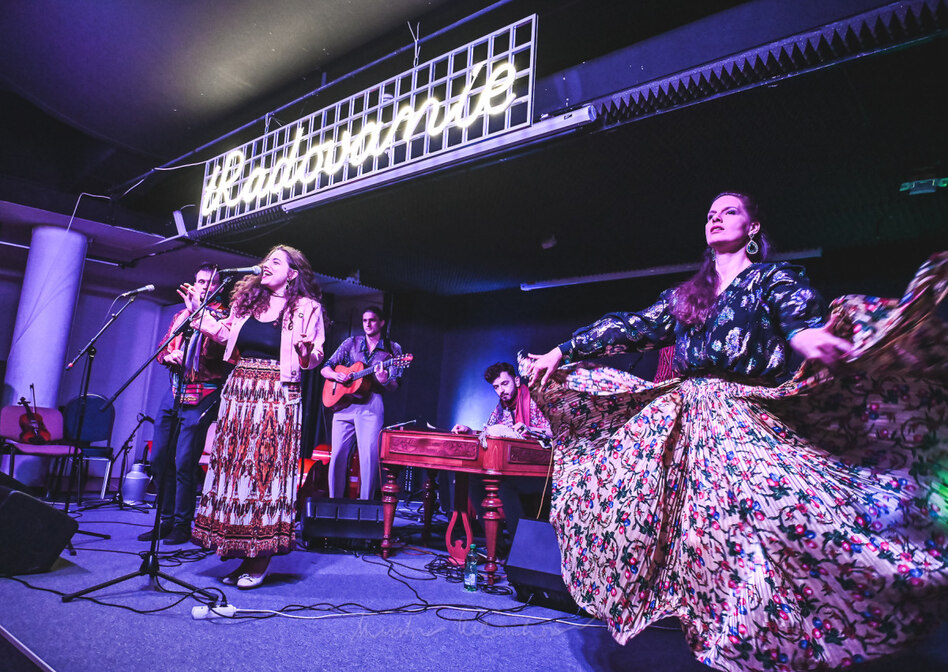
taz: The week starts on October 30th with a reading and concert. Django Galore presents “the unmistakable sound of Gypsy Swing,” says the program. Several dance workshops will take place over the following four weeks. Music and dance – isn’t that a deep dive into the Sinti and Roma clichés?
Demmer: We as organizers do not determine the content, but the Sinti and Roma themselves. At the beginning of the year we invited all actors to plan the program. Incidentally, Sinti and Roma are not a homogeneous group; there are many cultures and communities, represented by several associations. Kiel's cultural institutions, such as the theater and the Literaturhaus, always take part in the planning. Ideas developed from this round. The program is broad.
From October 30th until 28.11. at several locations in Kiel. Kick-off: Reading and concert “Romanes, the voice of a culture”, Friday, October 30th, 6:30 p.m., Junges Theater im Werftpark, Ostring 187 A, Kiel. Complete program: https://kulturwochen-kiel.de/
Demmer: There are events about history, racism against Sinti and Roma, and the experience of being different. And as far as clichés go – it depends on how you deal with them. There were very popular cooking classes during the Syrian and Kurdish cultural weeks, although it is also a cliché to reduce women from these cultures to the kitchen. Music and dance are part of the culture of the Sinti and Roma. Of all things, I wouldn't have associated flamenco - there will also be a workshop on this - with Sinti and Roma.
taz: Who are the cultural weeks aimed at, who should come?
Demmer: That varies from event to event. Dance enthusiasts come to flamenco. When children's books are presented, children and parents are sure to be there. Many come because they have seen posters around the city and want to go to a concert. There are also people who have known the cultural weeks for a long time and take part regularly. These also include the members of the communities that used to be the focus of the cultural weeks. What makes the cultural weeks so special is that the whole of Kiel joins in the celebrations.