
Germany · taz · · 3h
Crisis at Volkswagen: New labor disputes are imminent
Deutsch (original) · Auto-translated to English
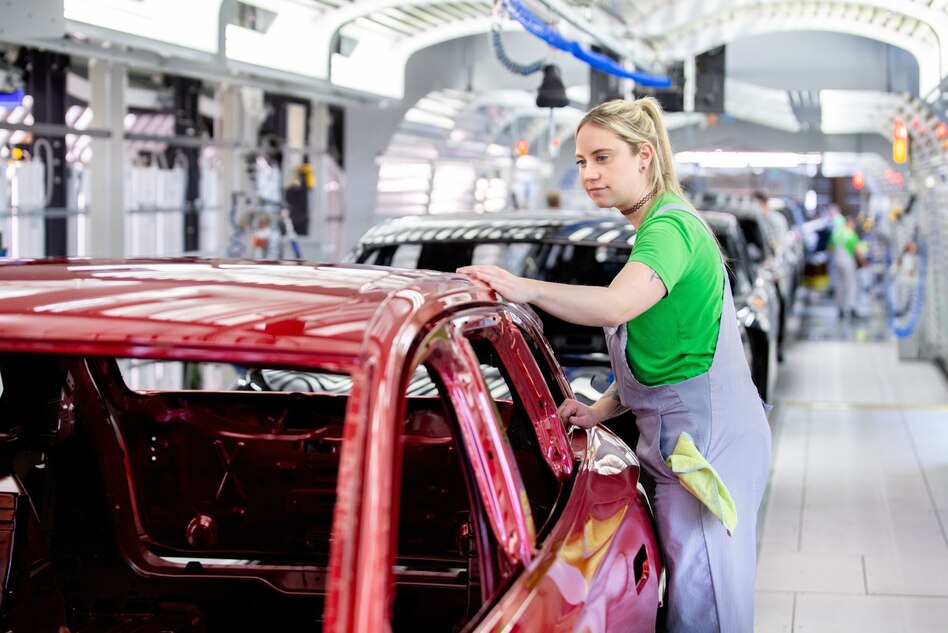
There is no calm at Volkswagen. It was only at the beginning of September that the Supervisory Board agreed on a “Future Plan 2030”, which envisages the reduction of 50,000 jobs worldwide and puts production in four German plants on hold. Now the around 130,000 VW employees in this country received new bad news last Wednesday: the board of directors is terminating 10 of 13 company collective agreements, including the wage and general collective agreement, which regulates working hours and vacation days. New rules will apply from January 2027.
Volkswagen faces difficult collective bargaining and labor disputes. But the group is not the only one in which the operating blessing is hanging awry. Management at Mercedes and BMW also wants to save costs at the expense of the employees. Above all, however, collective bargaining in the metal and electrical industries begins on October 7th. Warning strikes are possible from November 1st.
3.7 million people work in the metal and electrical industry nationwide. It is the most important industrial sector. What their employer and employee representatives negotiate has an impact on the entire economy. “We are going into the negotiations with combative realism,” said IG Metall boss Christiane Benner when the union presented its demands for the negotiations. She wants to get 5 percent more money for the employees. But part of “combative realism” is that things don’t go smoothly everywhere in the industry.
This text first appeared in wochentaz, our weekly newspaper from the left!
Every week, wochentaz is about the world as it is – and as it could be. A left-wing weekly newspaper with a voice, attitude and the special taz view of the world. New every Saturday at the kiosk and of course by subscription.
Before the collective bargaining round, IG Metall surveyed 267,000 employees in 3,200 companies. Around half of them perceive the economic situation in the company as “good” or “very good”, a third as “going okay” and a fifth as “bad” or “very bad”. While things are going well in armaments or shipbuilding, employees in the automotive industry are particularly feeling the pinch.
VW, BMW and Mercedes now realize that they have relied on combustion engines for too long. They now also offer electric models that run well. However, competition from Chinese car manufacturers and the Iran war are finally making new combustion engines slow sellers.
In September the inflation rate rose to 3.3 percent. It is driven by increased energy prices. Because there is no end to the Iran war in sight, oil prices are high and fuel prices at the pumps are at record levels. The result: electric vehicles are becoming increasingly cheaper compared to combustion engines.
Employees in the electrical and metal industries are also feeling the effects of rising prices. So many of them are worried about the increased cost of living and their jobs at the same time.
Employers point to the ongoing crisis to exert pressure. “The costs are too high,” says the employers’ association Gesamtmetall. Energy, bureaucracy, taxes and duties as well as the labor factor made Germany too expensive as a location to be able to keep up with global competition.
Before the upcoming collective bargaining talks, there were threats to extend working hours. Although employers have not yet terminated the general collective agreement, important employers have brought this into play. Initially, Mercedes management demanded an increase in weekly working hours from 35 to 40 hours with the same pay. Later, the chainsaw manufacturer Stihl sounded the same horn.
The fact that this demand was made by two large employers from Baden-Württemberg makes it particularly piquant. The state is an important location for the metal and electrical industries. That is why it has often become a so-called pilot district in industry collective bargaining. What unions and employers negotiated there was often adopted in other districts.
At Volkswagen, the collective bargaining conflicts are only likely to begin once the industry has negotiated: There could be the second major industrial dispute within two years. It was not until 2024 that management terminated numerous company collective agreements. At that time, the workforce made numerous concessions in order to guarantee employment until 2030. IG Metall puts it at around 1.5 billion euros annually.
Read the full story at the source
Source: taz