
World · taz · · 1h
War in Yemen: counteroffensive at dawn
Deutsch (original) · Auto-translated to English
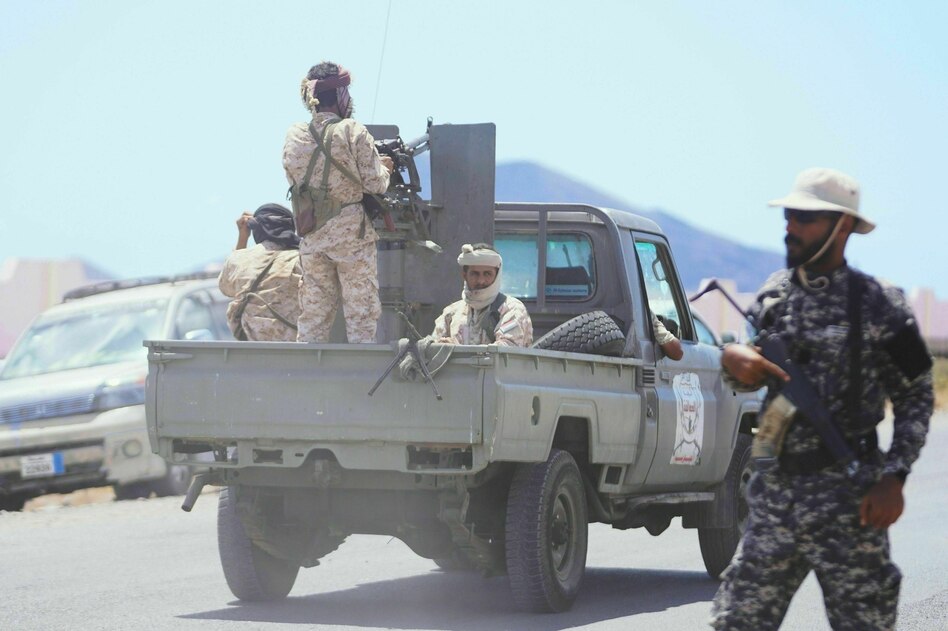
The young people go to the front with their own weapons to defend Taiz. Last week, the Houthi rebels in Yemen launched a major attack on the city of over a million people in the center of the country. Around 30,000 Houthi fighters are operating on 50 fronts, local sources say.
Almost three million people live in Taiz and the surrounding area. The Houthis have been besieging the city since 2015 and have never been able to invade. On Thursday, August 1st, they launched their new major attack on the city. On Sunday they even cut off the main road from Taiz to Yemen's main port city of Aden. Infiltrated fighters had previously blown them up.
Meanwhile, according to local reports, troops from Yemen's internationally recognized government have fought to clear the road again, but the fighting is said to be continuing.
Rashad al-Alimi, chairman of the Yemeni Presidential Council, announced the start of the counteroffensive around Taiz on Monday, a day after announcing a major offensive to retake Sanaa. “We went from preparation to action,” said al-Alimi on Sunday evening.
Since the Houthi rebels seized the Yemeni capital Sanaa in 2014, the country has been divided between the Iranian-backed Houthi government in Sanaa and the Saudi-backed internationally recognized government in the port city of Aden. The front lines have been largely stable since a UN-brokered ceasefire in 2022.
But in September, the Houthis launched their largest offensive since that ceasefire, taking the city of Mokha and then the entire Red Sea coast and offshore islands.
The Houthis thus controlled Yemen's coast on the Bab al-Mandab Strait, the most important sea trade route between Europe and Asia. They had already announced a naval blockade against Saudi ships at the end of July as a “response to the Saudi blockade” against Yemen’s Houthi territory.
Houthi missiles and drones also hit several targets in Saudi Arabia in response to Saudi airstrikes in Yemen. Military analysts tell the taz that it is also about preventing Saudi Arabia from directly supporting Yemeni government troops and consolidating control over the Bab al-Mandab Strait.
The government's counteroffensive since Monday started at dawn. According to the spokesman for the pro-government coalition, Major General Turki al-Maliki, 100 aircraft from the Saudi Air Force took part. According to the government, government forces recaptured the Dhubab district on the Bab al-Mandab Strait and advanced to around 20 kilometers from the city of Mokha. Several other cities are said to be contested.
Residents of Mokha report that the Houthis have withdrawn from the city, but have mined numerous buildings and cars. Late Monday, a car exploded outside the al-Mina sports stadium as a passerby walked past. No one dared to check whether the passerby survived or who he was.
Brigadier General Mohammed al-Kumaim, an adviser in Yemen's Defense Ministry, expects government troops to try to remove the Houthis from the Red Sea. The Houthis, in turn, say they are advancing inland - they are not only besieging Taiz, but also reporting the capture of the town of al-Turbah further south.
There is now a threat of a further intensification of the war. Yemen's government hopes to mobilize Houthi opponents within Houthi territory: Yemeni leaders living in Saudi Arabia have called for participation in a "decisive and existential" battle.
Houthi military spokesman Yahya Saree, for his part, reported attacks on the international airport in the Saudi capital Riyadh and an Aramco oil refinery in Saudi Arabia on Monday evening.
The Mecca Defense Alliance Committee, which includes Saudi Arabia, Turkey and Pakistan, also met for an emergency meeting in Riyadh on Monday evening. In a statement, the committee announced that it had decided to "immediately put into practice" the joint protection commitments and "take the necessary measures to make the agreed military forces and capacities available and to ensure their rapid deployment in the Kingdom (Saudi Arabia, red)".
In Turkey, this was seen as a preliminary step to sending troops to Saudi Arabia. In Pakistan, the Defense Ministry said it would “provide Riyadh with all resources should the Houthi attacks continue.”
Read the full story at the source
Source: taz