
War & Militarism taz
War in Afghanistan: International Criminal Court lets USA off the hook
The investigation into war crimes committed by the US military and its Afghan allies should be stopped. Human rights activists criticize. more...
Deutsch (original) ·Auto-translated to English
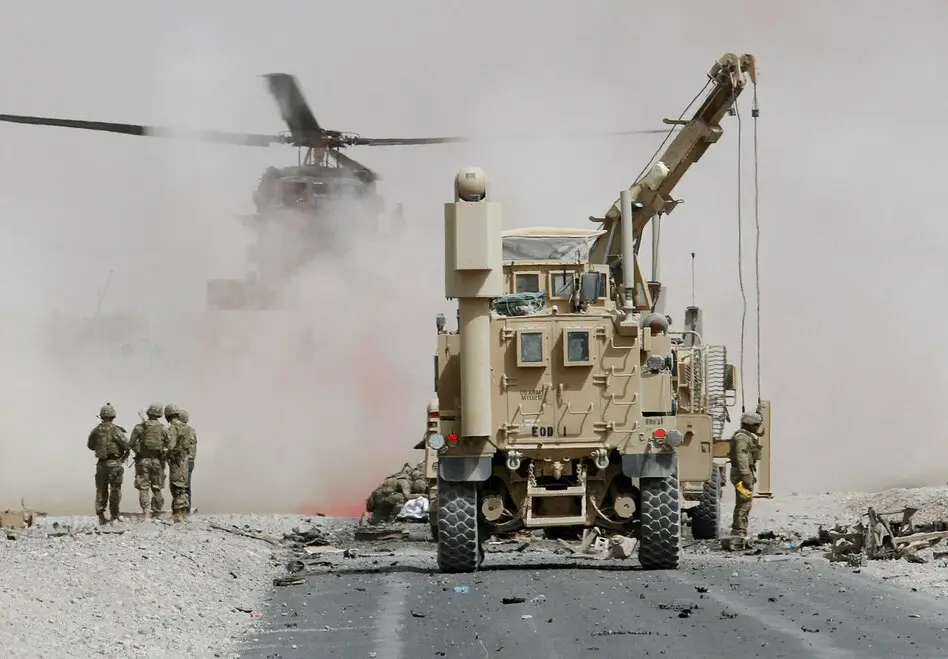
September 2019 in eastern Afghanistan, a family celebrates the return of a son from a pilgrimage. A commando from Special Unit 02 of the Afghan secret service NDS stormed the celebration, shot him and three brothers and claimed that they were fighters from ISKP, the Afghan branch of the international terrorist organization Islamic State. As “proof,” according to family members, they draped the firearms they had brought with them on the bodies. NDS units, often accompanied by instructors from the U.S. Central CIA, sometimes carried out dozens of such attacks in a night during the 20-year war against the Taliban.
The International Criminal Court (ICC) in The Hague is not supposed to investigate suspected war crimes like this, it announced on Friday. The judges in one of its pre-trial chambers issued a corresponding instruction to the ICC prosecutor's office.
It should now only investigate the atrocities committed by the Taliban since they came back to power in mid-2021 - but no longer those committed before that by the US military, the CIA and their Afghan allies. They argued that there were “significant restrictions on the possibilities” to “carry out investigations and secure evidence”. There were no further explanations.
In fact, an ICC investigation team would hardly be able to enter Afghanistan. The Taliban terminated the country's membership in the ICC in February 2025. However, witnesses can also be heard from outside. The court already did this before it issued arrest warrants against four Taliban leaders in July 2025 for crimes against humanity - their systematic disenfranchisement of women and girls.
Afghan civil society had previously gotten wind that something was brewing at the ICC. At the end of October, 23 organizations warned that a step like this would have a negative “effect on the rights of victims and their access to justice.”
The Trump administration also sanctioned the court as a whole and 13 current and former judges because of possible investigations against US citizens. Last week, the human rights organization The Rights Forum reported that the USA would negotiate changes to its founding treaty with the ICC host Netherlands. The aim is to limit its jurisdiction for citizens of non-member states. The USA never joined the founding treaty, the so-called Rome Statute.
The ICC prosecutor's office itself had already “deprioritized” the investigation against US nationals and their Afghan allies in September 2021.
Patti Gossman, Asia co-director of Human Rights Watch, told the taz that the current decision was “outrageous.” The court “should never be selective and deny justice to a group of victims” – namely those of the US military and its allies.
Ehsan Qaane, an Afghan human rights activist living in northern Europe, told taz that the chamber had previously “adopted a restrictive approach” to the Afghanistan investigation. But the scale and history of human rights violations in Afghanistan require “a broader approach to accountability, not a narrower one,” said Qaane.
Gossman said it was not certain whether the instruction to the ICC prosecutor's office would stand this time. She has already filed an appeal. Afghan victim representatives and ICC member states have until December 3rd to submit counterarguments. The final decision will be made on December 17th. Whatever it turns out to be, the existing arrest warrants against the four Taliban leaders remain in force.