
War & Militarism taz
Nuclear armament: Strong criticism of Urenco nationalization
The federal government wants to buy shares in the uranium enricher for 4 billion euros - and is thus entering the nuclear arms race. Criticism comes from all sides. more...
Deutsch (original) ·Auto-translated to English
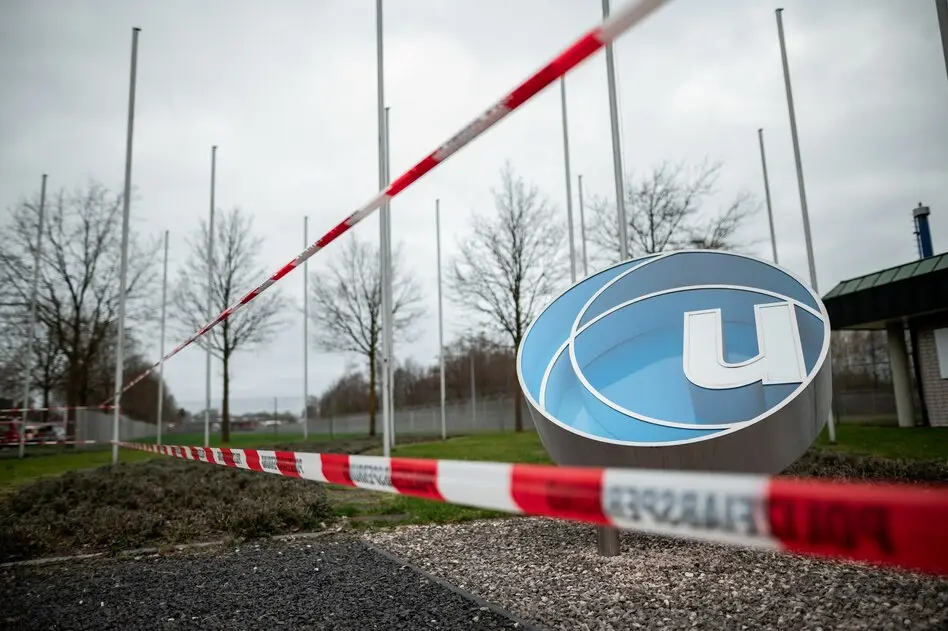
Anti-nuclear initiatives, environmental associations and politicians from the Left and Greens have reacted with strong criticism and incomprehension to reports that the federal government wants to buy into the international uranium enrichment company Urenco. “We strictly reject the fact that the federal government now wants to participate directly or indirectly in the nuclear arms race through the uranium enricher Urenco,” warns not only Matthias Eickhoff from the Münsterland Action Alliance against Nuclear Facilities.
North Rhine-Westphalia's Green Economics Minister Mona Neubaur is also surprisingly clear: "The reports that the federal government wants to invest a good four billion euros in Urenco shock me," said the Green Party, who is also the head of nuclear supervision in North Rhine-Westphalia, in response to a taz query.
“If the federal government is now stepping in with such a gigantic sum and at the same time supporting the reorientation of the company away from energy production towards the military use of nuclear fission,” said the Deputy Prime Minister of North Rhine-Westphalia, “that contradicts everything that is in Germany’s interest in terms of energy and security policy.”
The newspapers Welt and Handelsblatt reported on Friday that a new expenditure item had surprisingly appeared on Thursday in the adjustment session for the 2027 budget draft in the Bundestag: “Expenses in connection with the acquisition and holding of investments in companies in the energy sector: 4 billion euros” is its title.
The aim is apparently to purchase the shares currently held by the German energy companies RWE and Eon in the German-British-Dutch group Urenco. The two listed companies based in Essen each own a sixth of Urencos. The governments of Great Britain and the Netherlands each hold another third. Urenco operates Germany's only uranium enrichment plant (UAA) in Gronau, Münsterland, which has an unlimited operating license despite Germany's nuclear phase-out.
Neither the Federal Ministry of Finance, led by SPD federal party leader Lars Klingbeil, nor the Federal Ministry of Economics, led by Christian Democrat Katherina Reiche, wanted to officially confirm the purchase to the taz. “As usual, we do not comment on ongoing confidential processes,” the Ministry of Economic Affairs simply said. RWE and Eon also did not want to comment.
But the two former nuclear companies, which are increasingly trying to create a more sustainable image, have wanted to get rid of their Urenco shares for more than 10 years. And in Berlin it is now apparently said that the federal government was forced to act because of an imminent US entry and that it had decided to buy at the request of Great Britain.
Because Urenco is crucial for Great Britain's Royal Navy: As the taz reported in August, reactor fuel from the uranium enricher will in future power British nuclear submarines of the Vanguard class - apparently the USA is no longer supplying the British fleet sufficiently.
The Vanguard-class submarines each carry 16 nuclear-armed Trident ICBMs. In this way, they secure Britain's status as a nuclear power that can strike worldwide depending on the position of the submarines. Depending on how they are equipped, the explosive power of the missiles in the British submarine fleet can be more than 1,000 times that of the Hiroshima bomb.
“There are clearly geopolitical and military reasons that motivate the federal government to want to transfer Urenco into state ownership,” explains Hubertus Zdebel, nuclear policy spokesman for the Left in North Rhine-Westphalia. Already in August, leftists like Zdebel had warned that by supplying British submarines with reactor fuel, “the supposedly civilian Urenco, but also the German energy companies RWE and Eon, would become part of the military-industrial complex.”
The federal government is therefore rigorously blocking further inquiries from left-wing Bundestag member Mareike Hermeier. Although it is assured that the reactor fuel for the Royal Navy's submarines is not produced in Germany, Urenco also operates uranium enrichment plants in Almelo, the Netherlands, and Capenhurst, Great Britain.
Hermeier's questions as to whether Urenco Technology and Development, based in Gronau, Germany, which is considered the research department and therefore the "brain" of the uranium enricher, supplies services or knowledge transfers to Great Britain, could not be answered "for reasons of state welfare" and for "secrecy interests".
This also applies to the question of whether the centrifuge manufacturer Enrichment Technology Company (ETC) in Jülich, Rhineland, in which Urenco has a 50 percent stake, is involved in the British nuclear arms program. MPs like Hermeier should not even be allowed to look at documents about this in the secret protection office of the German Bundestag.
Finally, centrifuge technology, which is also used in Urenco's UAA in Gronau, is considered the key to uranium enrichment for civilian purposes, but also for the construction of atomic bombs. The technology is also used in the Iranian nuclear facilities at Natans and Fordow, which were most recently massively attacked by US and Israeli forces in March.
But the militarization of Urenco apparently goes far beyond equipping the British nuclear submarines. Anti-nuclear initiatives from North Rhine-Westphalia, but also the International Physicians for the Prevention of Nuclear War (IPPNW), warn that Urenco is also working with a partner in the US Army. The delivery of higher enriched uranium (HALEU) has been agreed with the company Antares. This should be used in so-called micro-modular reactors (MMR), which could ensure a self-sufficient power supply for the US armed forces anywhere in the world.
The now planned nationalization of the German Urenco shares shows “that the federal government is taking further steps to support Great Britain and the USA in the modernization of their military nuclear programs,” is why not only the European IPPNW chairwoman Angelika Claußen criticizes. The Federal Republic's entry into Urenco is "a step in the wrong direction that takes us further away from a world that is free of nuclear weapons," warns the doctor.
North Rhine-Westphalia's Deputy Prime Minister Neubaur also made it clear: "I expect the federal government to withdraw these plans and consistently focus on converting the energy supply to renewable energies," demands the Green Party. “It is time for us to completely phase out nuclear energy in Germany.”