
War & Militarism taz
War in Yemen: How the government lost control of Bab al-Mandab
The Iran-backed Houthi militia is once again taking over strategically important territory in Yemen. Government forces remain divided into factions and weak. more...
Deutsch (original) ·Auto-translated to English
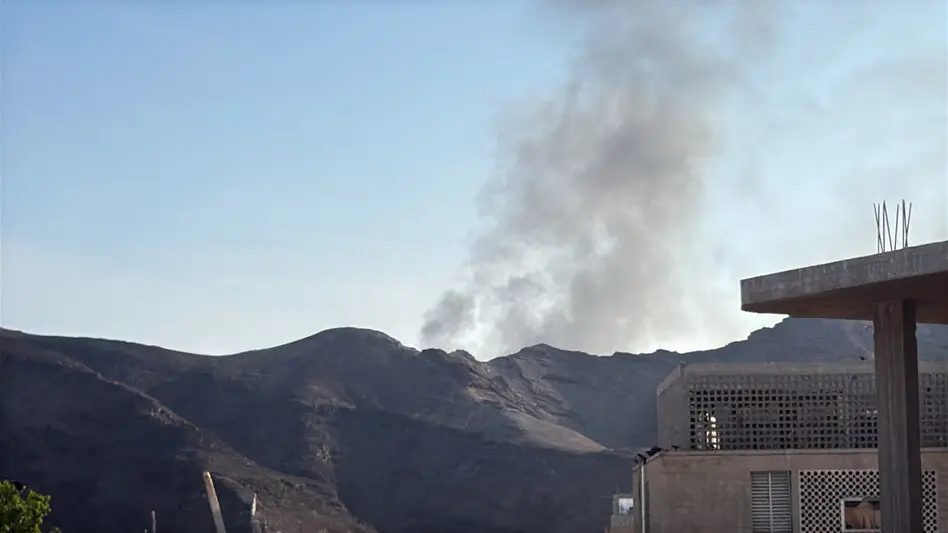
On Sunday, troops from Yemen's internationally recognized government announced a so-called "realignment." As part of this, they withdrew from the area around the strategically important Bab al-Mandab Strait - just over a month after they recaptured the region from the Houthis militia. This withdrawal allowed the Houthi militia to retake the high ground overlooking the strait. From these they have complete control of the straits.
According to Yemeni military sources, government forces withdrew to al-Saqiya, about 150 kilometers west of the city of Aden. The internationally recognized government sits there.
The fragile ceasefire that has existed since 2022 ended this summer. Since then, the government and allied armed groups have again found themselves in a heated war with the Iran-backed Houthi militia. They had made major gains in territory in a lightning offensive, especially in the direction of the Bab al-Mandab Strait. They also advanced on Taiz and have been besieging the city again ever since. Taiz itself remains under the control of the government and its allies, and the outskirts are partly under the control of the Houthis. The militia also advanced towards Aden and is now reportedly 60 kilometers from the city.
According to the United Nations, the conflict has forced more than 330,000 Yemenis to flee in recent months; about 12,000 people were wounded or killed.
Brigadier General Mohammed al-Kumaim, an adviser to Yemen's defense minister, said of the withdrawal: "It is an important, well-considered tactical step to prevent Houthi forces from encircling government forces in Bab al-Mandab." The Houthis had previously taken control of the Al-Maqatira mountains. It lies behind the supply lines of government troops; these would have been cut off from supply later on.
Al-Kumaim stated that “protecting Aden and lifting the siege of Taiz are now priorities.” And that the Houthis had laid thousands of mines on the coast, hindering the advance of government troops in open areas.
Political scientist Anwar al-Ansi sees the withdrawal as a serious setback for the “Dawn in Yemen” campaign announced by the chairman of the Presidential Leadership Council. He cites the following reasons: the disintegration of government troops, the lack of a joint operations center and the different fighting doctrines of the factions, especially the brigades of the Southern Transitional Council, which is calling for the secession of South Yemen.
The fact that the Houthis have now gained full control of the Bab al-Mandab Strait could have consequences. About 12 percent of world trade passes through these; it is on the way to the Suez Canal. Their importance has increased since the US-Iran war paralyzed shipping traffic in the Strait of Hormuz. Bab al-Mandab has now become a main export route for Saudi Arabia's oil from the Red Sea port of Yanbu to the world.
Until now, the Houthis had targeted the strait from a distance using drones and drone boats. The distance helped with defense. Controlling the entire area around Bab al-Mandab could give them a strategic advantage.
The Houthis had already declared in the past that they wanted to block ships with connections to Saudi Arabia. In July, for example, the militia attacked several tankers linked to Saudi Arabia; Several ships have so far turned away and are taking long detours. According to Houthi officials, the Houthis told U.S. officials that they would not target U.S. ships. The Axios portal reported that the United States had no intention of participating in this war.
On the opposite bank of the strait, in Djibouti, about 20 kilometers away, there are military bases of the United States, China, France, Japan and Italy.
Moscow rejects designation of Houthis as terrorists
Last Thursday, the United Nations Security Council unanimously passed Resolution 2837. This extends sanctions against Yemen until November 2027 and calls on the Houthis to end their offensive in the country, their attacks on Saudi Arabia and their threats to shipping.
However, the text does not describe the Houthis as a “terrorist group”. Russia objected to this, arguing that it would hamper the political process - which de facto no longer exists. Yemen's UN Ambassador Abdullah al-Saadi regretted that the council "could not agree on calling a spade a spade."