
War & Militarism taz
War in Yemen: “All roads to Taiz are closed because of the fighting”
The government-controlled city of Taiz in Yemen is under siege by the Houthi militia. People are running out of food, gas and medicine. more...
Deutsch (original) ·Auto-translated to English
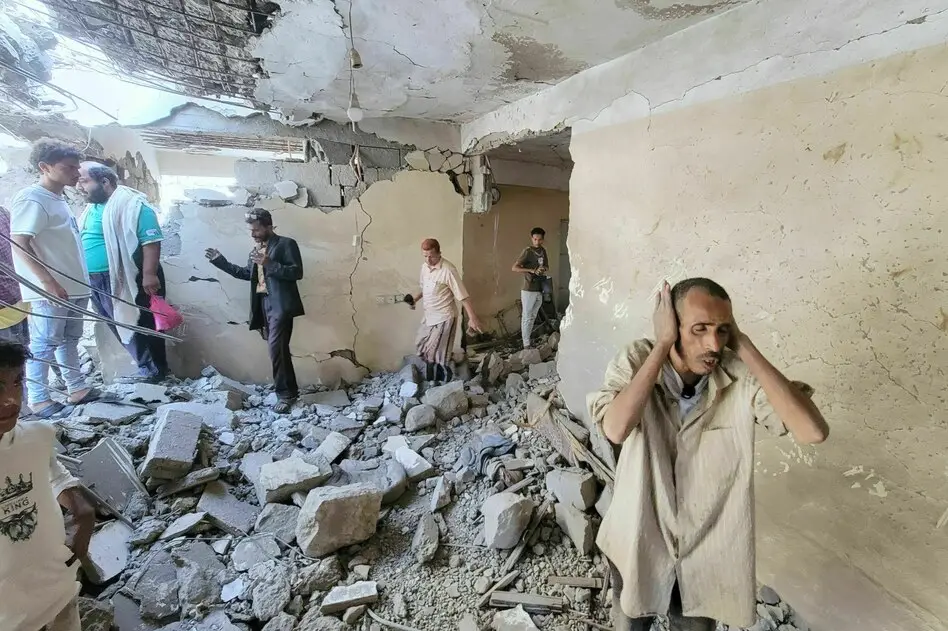
“The road is dangerous, every car that drives by is shot at,” Danya Abboud, a resident of the Yemeni city of Taiz, told taz via a messenger service. She wanted to leave the city, but has not been able to do so since the blockade by the Houthi militia began again.
Taiz has been under a sometimes more and sometimes less permeable siege by the Iranian-backed Yemeni militia since 2015. At that time, the Houthis and the internationally recognized government and allied troops were fighting for control of the city. The Houthis surrounded them on three sides, and the city center itself remained in government hands.
For years, residents relied on long, arduous mountain roads to get in and out of the city. Between 2015 and June 2024, more than 600 people died on these unsafe routes. In June 2024, under international pressure, the Houthis opened one of the main entrances to the city.
The Houthis then closed this road again in September. At that time, the group had just begun an offensive, extending its control to the strategically important city of Mocha on Yemen's western coast, towards the Bab al-Mandab Strait. On October 4th, the Houthis captured the town of al-Turba south of Taiz - and are now also cutting it off from the south. The road at Hijat al-Abd - the last link between Taiz and the city of Aden - was destroyed, Human Rights Watch said. The organization said the Houthis' use of starvation as a weapon against civilians in Taiz could constitute a war crime. The Houthis deny that they are besieging the city.
Stéphane Dujarric, spokesman for the Secretary General of the United Nations (UN) António Guterres, says: a siege like in the Middle Ages. He said the UN could no longer bring aid trucks to the city of Taiz. Over a million people live there. “All roads to Taiz are closed due to the fighting and commercial supplies are no longer arriving,” said Dujarric.
Mustafa Noman, deputy foreign minister of Yemen's internationally recognized government, said: There is no scope for talks or mediation with the Houthis until the siege of Taiz is lifted. “We don’t want negotiations until the group shows seriousness,” he says.
Danya Abboud, who lives in the besieged city, says: The crisis is also reflected in the price of a gas bottle. Before the siege it cost 10,000 Yemeni rials, just over 5 euros. Today it costs three times as much at 30,000 rials – if it is available at all.
Journalist Farouk al-Kamali from Taiz reports that gas has disappeared from the markets in recent weeks - and is now reappearing at higher prices. Some families cooked with firewood and cardboard, he says. Even a sack of flour now costs more than 55,000 rials – around 30 euros. The bakery owners have so far kept the price of bread stable - and have made the loaves smaller. “Citizens cannot afford to buy at high prices and the bakery owners know this,” he says.
And water is even more scarce. Taiz Governor Nabil Shamsan said at a recent press conference that the city needs about 35,000 cubic meters of water daily. This is already less than the 50 liters per person per day defined by the UN as mediocre water access. Due to the current siege, on some days only around 1,000 cubic meters are arriving, said Shamsan. The cost of water delivered by tanker has tripled.
Danya Abboud says the drinking water she uses comes from wells within the city, “but it is in danger of running out.” Water for daily use comes from outside the city and is therefore often no longer available.
The public electricity supply in Taiz has also been interrupted since 2015, when the Houthi militia and its then allies, the troops of former Yemeni President Ali Abdullah Saleh, shelled the Usaifira power plant. Das geht aus einer Untersuchung des Yemeni Archive hervor. Seitdem sind viele Einwohner auf Solarmodule angewiesen, um ihre Wohnungen zu beleuchten und ihre Handys aufzuladen. Danya says: "The previous siege taught us how to deal with the power problem - but this siege is different. They are even preventing the garbage from being taken away and it is piling up everywhere." Some then set it on fire.
Another resident, who wishes to remain anonymous, reports to taz: “The fear is killing us, the siege is making us hungry, and the smoke from the burning garbage over the city districts is making us sick.” Life in Taiz has come to a standstill since mid-October: the province's local authorities have closed schools and universities. Danya says the streets look “almost empty.”
In addition to the lack of food and water, there is a serious shortage of medicine in the city, according to pharmacist Iyad Sadiq. The free distribution of insulin in state health centers has been stopped; Patients with kidney failure also no longer received dialysis treatments. According to the UN, around 250,000 people in the city no longer have access to basic medical care, including 23,000 pregnant women.
According to the United Nations, only 5 of 27 health facilities in Taiz are currently operational. At the city's only maternity and children's hospital, the number of incubators was reduced from 40 to 10 due to fuel shortages, hospital officials said. The UN warns that 12 hospitals are at risk of closure or have restricted their operations.
Danya says she currently falls asleep to the sound of battles. She says: "When I wake up, the first thing I ask is: Did the city fall? Is my family okay? Then: Did gas and petrol arrive? Can we go out and buy vegetables? Have they opened the road?"