
Germany · taz · · 2h
Conflict between Saudis and Houthis: The unholy dispute over Mecca
Deutsch (original) · Auto-translated to English
Last week, a message flashed on the cell phones of many people in the Saudi Arabian city of Mecca. It warns of an enemy threat from the air and calls for people to stay indoors and away from windows and doors. The reason for the notification: an attack by the Iranian-backed Yemeni Houthi militia. On the city that houses Islam's holiest site - the Kaaba.
After some time, the warning was lifted and Saudi Arabian Major General Turki al-Maliki said that air defenses had destroyed a Houthi drone before it could enter the restricted airspace over the holy city. He described the security of the two holy mosques as a red line. One of the two holy mosques surrounds the Kaaba in Mecca, the other is in the city of Medina. It is considered the burial place of the Muslim prophet Mohammed and the second holiest site in Islam.
The Houthis deny that they targeted Mecca. Their military spokesman Yahya Saree said they were only targeting oil facilities and military bases. However, the fact that this is not true is shown by the fact that civilians and children are often among those injured after Houthi attacks.
It is also not the first time that Mecca has been attacked by the Houthis. In October 2016, according to Saudi Arabia, a missile was intercepted 65 kilometers from Mecca. The Houthis said at the time that they wanted to target Jeddah airport. There were similar incidents in 2017 and 2019.
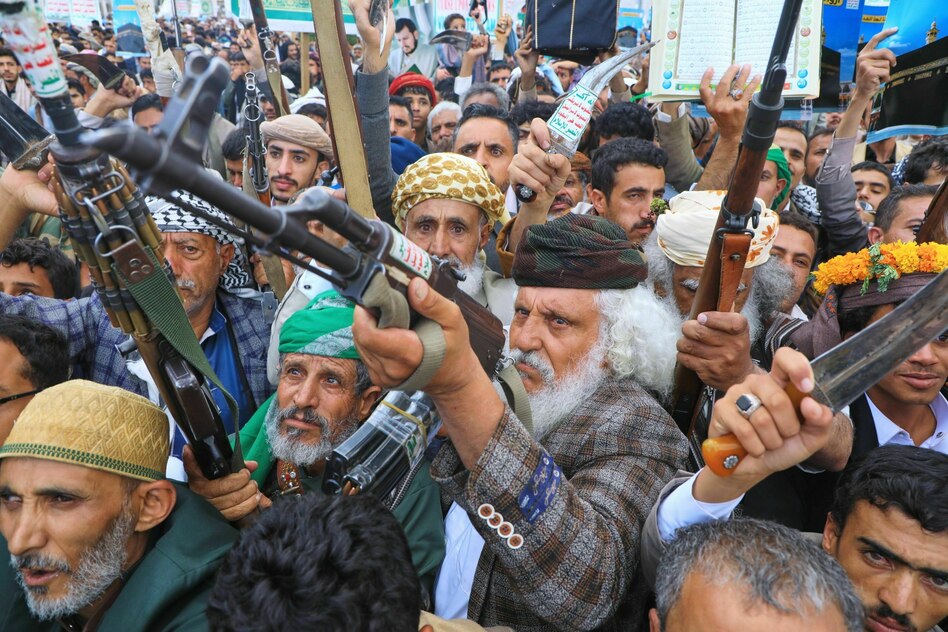
In mosques and at mobilization events in the Houthi-controlled areas of Yemen, one claim repeatedly appears: Mecca is occupied and is under the unlawful rule of the House of Al Saud. Under his control, the pilgrimage to Mecca - called Hajj and a duty that Muslims have to fulfill once in their life - is unlawful. Videos of these sermons appear again and again.
In their mobilization speeches, the Houthis refer to the so-called Tanuma massacre in 1923, nine years before the declaration of the Kingdom of Saudi Arabia. A caravan of Yemeni pilgrims was on its way to Mecca when it was attacked by troops of Abdulaziz bin Abdul Rahman Al Saud, known as Ibn Saud. The Houthis claim that several thousand people died in the incident.
At that time, Ibn Saud was on a course to conquer parts of modern Saudi Arabia and was later the founder of its state. His descendants still control the kingdom today.
The Tanuma massacre is being exploited by the Houthis and their mouthpieces in their opposition to the Kingdom of Saudi Arabia. The Yemeni news agency Saba, which is under the control of the Houthis, repeatedly mentions it in texts.
Northern Yemen was then the kingdom of the Mutawakkilites under the control of Zaid Imams. The Zaidi are a separate branch within Islam that is classified as Shiite. The founders of the Houthis, the Al Huthi family, are also Zaidi.
And there is another aspect from which the Houthis derive a claim to control over the two holy cities: large parts of the Hejaz, i.e. the region around Mecca and Medina, were controlled by the Sherifs of Mecca for centuries. Until the 14th century they were Zaidi - the subgroup in Islam that includes the Houthis. They then converted to the Sunni branch.
The Houthis have not yet declared an imamat. The imamate is an important concept in the Shiite faith: only a flawless and pure person from the prophet's family should be allowed to lead the community in all matters, religious and secular. But the curricula in the areas it controls have been rewritten to teach this concept. The principle of wilaya is also taught: In Shiite theology, authority over the world is reserved to God alone and this can only be delegated to prophets and infallible imams.
This is the form of government propagated in the Islamic Republic of Iran, where the “Wilayat Faqih” applies, translated as “guardianship of the jurist”. The Supreme Leader is therefore merely a governor in the absence of the actual leader of the community. In the Shiite faith, this has been in a status of “occultation”, i.e. hidden from the world, for centuries and is supposed to return as ruler in due course.
Iran is also making the case that the Saudi Arabian royal family is unsuitable: the then Ayatollah Ali Khamenei declared after a mass panic in 2016 that Muslim nations should discuss ending the control of the House of Al Saud there. The Gulf states described this as incitement.
Read the full story at the source
Source: taz