
Germany · taz · · 3h
Conflict in the Philippines: A Shaky Step Toward Peace
Deutsch (original) · Auto-translated to English
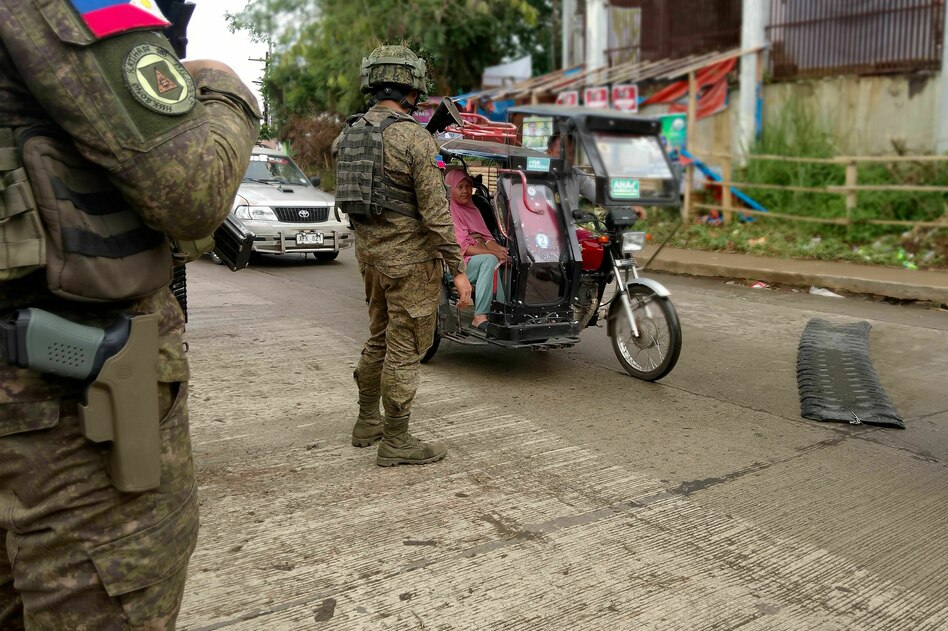
This Monday, a parliament will be elected for the first time in the “Bangsamoro Autonomous Region in Muslim Mindanao” (Barmm). It is a culmination of the long struggle for self-determination by the Muslims known there as Moro. They have long since become a minority compared to the country's Christian majority on the southern island of Mindanao and neighboring areas. The Barmm unites the remaining Muslim strongholds and represents a laborious process of pacification and limited self-government of Muslim areas.
Mindanao is home to all sorts of communist and Islamist militias. There are also criminal gangs, private armies of powerful Moro clans as well as the military, police and vigilante groups. The boundaries between these actors are fluid. A business model used by terrorists and gangs alike is kidnapping, such as that of the German Wallert family in 2000.
The terrorist Abu Sayyaf group, which first pledged allegiance to al-Qaeda and then to the Islamic State (IS), was involved, together with Islamist splinter groups, in the five-month siege of the city of Marawi, which is now part of the BARMM, in 2017. In the battle for the city of 200,000, 1,200 people died and tens of thousands were displaced.
Mindanao was embroiled in a struggle between the government and the Moro National Liberation Front (MNLF) and later its soon-to-be-dominant spinoff Moro Islamic Liberation Front (MILF) from 1968 to February 2019. The conflict resulted in a total of 150,000 deaths.
The peace process, which had failed several times for almost as long, culminated in the founding of the Barmm and a transitional government appointed by the Philippine government in 2018/19. A core of the agreement was a parliamentary election. However, it was postponed several times due to the corona pandemic and then due to a constitutional court ruling.
On Monday, 2.4 million eligible voters will be able to choose one of the 12 parties. These include the top dogs “United Bangsamoro Justice Party” (UBJP) and “Bangsomoro Federalist Party” (BFP), which emerged from the MILF. 631 candidates are running for 80 seats, half of which are determined by proportional representation via party lists and 32 by direct election. Eight seats are reserved for specific groups such as women, Islamic scholars and indigenous people.
Neither the election campaign nor the election per se promise the beginning of a peaceful, democratic future. Despite the establishment of a parliamentary system and political parties, the election campaign “revealed a profound contradiction at the core of Bangsamoro politics,” says an analysis by the International Crisis Group. “Family ties shape the party lists and some clans put forward candidates from different parties in order to secure a place in the regional power structure regardless of the election outcome.”
There were attacks during the election campaign, including an attempted assassination of the interim head of government Abdulraof Macacua. It is unclear who is behind it. “Many locals believe it may have been staged to drum up sentiment for Macacua and improve the chances of his Federalist Party,” the Crisis Group said.
Political violence is widespread in the Philippines and particularly in Barmm. In the 2025 local elections, more than a third of all violent acts recorded nationwide took place there.
Observers are concerned to see that around 14,000 MILF fighters are still armed. Some are loyal to MILF leader Murad Ebrahim, the former Barmm interim government head and current UBJP top candidate.
Others remain loyal to the MILF military commander, current interim head of government and BFP top candidate Macacua. He is considered the favorite of President Ferdinand Marcos Jr. and declared during the election campaign that his BFP was “ready for war to ensure that the Bangsamoro is on the right path.”
Read the full story at the source →
Source: taz