
Germany · taz · · 2h
Colombia liberalizes gun law: The armed “good guy” and the fear of more vigilantism
Deutsch (original) · Auto-translated to English
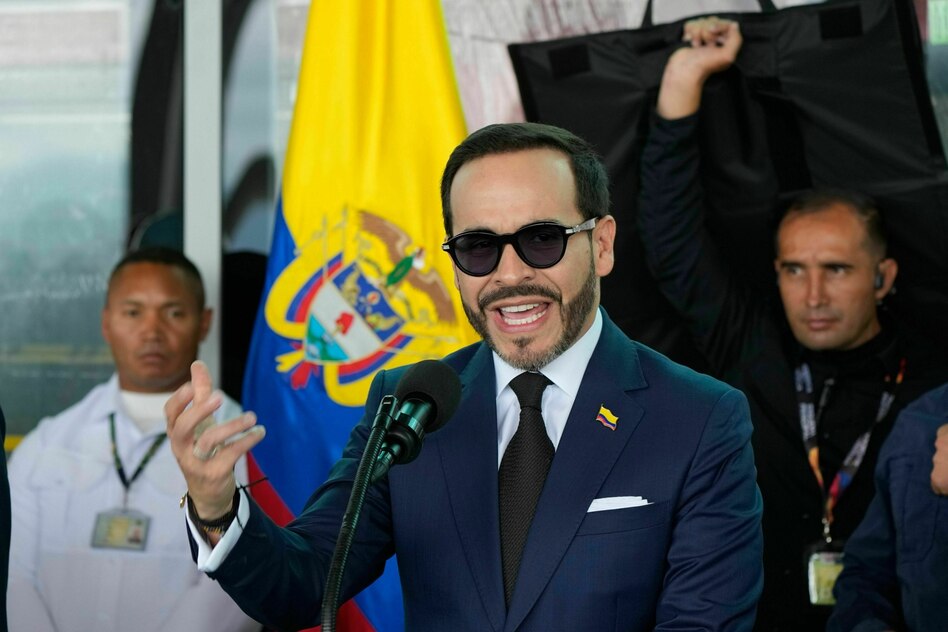
Colombia's new ultra-right President Abelardo de la Espriella is breaking a taboo. Last week he repealed a decree that previously restricted the carrying of weapons. But what does that mean now? More than 600,000 citizens with a firearms license, which regulates the ownership and carrying of a weapon, are now allowed to carry them outside the home. A special permit is no longer necessary for this.
"For years, law-abiding citizens have been restricted while criminals have continued to illegally arm themselves to the teeth. That has to change," the president said, explaining the change. “It cannot be the case that decent citizens cannot defend themselves.” 99 percent of crimes are committed with illegal weapons, he said in a video.
His supporters applauded. But MP from the right-wing Centro Democrático party Jaime Arizabalete also agreed with the president. “There is no better way to stop an armed bad guy than with an armed good guy.” The right in parliament is celebrating the new gun law, the opposition has announced lawsuits.
Since 2014, all presidents - regardless of party - have re-signed the relevant decree suspending firearms licenses every year. Their reasons: More weapons lead to more injuries and deaths. And when President Guillermo Lasso liberalized the right to carry weapons for self-protection in neighboring Ecuador in 2023, many of them ended up in the hands of criminal gangs.
The new decree does not mean that everyone can carry a weapon at once, let alone that shootings will not be punished. The state continues to regulate and control the right to own and bear a weapon. But the decree sends a fatal message not only to Hugo Acero, security secretary under Bogotá's former mayor Claudia López: the state cannot adequately protect its citizens and is passing this task on to the population.
However, experts deny that more weapons lead to more security. On the contrary, violence is likely to increase. The best-known example is the USA – and at least there is peace there. War has been raging in Colombia for more than 60 years - there are currently around eight armed conflicts. Colombian society is characterized by war and violence, even in the private sphere.
In fact, the death toll from fighting in Colombia is almost as high as that from organized crime, says Jorge Mantilla, an expert on crime, security and conflict. 4 out of 10 murders in Colombia occur in the context of street fights or arguments over “civil intolerance”. Especially on weekends. Alcohol, loud music from the neighbors, trouble at a family celebration – all of this can be a deadly mix.
The president is taking advantage of this mood. His announcement video shows how a couple in the Colombian capital Bogotá - he is sitting in a wheelchair - are robbed by a gunman. But figures from the capital district of Bogotá show a different reality. Acts of violence have decreased, but so has the feeling of security. In Bogotá, most robberies are still carried out without firearms. But: Half of the people are prepared to take the justice system into their own hands. 3 in 10 people would purchase a means of self-defense because they believe reporting to the police and the criminal justice system are ineffective. This is the result of a study by the Universidad Central and the Universidad Libre.
Another concern is that the number of femicides will increase. Currently, on average, a woman is killed every 18 hours. According to the research portal Cuestión Pública, the change in gun law is not only a “death penalty with announcement” for women. The non-governmental organization Temblores warns: “In a society characterized by male sexism, more weapons can mean more power to threaten, control and kill women.”
Many people also fear that conditions like those in the USA could soon prevail in Colombia. The day after the gun law change, a 17-year-old broke into a school in Medellín with a gun, shot several times and ended up injuring himself. His target is said to have been a teacher. Two men, aged 37 and 46, later entered the facility, took the gun from the boy and left the school. There is a suspicion that the two belong to a criminal organization active in the area that recruits young people. The act made headlines and further fueled the debate about gun rights.
Many experts argue that it is more important to take illegal weapons away from criminals than to equip citizens with legal weapons. But this is a task that the Colombian state has not been able to control for years. According to estimates, the approximately 700,000 legal weapons are offset by 3 to 5 million illegal weapons. In 2024, guns could be rented in the San Bernardo district of Bogotá for around 15,000 pesos (less than 4 euros) per hour. For Andrés Nieto, head of the Security Observatory at the Universidad Central, the current change is “eyewash” and does not change the actual problem.
In 2025, a criminal gang was busted in Bogotá that had stocked up on weapons from the state-owned company Indumil in order to sell them on to contract killers. After the president's announcement a few days ago, Indumil's website collapsed. Apparently many Colombians now wanted to buy a weapon.
Read the full story at the source
Source: taz