
World · taz · · 8h
Artificial intelligence: Trump agrees to self-control with AI companies
Deutsch (original) · Auto-translated to English
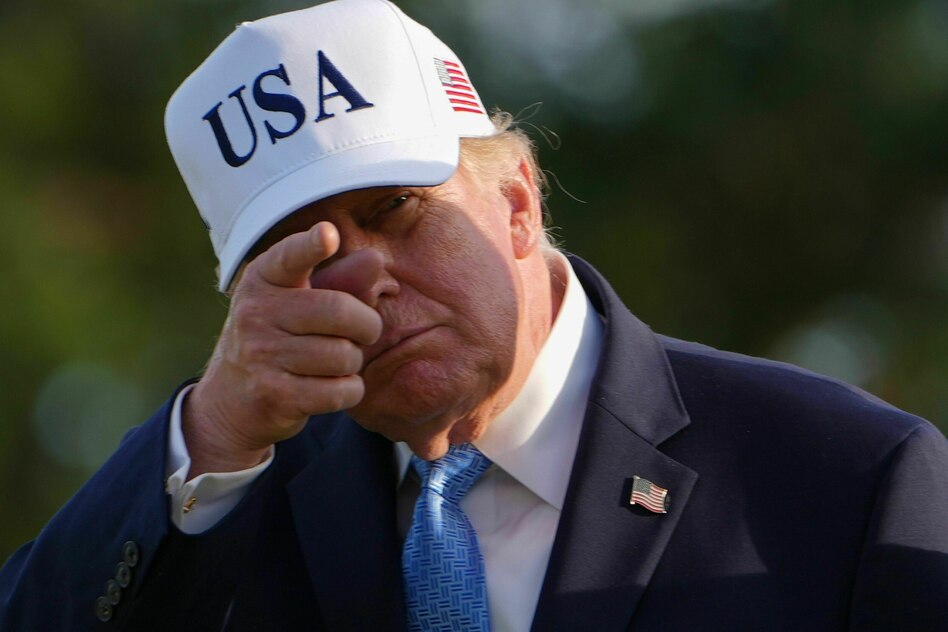
dpa | Despite warnings about the existential risks of artificial intelligence, US President Donald Trump wants to leave the supervision of the technology to its developers themselves. The companies would control themselves, Trump said after a meeting with heads of AI companies in Washington. He sees sufficient protection from the economic interests of US companies. “Their businesses are at stake if something goes wrong,” the president said. “They won’t allow this.” The companies would “control each other”.
Recently, independent hacking attacks by AI models had raised concerns about the dangers of artificial intelligence. Some industry representatives themselves warned that it cannot be completely ruled out that AI will wipe out humanity in the future.
The head of the AI company Anthropic, Dario Amodei, had spoken out in favor of slowing down the development of the most powerful AI models to ensure that one does not lose control of the technology. Trump had previously rejected increased government regulation of the technology. It is important that the USA does not lose its lead over China, he emphasizes.
Amodei said after the meeting with Trump that AI has great potential – “but also very real risks”. Measures to counteract these risks are “still under discussion”.
Now the meeting agreed on a set of principles in a voluntary commitment, including “robust internal controls,” according to the document released by Trump. This should, among other things, eliminate biological weapons and chemical weapons risks - and also ensure that there are no hacking attacks.
In addition, the companies agreed to allow external observers. This corresponds to an idea that Amodei presented a few weeks ago and which was supported, among others, by his competitor Sam Altman at ChatGPT developer OpenAI and tech billionaire Elon Musk. The administrative boards of AI companies - which roughly correspond to German supervisory boards - should also set up separate independent committees that review internal and external reports.
“Over time, it may make sense to enshrine these steps in laws or rules,” the document also said. The paper was signed by, among others, Amodei, Musk, Facebook founder Mark Zuckerberg, Google boss Sundar Pichai and the head of AI chip specialist Nvidia, Jensen Huang.
Altman's right-hand man, top manager Greg Brockman, signed the paper for OpenAI. The company boss was unable to come to the meeting in Washington at very short notice because he was appearing at OpenAI's annual developer conference in San Francisco. There he presented so-called AI agents called “Dots” that can independently carry out tasks on behalf of the users. A dot can do practically anything “you can think of” on the computer. After the launch in the USA, Dots will also be available in Europe “soon”, it was said.
Initially you only get one dot per user - but over time a large number of such agents should be in use for the users. Communication with the software takes place via chat. There should be specialized dots for individual areas of knowledge in companies – such as accounting, marketing or legal issues. Initially, Dot assistants can only be used behind subscription barriers, which will initially limit their distribution primarily to everyday working life. “But they should assume that one day we will do something in the mass market for billions of people.”
Just a few weeks ago, Meta launched a similarly functioning AI assistant called Muse, initially in the USA, which is aimed at consumers. The Muse app then climbed to the top position in Apple's US app store, and Meta was again seen on Wall Street as a promising contender in the competition for a leading role in artificial intelligence after investing billions in AI infrastructure. ChatGPT first triggered the hype about artificial intelligence, but Meta beat the pioneer to the latest AI assistant for consumers. Altman, meanwhile, said Dots is “far ahead of anything available on the market today.”
In principle, consumers could already use Dots for everyday things, OpenAI manager Alexander Embiricos told the German Press Agency. But that would mean they would not be taking advantage of the real benefits of the software, he said. Dots is optimized for ambitious tasks in order to do more than you think you can.
Read the full story at the source
Source: taz