
World · Perspektive Online · · 5h
Little content, a lot of symbolic impact: Wadephul and Lavrov meet in New York
Deutsch (original) · Auto-translated to English
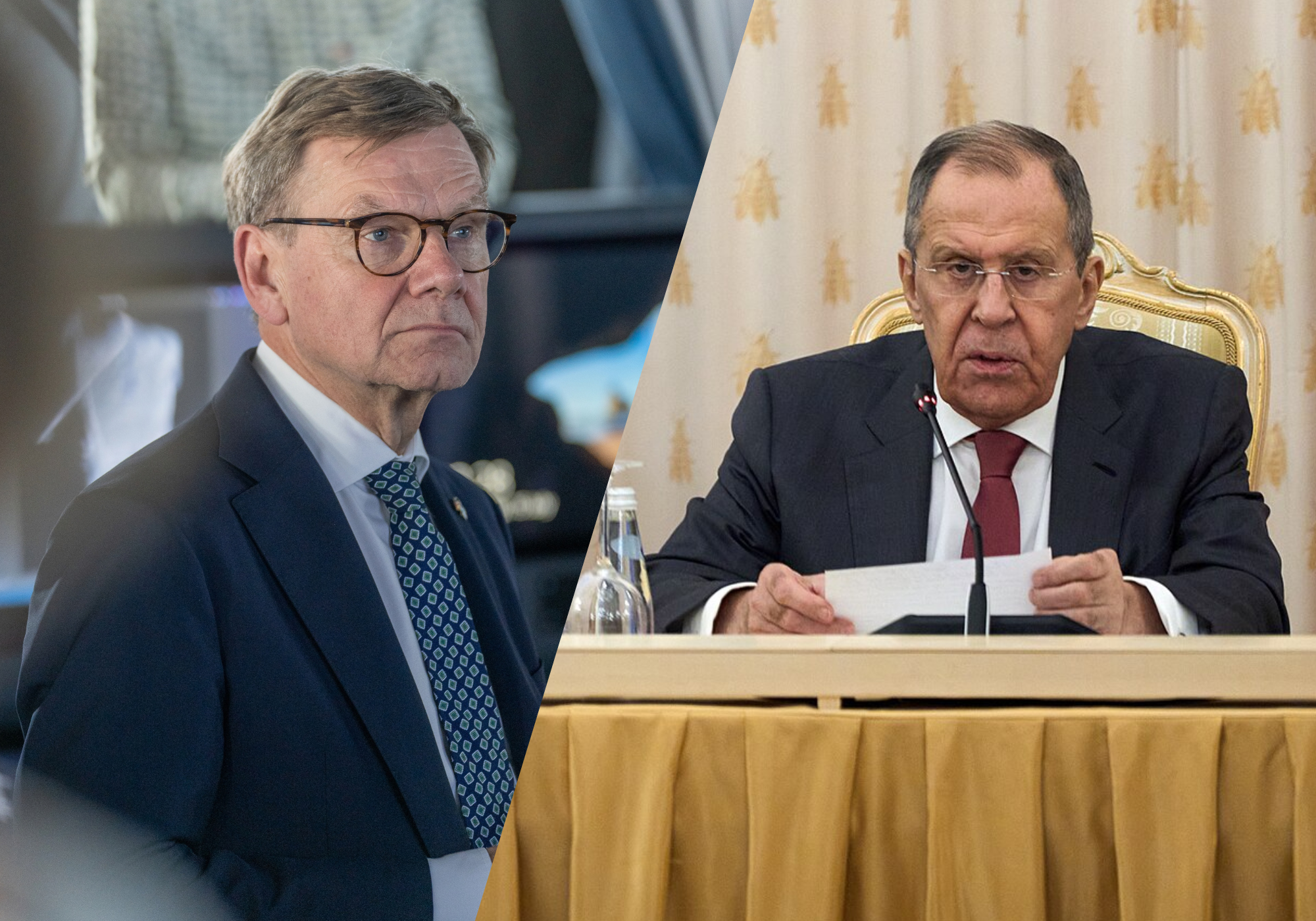
A meeting that lasted just twenty minutes on the sidelines of the UN General Assembly broke the four-year-long frost at the level of the German-Russian foreign ministers. As expected, the positions of both states on the Ukraine issue remain contradictory - and yet the meeting sparked a lot of discussion.
German Foreign Minister Johann Wadephul and Russian Foreign Minister Sergei Lavrov met in a conference room belonging to the Russian delegation on Saturday. This is the first bilateral meeting between the two foreign ministers since Russia's military invasion of Ukraine in February 2022. The last personal conversation between a German and a Russian foreign minister was even further back: it took place in January 2022, when the then German Foreign Minister Baerbock visited Moscow.
The meeting lasted about twenty minutes. Both sides shook hands and then went their separate ways. Considering how long it took, it was more like a careful feeling than a negotiation. However, against the background of German-Russian relations being almost completely frozen, the public meeting is also important because it sends a signal to the public.
A “last minute” request
According to the Russian account, the German side had only expressed its desire for this meeting the day before. Russian Foreign Ministry spokeswoman Marija Zakharova said Germany had asked for this conversation to be arranged “at the last minute”. Lavrov himself emphasized this point after the meeting and used it to express his discomfort with the way it took place. He said that if they had just wanted him to read Germany's public statements, "one phone call would have been enough."
The German side offered a different explanation. After the meeting, Wadephul said in an interview with ARD that the conversation had come about through “third-party mediation.” Colleagues from several countries sent him signals that the Russian side was ready for dialogue and advised him to take advantage of this opportunity. Wadephul also mentioned that several foreign ministers from the “Global South” had directly asked him to speak to the Russian side. The interruption of grain exports from Russia and Ukraine threatens the food security of these countries, and countries like Egypt need “extremely urgent” solutions.
Ten million tons of crop losses: European agriculture between drought and war
According to the German delegation, Wadephul mainly addressed three points in the conversation: first, he called on Russia to stop the “hybrid attacks” against Germany and Europe and specifically mentioned the drone incident at Leipzig/Halle Airport in early August; second, he urged Russia to seek a ceasefire that would allow grain exports across the Black Sea; thirdly, he reiterated that German support for Ukraine remains “completely unshakable”.
The shadow of Leipzig
The drone incident at Leipzig/Halle Airport is key to understanding the background to this meeting. At the beginning of August, German security authorities discovered a drone carrying explosives and a detonator at this airport. After four weeks of investigations, the federal government came to the conclusion at the beginning of September that the Russian military intelligence service GRU was responsible. Chancellor Merz described the evidence as “very clear, irrefutable and court-proof.”
Failed drone attack at Leipzig Airport further boosts German rearmament
Germany's response was quick and harsh: closing the Russian Consulate General in Bonn, ending the activities of the Russian House in Berlin. Lavrov described these measures as a “de facto start of war.” In an interview with Russian media, he said: “This is basically the beginning of a real war.” He even drew parallels to the closure of diplomatic missions before World War II, claiming “they want to go to war again.”
The situation became even more tense when, just a few weeks before the meeting between Wadephul and Lavrov, it became known that the American defense start-up Covenant was planning to build a cruise missile factory near Leipzig. According to reports, the factory could produce up to a thousand medium-range missiles with a range of over 1,500 kilometers annually from 2027, with the components coming predominantly from German and European suppliers. This plan is widely seen as Germany's alternative to the stalled US "Tomahawk" cruise missile transfer, with the country aiming for an independent long-range strike capability.
It is not known whether Lavrov addressed this issue at the meeting. But previous statements from the Russian side make it clear that Moscow reacts extremely sensitively to any strengthening of German military capabilities. Lavrov had explicitly quoted Merz's statement that Germany should "return to Europe's leading military power" and described this as the factual basis for a "declaration of war on Russia."
US-Israeli start-up Covenant wants to build weapons near Leipzig
Twenty minutes with no tangible results
After the meeting, the representations from both sides showed a clear difference. Wadephul's assessment was relatively cautious. In the ARD program "Tagesthemen" he said: "You don't have to negotiate with friends, you have to negotiate with opponents. That is one of the basic principles of foreign policy."He explained, “very clear words” were spoken at the meeting, but the opening of a communication channel alone is significant. At the same time, he made it clear that he could currently see no “serious willingness to negotiate” on the Russian side and that further meetings therefore made “little sense”.
Lavrov's reaction was cooler. Immediately after the meeting, he told press representatives that he had “heard nothing from Wadephul that goes beyond Berlin’s daily public statements.” He described the attitude of the German side as if it wanted to convey: “I deign to come to you.” He was alluding to the fact that Wadephul had expected Russia to make concessions on the Ukraine issue and Black Sea shipping in return for the meeting.
Lavrov's subsequent actions were even more remarkable. Just hours after shaking hands with Wadephul, he took the lectern at the UN General Assembly and delivered a sharply worded speech. He accused Europe of trying "with all its might" to undermine the peace negotiations desired by the Trump administration and reiterated that Russia would achieve its military goals in Ukraine "at all costs."
Domestic politics and the Chancellor
At the domestic political level, however, the reactions were mixed. The CDU's foreign policy expert, Kiesewetter, criticized Wadephul's move and spoke of an "impression of a German special path" and that the meeting had "achieved nothing except false hopes and confusion." The Greens and the SPD expressed themselves positively and argued that the evidence of a lack of Russian interest in negotiations was itself a “result”.
Chancellor Merz essentially set the tone after the meeting. At a joint press conference with the Kazakh president, he said: "Russia's subsequent assessment shows that it is clearly not interested in a serious dialogue at this moment." This assessment means that Berlin will probably not seek any further high-level contacts with Moscow in the short term.
The postLittle content, a lot of symbolic impact: Wadephul and Lavrov meet in New Yorkappeared firstperspective.
Read the full story at the source
Source: Perspektive Online