
Germany · taz · 7h
Consequences of climate change: What can we do to prevent the forest from burning?
Deutsch (original) · Auto-translated to English
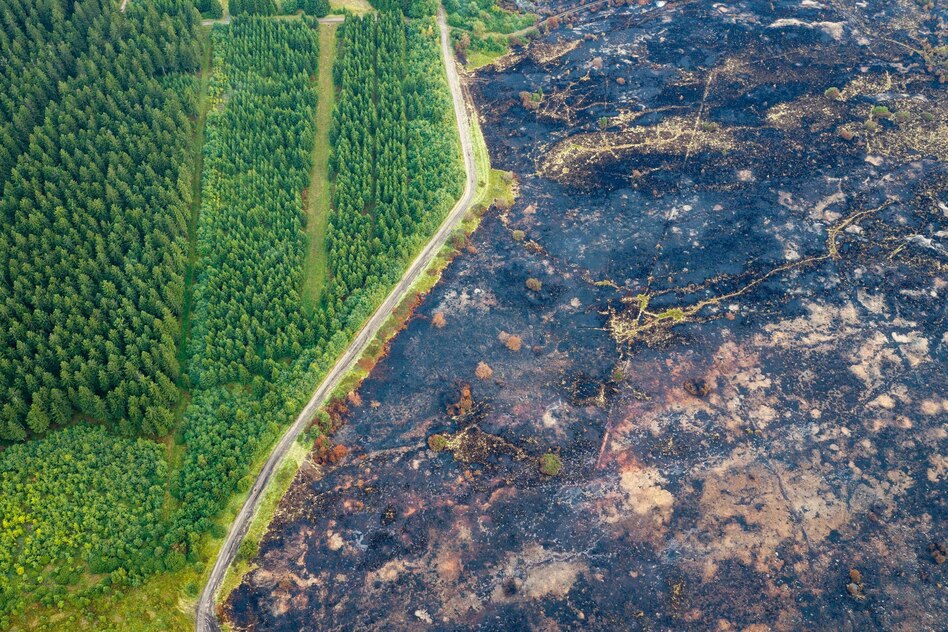
Until recently there were still fires in the High Fens and the Hürtgen Forest on the German-Belgian border - it was probably the largest forest fire in the history of North Rhine-Westphalia. But the megafires in France, Spain and Portugal this year are also the most devastating in their history. Statistically speaking, they are appearing more and more frequently in Europe. The year 2026 is already the year with the most area burned compared to the past 20 years. A study in the journal Global Change Biology has now examined what developments lie ahead of us in the face of climate change and how they can be influenced.
The researchers project two scenarios for the future of the continent. According to their calculations, with an emissions-saving policy and an average temperature increase of 1.8 degrees Celsius, the number of forest fires would increase by 39 percent. However, with an increase of 3.6 degrees Celsius it would be 192 percent. However, previous research has also shown that socioeconomic drivers play a role in the development of fires, including population distribution, land use and economic activities. The researchers therefore carried out another calculation that includes the prosperity and development status of European countries. In these models, the increase in fires could be significantly limited.
When it comes to the question of which prevention and firefighting measures are really important, experts complain that the factor is not robust enough. For even better models, local measures and circumstances would have to be taken into account more closely; such as planting tree species adapted to local conditions, thinning and fuel management. More consideration must also be given to the duration and intensity of the fires in order to be able to carry out more precise calculations in the future.
You are reading a text from our future department. If you're interested in more positive perspectives, subscribe to TEAM FUTURE, the constructive newsletter on climate, knowledge, utopias. Every Thursday you will receive an email from us with strong thoughts for you and the planet.
🐾 Sign up now for the TEAM FUTURE newsletter – free of charge
Despite all the criticism, the study shows for the first time how changes in the global climate, social developments and economic factors are related to the possibilities of containing vegetation fires. And it reminds us of how important it is to act in the face of climate change. But the good news is that a lot can be improved – provided there is political will. The creation of firebreaks and reforestation through more adapted vegetation helps in prevention. And the response to fires can also be better prepared. For example, coordinated extinguishing strategies, sufficient equipment and trained personnel, as well as innovative technologies such as satellite monitoring and AI-supported early detection could be introduced. This is the only way to minimize devastating fires like this year.
Read the full story at the source →
Source: taz