
Germany · taz · · 2h
Climate policy down under: Australia remains committed to coal
Deutsch (original) · Auto-translated to English
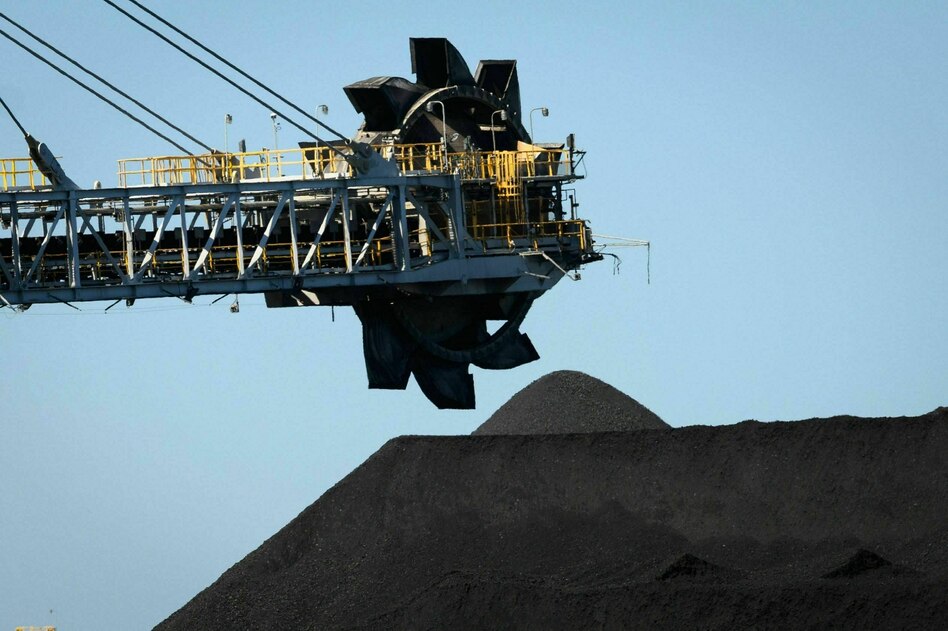
Australia wants to combat global warming while holding on to one of the most profitable businesses of the fossil fuel age. This contradiction precisely describes the climate policy of the government of Anthony Albanese. While the prime minister warned of the economic and security consequences of climate change at Climate Week in New York earlier this week, his country remains one of the world's leading exporters of climate-damaging coal and gas.
“Climate security is the new national security,” said Albanese in the US. Australia knows the consequences of global warming from its own experience, from bushfires to floods. What was missing from the speech, however, is crucial for Australia's international climate balance: A large proportion of the fossil fuels that the country produces are not burned in Australia, but are exported to Asia and other regions of the world.
Australia is the world's third largest exporter of fossil fuels in terms of volume exported, behind Russia and the USA. According to calculations by the climate research institute Climate Analytics, Australia's coal and gas exports in 2023 were associated with around 1.15 billion tonnes of CO₂. However, these emissions appear predominantly in the balance sheets of those countries in which the fuels are burned.
The economic importance of the deal explains the political persistence. According to forecasts by the Australian Ministry of Economic Affairs, Australia is expected to earn around 65 billion Australian dollars (a good 40 billion euros) from exports of liquid gas in 2026/27. In addition, there are around 29 billion from thermal coal and 38 billion from metallurgical coal. Even for 2030/31, Canberra still expects around 98 billion Australian dollars from these three sectors.
This contradiction has not disappeared under the Social Democrat Albanese. Since Labor took over in 2022, 37 new, expanded or extended coal, oil and gas projects have been approved, according to the Climate Council. Some of them are scheduled to last well beyond the middle of the century.
At the same time, Australia is pursuing ambitious climate goals. By 2035, greenhouse gas emissions are expected to fall by 62 to 70 percent compared to 2005. Around 50 percent of the electricity in the power grid now comes from renewable sources. For the government, the two are not opposites: domestic decarbonization and the export of fossil energy are seen as possible parallel tasks.
Internationally, however, this separation is becoming increasingly problematic. Because it doesn't matter for the climate whether the ton of CO₂ is emitted in Brisbane, Tokyo or Shanghai. Australia's fossil exports produced around 30 billion tonnes of CO₂ between 1961 and 2023, according to Climate Analytics. Under current policy guidance, the amount could rise to 45 billion tonnes by 2035.
This is the uncomfortable side of Albanese's climate message: Australia can decarbonize its own electricity sector faster while supplying fossil energy to the world. At the upcoming global climate conference COP31, which Australia will hold in Antalya together with the Pacific states and Turkey, which are already massively affected by global warming, the focus is likely to be less on whether Canberra is pursuing climate protection. Rather, other countries will ask the question of how long Australia can continue to present itself as a climate leader while its prosperity relies largely on the export of the fuels whose combustion is largely responsible for global warming.
Read the full story at the source
Source: taz