
Politics taz
Church institution against the AfD: Now it becomes fundamental
A hospice in the Friesland district terminated an AfD member, and the conciliation hearing at the labor court on Wednesday did not result in an agreement. Now comes the trial. more...
Deutsch (original) ·Auto-translated to English
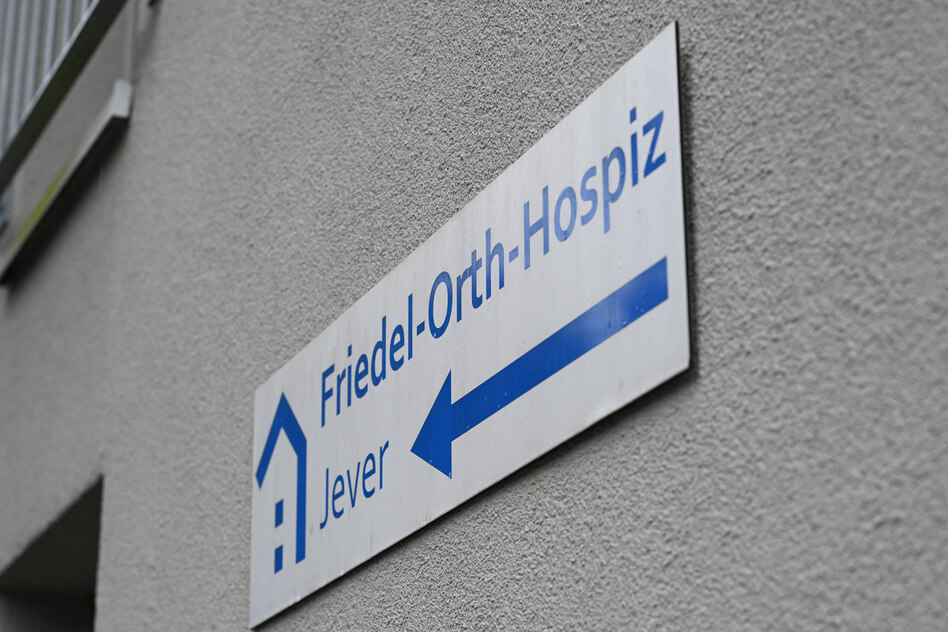
Can a church institution fire an employee because she is running for the AfD? This question will now probably be clarified in court in Wilhelmshaven. A conciliation hearing that took place on Wednesday before the Wilhelmshaven labor court ended without an agreement.
Martina Müller ran as the AfD's top candidate for the Friesland district council and the Wangerland municipal council in the Lower Saxony local elections. When her employer at the diaconal Friedel Orth Hospice noticed this, she received a warning. She should resign her candidacy within a week, otherwise serious consequences would follow. Müller did not respond and was terminated without notice on August 20th.
Müller has now been elected and is now the AfD parliamentary group leader in the Friesland district council. The 60-year-old had worked in the administration of the Friedel Orth Hospice in Jever for 15 years until her resignation. As an institution of the church society “Mission:Lebenshaus”, it belongs to the Inner Mission Bremen, and therefore to Diakonie Deutschland – the welfare association of the Protestant churches in Germany (EKD).
An EKD guideline obliges employees to respect the basic values of the church even outside of their work. “In our opinion,” the Inner Mission wrote in a statement immediately after the termination, “the active candidacy for an organization that is classified as right-wing extremist is in serious tension with the basic values and mission of the church and diakonia.” Special loyalty requirements apply to employees in church-diaconal institutions.
According to the ruling of the Hanover Administrative Court in the dispute over the assessment of the Lower Saxony AfD as a “certain right-wing extremist”, there is evidence of their agitation against human dignity as well as against the principles of democracy and the rule of law. The party generally devalues migrants and is also clearly anti-church, said Mission:Lebenshaus's lawyer, Dieter Ahlers, in the conciliation hearing. “There is a clear contradiction of values here.”
Müller and her lawyer, on the other hand, argue that the assessment of the Lower Saxony Office for the Protection of the Constitution is politically colored - after all, as civil servants, the Office for the Protection of the Constitution is bound by instructions to the SPD-led Ministry of the Interior. Müller emphasized to the press before the trial that she was a Christian and represented conservative values.
So far, individual terminations based on AfD membership have been rejected by the courts - for example in the case of a Düsseldorf professor. But in the case of churches, other rights apply. The procedure could therefore become a precedent. The Diakonie had announced that it wanted to bring about a fundamental judgment. She is not alone: The Catholic Caritas in Salzgitter was just sued in a similar case because it fired an educator after her AfD candidacy.
The AfD and the right-wing scene also want to deal with the matter in principle and are using the cases to attract attention: AfD member of the Bundestag Martin Sichert published a joint video with Martina Müller on Facebook and believed he found evidence of the decline of democracy in her case. Müller is also legally represented in court by AfD member of the Bundestag Christian Wirth. The terminated educator from Salzgitter relies on a right-wing extremist lawyer.
Judge Dorothea Vincetic says she “doesn’t want to position herself here,” not in a conciliation hearing, not in front of so much press. But then she does it, “very vaguely,” as she says herself: “The candidacy alone shouldn’t be enough to get you fired.” And when it comes later to a possible severance payment for the plaintiff, she says: “The parameters in this case give scope to talk about a severance payment above the standard rate.”
That doesn't sound promising for Diakonie's argument before this labor court. However, a lot is still open: in the conciliatory hearing on the termination, the judge was primarily concerned with the question of the extent to which deadlines were set and adhered to. She only briefly discussed the canonical peculiarities of termination processes.
“I think there is still a need for clarification,” said a spokesman for Mission:Lebenshaus after the hearing. The required loyalty to “church values” can extend to large parts of private life in churches. She could certainly be considered impaired by running for certain parties.
In his written submissions, Mission:Lebenshaus's lawyer argues with a judgment from 1985; At that time, the Hamm State Labor Court had decided that a church-run children's home had rightly terminated an educator: the man had previously run for the Marxist-Leninist Party of Germany (MLPD); The court ruled that their values were in stark contrast to the values of the church, and the termination was therefore legal.
Judge Vincetic admitted that she did not yet know the MLPD ruling. “And I can’t assess what the positions of this party are either.” She now has a few months to catch up: Although, according to the Labor Court Act, if conciliatory negotiations are unsuccessful, the trial usually follows immediately, in the Müller case the next hearing date is not scheduled until the end of April.
It will also be clarified how important Müller's work was for the hospice. Since a ruling by the European Court of Justice in 2022, the church is no longer allowed to decide alone which tasks require special loyalty - only certain fields are eligible.
Müller did not work with patients, but in administration. As secretary to the management, she had external contact there, lawyer Ahlers argued, she showed guests around the house and was the first point of contact for many on the phone. The judge indicated that she could interpret Müller's tasks as "proclamatory." According to the ECJ ruling, canon law could also apply if an employee had to credibly represent the church or organization externally.