
Germany · taz · · 3h
AI researcher Theresaüger: “The main problem is irresponsibility”
Deutsch (original) · Auto-translated to English
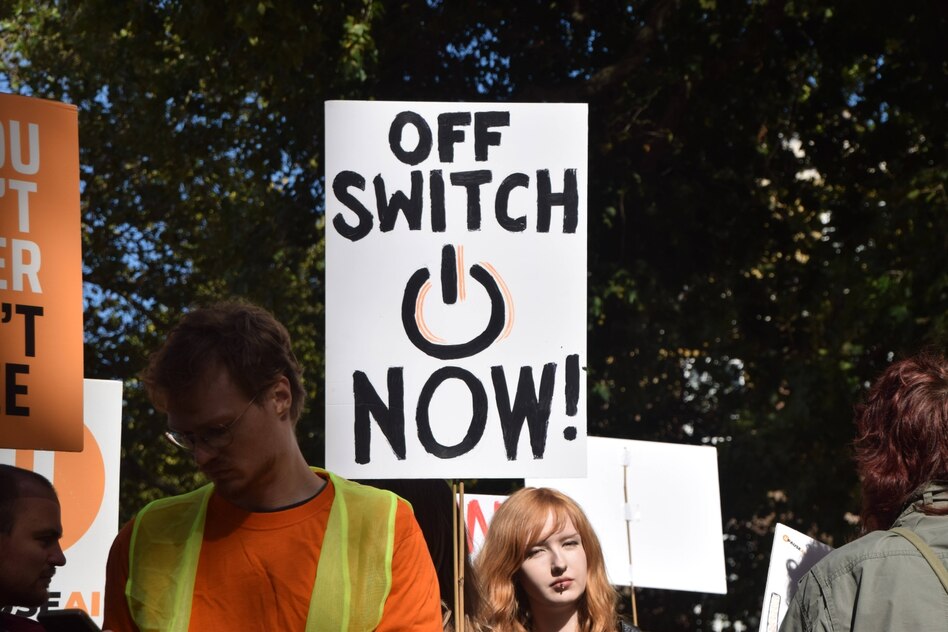
taz: The heads of several AI companies have advocated slower development of new models. How credible do you think that is?
Theresaüger: I'm skeptical about that. The company bosses claim that they care about humanity and therefore want a pause or slowdown in development. But where was their concern for humanity in recent years? Of course, the insights into the dangers of AI are not wrong, and ideas such as those about more supervision and international agreements are also roughly in the right direction. But in my opinion, key elements are missing to take the statements seriously.
üger: One point would be that external supervision is only effective if it is independent and anchored in law. Companies are not allowed to choose for themselves who and how they are checked, as Anthropic boss Amodei, for example, would like. And secondly: In order to act more responsibly, company bosses would not need any further laws.
They could have long been guided by international legal documents that have so far been ignored. For example, the UN resolution for safe AI from the UN General Assembly in March 2024. Overall, the company bosses' suggestions seem more like a maneuver intended to make them look good, but which shifts the main responsibility to others and avoids legal intervention.
Theresaüger is head of the research focus on social values, transformation and AI at the Alexander von Humboldt Institute for Internet and Society (HIIG).
taz: Are the three of them right that development is actually going too quickly?
Zuger: The skin problem is not the speed, but the irresponsibility. If companies were to introduce security mechanisms at the pace of development and pay attention to alignment, i.e. that the AI acts in accordance with the desired values, then the problem would be significantly smaller. But the motto is still: “Move fast and break things.” But if you create the narrative that speed is the problem, then it seems as if AI is some kind of force of nature that is rolling over us and there is nothing we can do about it. This is a dangerous narrative – but one that serves the interests of the industry.
Zuger: Because it causes fainting. Just like the narrative that humanity is in danger. This of course triggers massive fears and portrays AI as a powerful and uncontrollable force. Likewise, when the rhetoric suggests that there is a kind of capitalist compulsion to go to the point of destruction if it brings a market advantage. It is important to realize that behind the current risks and harms of AI lie decisions to allow it. Regulation must make companies more responsible. But at the same time, we as a society could do much more than the current regulation. We could think about AI development differently.
You are reading a text from our future department. If you're interested in more positive perspectives, subscribe to TEAM FUTURE, the constructive newsletter on climate, knowledge, utopias. Every Thursday you will receive an email from us with strong thoughts for you and the planet.
🐾 Sign up now for the TEAM FUTURE newsletter – free of charge
üger: We are currently seeing that the companies behind these models want to maximize their profits first and foremost. We see this along the entire chain, from the poorly paid data workers used to train the models, to the energy supply, where sustainability plays no role, to digital violence through sexualized AI images. When it comes to large commercial applications, no one primarily asks themselves: What does our society need with its multiple crises, how can AI help here so that it benefits the common good?
Zuger: That is the point that we as a society have to negotiate.
üger: In my research team in the “Impact AI” project, we have developed 26 criteria on the topic of common good and sustainability of AI. For example, adequacy of the system – is there really a need for a complex language model or could a simpler system work just as well or better? Or that it is necessary to investigate what possible damage a system can cause. No application in the world will be perfect in all 26 criteria. And yet there are applications and projects that have added value and credibly pursue the common good as their goal.
üger: An application that we have examined in more detail is Fullfact AI. This is an assistance system that helps fact checkers better identify possible disinformation and keep track of it. For example, it detects whether disinformation has already been checked and can be referred to directly. This does not make human fact checkers superfluous, but rather supports them and makes their work more efficient. One project that is in a testing phase is “Sea Clear”. This project uses AI to detect trash in a maritime environment and distinguish it from creatures such as fish. This means that underwater robots can be used to collect garbage from the seabed.
This text first appeared in wochentaz, our weekly newspaper from the left!
Every week, wochentaz is about the world as it is – and as it could be. A left-wing weekly newspaper with a voice, attitude and the special taz view of the world. New every Saturday at the kiosk and of course by subscription.
taz: Where should AI definitely not be in the interests of the common good?
Zuger: I think that in order to clarify this, we should proceed in the debate in three steps. First, we have to clarify: What are the major social problems? Second: Is technology a helpful solution here? Third: If we want to use AI – how do we create safe systems and at the same time protect ourselves from side effects that can never be ruled out? The problem is: We never get to the beginning of such a debate because the industry throws new developments onto the market without considering the losses.
taz: Cases are increasingly becoming known in which AI does not do what it is supposed to - for example, in which AI agents launch cyber attacks. So ban AI agents?
üger: In any case, we see that security cannot currently be guaranteed when using this technology. And let's imagine this: A car manufacturer says, "I can't guarantee that a significant percentage of our cars won't explode in the next ten years." Nobody would say: Well, let's see and take the risk.
No, they are only allowed on the market once they have passed all safety tests - and the drivers are partly liable for the remaining risks, and the manufacturers are partly liable. As with other high-risk industries, AI companies should be liable for damage caused by their products. This would also be an important incentive to take stronger security precautions, assess risks more honestly and avoid damage.
taz: How realistic do you think such a change of course is?
Zuger: I think it's desirable that we only have AI that is oriented towards the common good, but it's not realistic at the moment. A lot would be gained if the current industry acted less harmful to the common good. In the next step, a coexistence is also conceivable: a good range of applications oriented towards the common good and those from profit-oriented companies, which of course still have to meet minimum standards and prevent serious damage.
taz: There is already such a coexistence in social media - and the alternatives have a niche existence...
Zuger: Yes, but the situation is different with AI. The network effect is important for the growth of social media platforms. The more users, the more others are attracted. We don’t have that with AI. AI applications aimed at the common good would give people, institutions and companies a choice and show an alternative to profit-oriented AI companies.
Zuger: That's a big question. What is urgently needed in any case are supervisory structures with sanction mechanisms. And they need to be interlinked at the national level and beyond. Such institutions first have to be created at the multinational level, similar to other danger areas. Combined with liability for damages from AI providers, this could establish a minimum standard for protection against damage caused by AI.
taz: Economic growth is often used as an argument against regulation.
Zuger: The more important question is: At what price do you agree with a market or let it go if it causes long-term damage? In the long run, this price could be much higher than lost growth.
Read the full story at the source
Source: taz