
Germany · taz · · 1h
Kenya tightens its course against migrants: sharp criticism and protests with graffiti
Deutsch (original) · Auto-translated to English
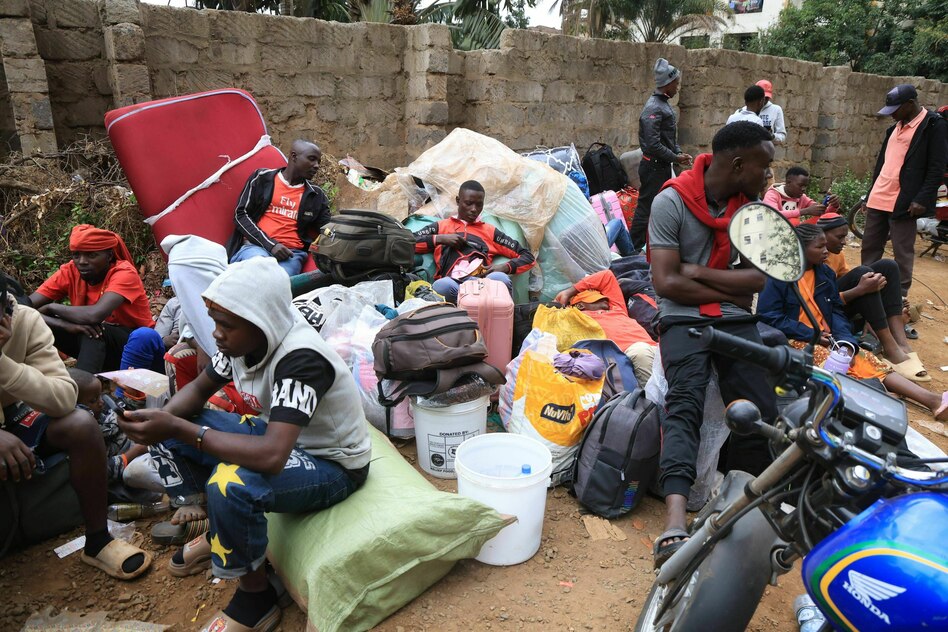
They carry mattresses on their heads, shoulder travel bags and have rolling suitcases in tow - every day hundreds of Ugandans from neighboring Kenya return to their home country via the border post. The reason: At the beginning of September, Kenya's President William Ruto announced that foreign traders or street vendors without work permits would no longer be tolerated doing business in Kenya and thus taking jobs away from Kenyans. He initially set a five-day deadline for foreigners without a work permit to leave the country.
Ruto communicated this decision after a meeting with Kenya's Trade Association, the Association of Small and Medium Enterprises and Kenya's Trade Minister Lee Kinyanjui. Two laws were discussed that were debated in Parliament and now need to be signed by President Ruto. This includes a law that requires foreign investors to buy the majority of local raw materials and hire Kenyan workers.
Trade Minister Kinyanjui stressed to Ruto that there had been “deliberate misuse of visa applications by some visitors”. Although they arrived as investors or tourists, they ultimately devoted themselves to business activities. Thousands of traders protested in Nairobi last week against rising taxes and business costs. Like everywhere in Africa, Kenya's economy is experiencing an enormous downturn. The reasons for this include high gasoline prices as a result of the Iran war, which are crippling the economy, and a persistent drought that is making food prices more expensive.
After the events in South Africa in June, when thousands of African migrants were chased out of the country by angry mobs, many fear this scenario will now be repeated in Kenya. In recent days there have been mob attacks against Burundian, Congolese and Ugandan street traders in Kenya's capital Nairobi.
Fearing attacks, thousands of Burundians sought shelter on the grounds of the Burundian embassy, many dragged their belongings and demanded that the embassy provide them with financial support for the journey home. In Kenya's port city of Mombasa, hundreds of Burundians sought shelter in a church. Burundi's Foreign Minister Edouard Bizimana said in a post on
Kenya's government on Tuesday extended the deadline for foreigners to obtain the necessary documents to 90 days. After this period, however, the government will "strictly" implement immigration laws, it said in a statement, emphasizing: "No individuals or groups have the right to harass, intimidate or threaten foreign nationals."
Kenya is considered a magnet for migrant workers in the East African Community (EAC), as the private sector in Kenya is significantly stronger and therefore offers more jobs and income. The EAC statutes allow people from neighboring countries to migrate freely, similar to the European Schengen area. According to Kenyan immigration rules, migrants from the EAC countries only need a so-called “Class R permit” to settle long-term, take up a job or open a shop.
You can apply for the document online for free, but you must present a police clearance certificate and small business registration to the immigration authorities. These are documents that many street vendors from Burundi or Congo who sell boiled eggs, coffee or sandwiches at bus stops do not have. According to the UN refugee agency UNHCR, around 16,000 Burundians live in Kenya, most of them since the constitutional crisis in their homeland in 2015. They came as refugees, received asylum and then stayed. They looked for work without applying for a work permit.
Kenya's presidential spokesman Hussein Mohamed specified on Tuesday: "We call on all nationals of East African communities without valid residence documents - and in particular Burundian citizens currently in Kenya - to immediately report to their respective high commissions or embassies for formal identity registration."
Kenya's government will work directly with the embassies to legalize the stay in order to give migrants "access to health care, justice and banks without fear," said the spokesman. He stressed that the government has a “zero tolerance policy” towards xenophobia. Kenya is famous for its “hospitality”. The East African Regional Bar Association condemns the action and specifically refers to Article 13 of the EAC Common Market Protocol, which grants persons from EAC member states the right to become self-employed and engage in economic activities anywhere within the EAC.
Kenya's Independent Human Rights Commission (KNCHR) said in a statement it was "concerned about the potential impact on human rights." And the Kenyan criminal police have already arrested a man who incited against Burundians in video messages on social media. He will now be charged with “hate speech,” authorities said. Thousands of Kenyans took to the streets of central Nairobi on Tuesday to demonstrate against xenophobia. Artists sprayed graffiti “Against Xenophobia” on house walls.
Martha Karua, Kenya's former justice minister and presidential candidate in the upcoming 2027 elections, also criticized Ruto's decision on X. For her, this is purely a campaign tactic: "We must not allow economic frustration to turn into xenophobic rhetoric," she warned. When he took office, Ruto promised more jobs and better opportunities, especially to young people. However, the current economic situation is anything but promising.
Read the full story at the source →
Source: taz