
Germany taz
U-turn in tax policy: Black and Red are swimming against the tide
Budget politicians in the government coalition see no scope for reducing electricity taxes. Business representatives are outraged by the zigzag course. more...
Deutsch (original) ·Auto-translated to English
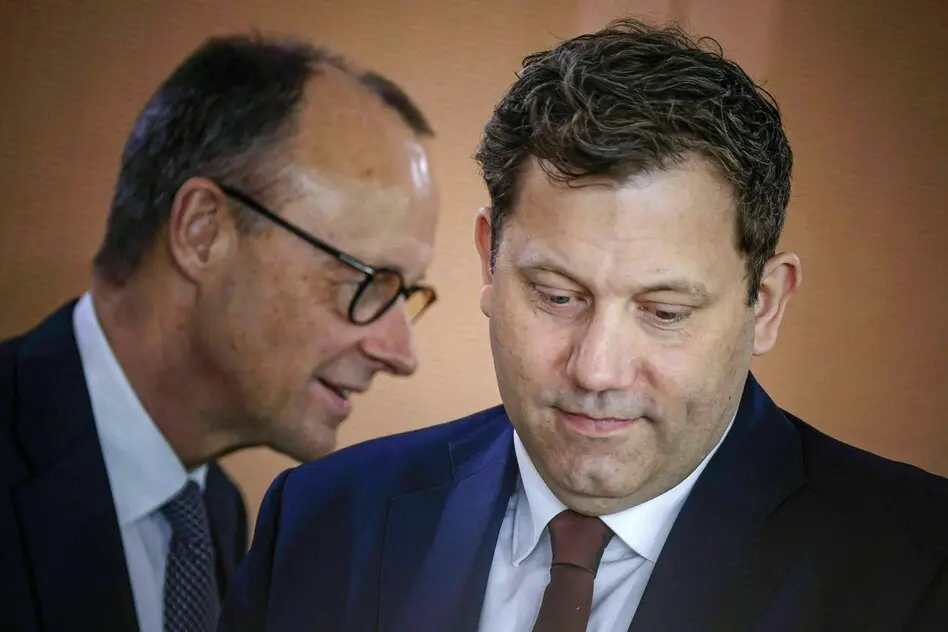
The government factions of the Union and SPD are making a U-turn on important tax projects: According to the will of the black and red budget politicians, the electricity tax should not be reduced for everyone, the introduction of the sugar tax will be postponed and the planned plastic tax will be canceled entirely. Business associations harshly criticize the lack of relief.
Lowering the electricity tax for everyone to the European minimum was originally planned in the coalition agreement between the Union and the SPD. The black-red government then only reduced the electricity tax for large consumers, not for private households and smaller companies. More than 80 percent of all companies do not benefit.
Reducing the tax for them too would lead to lower state revenues of around 5.4 billion euros. The price would fall by around 2 cents per kilowatt hour of electricity. According to the comparison portal Verivox, the savings for a single household with average consumption would be around 35 euros per year; for a three-person household it would have been 95 euros.
On Wednesday evening, coalition representatives declared that they had not found any counter-financing for the reduction. After losing the state elections in October, Chancellor Friedrich Merz (CDU) announced that he would lower them for everyone. He explained that this was an important signal to regain lost trust. According to media reports, Merz still wants to push through the reduction at the coalition talks next Tuesday. Several CDU prime ministers are also calling for a lower electricity tax.
Business representatives are outraged by the back and forth. “The zigzag course of new promises and backtracking is shaking trust in the federal government,” said the President of the German Chamber of Commerce and Industry (DIHK), Peter Adrian. Wednesday's cancellation was a bitter disappointment for companies in Germany.
Adrian criticizes the fact that companies are being burdened with electricity costs because the state subsidy for network fees is to be reduced. Lower electricity costs would not only relieve the burden on companies. “At the same time, they strengthen investments in climate-friendly technologies, from heat pumps to e-mobility to the electrification of industrial processes, and thus make us more independent of fossil energy imports,” he said.
The Association of the Electrical and Digital Industry is also disappointed. “The electricity tax threatens to become a symbol of a coalition reform policy that promises too much and delivers too little,” said managing director Wolfgang Weber.
Anyone who repeatedly makes promises and then takes them back is wasting trust, said the head of the Federal Association of Consumer Organizations (vzbv), Ramona Popp. “It is no longer possible to convey to consumers that the electricity tax cut will no longer be cut.” She criticized the fact that at the same time the introduction of a sugar tax would once again become a “dream”.
The government factions want to postpone the introduction of the tax on sugar-sweetened drinks. It was originally scheduled to come into force in mid-2027. This should not happen until the beginning of 2028. It was said that the industry should be given greater scope to adapt to the new rules. This gives manufacturers longer time to switch production to a lower sugar content. Contrary to what was originally planned, there should be not two, but three tax levels depending on the sugar content.
The introduction of a plastic tax originally agreed by the Union and the SPD has been deleted. This was intended to stem the flood of plastic waste. The coalition has not found an unbureaucratic regulation for this, explained Union parliamentary group leader Thorsten Frei. The plastic tax should have brought the state around 800 million euros in 2027 and almost 1.5 billion euros from 2028.