
Germany · taz · · 2h
Canada as a country of longing: Oh, how beautiful Canada is
Deutsch (original) · Auto-translated to English
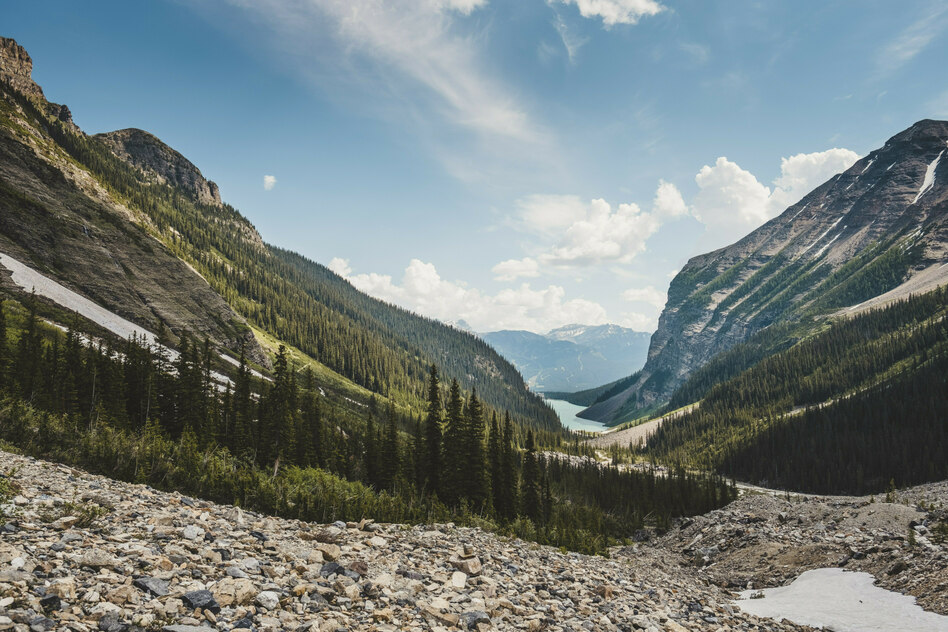
T he leaves on the trees turn orange-brown, some fall and are blown up by the cool wind and passing cars. The sun hangs in a sea of blue over a lake so gigantic that I can barely see the end of it. I walk through the streets of Toronto, looking forward to every shop that has a Pride flag on the window (there are so many!) and later drinking my filter coffee in a small café with a wooden veranda. Oh how beautiful you are, Canada.
Now that fall is upon us again, I'm thinking back to last year, around the same time, when I traveled to the land of scenic landscapes, bears, ice hockey, and maple syrup. I'm hardly alone in my romanticized idea of Canada; in fact, it was probably never my own thoughts that conjured up this image. Rather, as is so often the case, it is an idea, a promise that is only too readily conveyed to us in films and books. Or: good marketing.
Ursula von der Leyen, President of the European Commission, also seems to dream of Canada. She proposed that it should become the EU's first “associated member”. For the suggestion, she immediately received kisses left and right from Canadian Prime Minister Mark Carney.
Our countries are already closely connected, but the free trade agreement should make them even better buddies. What exactly this will look like has not yet been decided. A start could be that all EU citizens receive a bottle of maple syrup. Bonus material: Trump now jumps in the triangle like an angry Rumpelstiltskin and threatens - what else - high tariffs.
Even before the USA mutated into autocracy under Donald Trump and more and more US scientists, journalists and activists were now emigrating to Canada or at least thinking about it, the country was idealized as a place of refuge in numerous stories.
Just think of “The Handmaid’s Tale,” whose fiction seems to be becoming reality. In contrast to this, Canada stands as a shining maple leaf of democracy, as the successor of the American dream, so to speak, and as a country of longing par excellence. We also see this embodiment in series such as “Sterling Point”, “Heated Rivalry” or “Every Year After”. The romanticization of Canada is real.
The reality could not be further away: in Canada, which is the second largest country in the world in terms of area, the climate crisis is occurring twice as quickly as anywhere else. The northern territories, which extend into the Arctic, are characterized by melting glaciers and floods, while in the south of the country, periods of drought, tornadoes and drastic forest fires determine the climate.
Or rather, the climate crisis determines fires and makes them all the more likely. This has often provoked large evacuations, such as in 2023, when 15,000 people in the province of Quebec had to leave their homes as a precautionary measure between May and June and thousands lost them. Research has its own name for these extremes: “fire weather.”
And while I'm still thinking about last year's orange autumn, most Canadians have a completely different association with the color. Orange stands for solidarity with the country's indigenous population. Because not surprisingly, Canada also has a dark and not so ancient past. In the 19th and 20th centuries, more than 150,000 indigenous children were separated from their parents and placed in residential schools. The goal: erase indigenous knowledge and culture.
More than 6,000 students died in the educational institutions and 15,000 later filed complaints of sexual and physical abuse. The last of these facilities was only closed in 1996; the refurbishment began with a lot of headwind in the 2000s and has not been completed to this day. Mass graves are repeatedly found and other details come to light that send the country into a self-inflicted identity crisis. On this point, our countries seem to be good buddies, after all.
As much as I want to join Chappell Roan's Canadian escapism in her song "The Subway" and the thought lurks in the back of my mind, if everything goes to hell, then "well, fuck this city, I'm moving to Saskatchewan". This raises a question that white people in particular should consider: Canada, were you ever beautiful?
Read the full story at the source
Source: taz