
Politics taz
Justice Minister skeptical: “Many question marks” about the law against socialization
Interior Minister Dobrindt is planning high hurdles to socialize apartments. Justice Minister Hubig still needs clarification. more...
Deutsch (original) ·Auto-translated to English
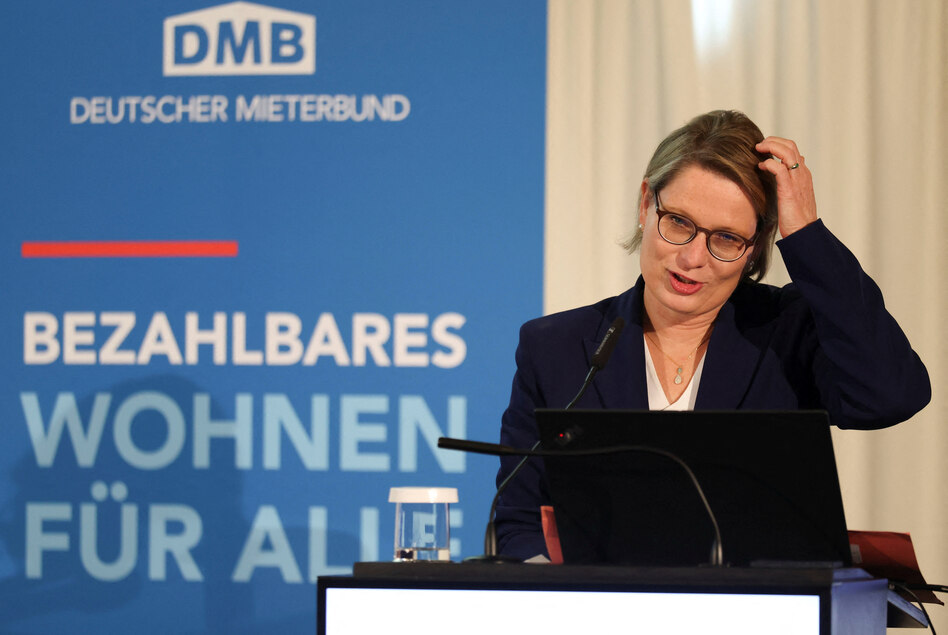
dpa Federal Justice Minister Stefanie Hubig still sees a significant need for clarification regarding the federal government's planned law, which is intended to make socialization more difficult. "There are still many question marks - and of course the debate is not over. I take the constitutional and political concerns about the project seriously," said the SPD politician to the Kölner Stadt-Anzeiger.
At the same time, Hubig made it clear that she was not ignoring the law. "At the same time, it is clear to me: If something has been decided in the coalition committee, then everyone is well advised to get involved constructively and work together in a spirit of trust. That is my line," she emphasized.
According to the federal government, key points for the law have been completed. Among other things, socialization of rental apartments, for example, should only be possible if it can be proven that this is absolutely necessary and all other means such as investments and funding for housing construction have been exhausted. Federal Interior Minister Alexander Dobrindt (CSU) told the Bild newspaper: “We will make it clear in an investment protection law that arbitrary left-wing socialization fetish is incompatible with the Basic Law.”
The desired coalition of the Left, the Greens and the SPD in Berlin wants to socialize large private housing stocks. As can be seen from their exploratory paper, the parties in the capital want to take action against private housing companies with a portfolio of more than 10,000 apartments. They are planning compensation costs of 16 billion euros, which is likely to be below the market value of the apartments.
Hubig considers the approach of the Left, the Greens and the SPD in Berlin to be unsuitable. She referred to many billions in compensation and years of legal uncertainty. "It would be better to invest the money in building new affordable apartments. We also need to further strengthen our social tenancy law," she said about possible alternatives.