
Germany taz
Young mayor about togetherness: “I want to grow old in Gartz”
Brandenburg's youngest mayor holds office in Gartz (Oder). Luca Piwodda is working hard to get social life back on track. more...
Deutsch (original) ·Auto-translated to English
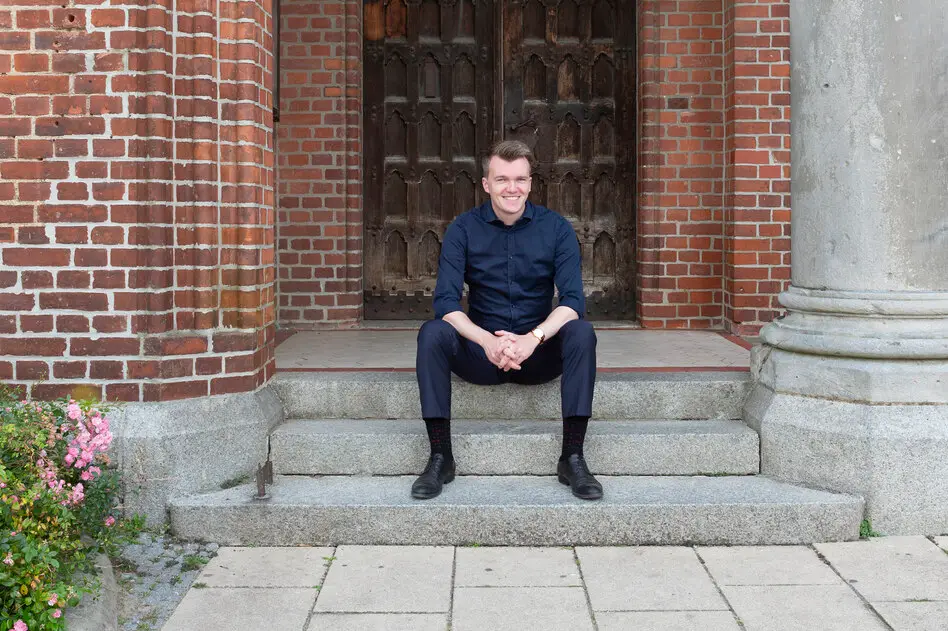
When you approach Gartz an der Oder in Uckermark from the west by car, the road suddenly leads steeply down into the valley. There is the pretty old town with the two red church towers and the city gate, which is also made of brick. Next to it is the town hall, where Luca Piwodda works. Before the interview, he takes the taz through the old building.
Luca Piwodda: We have been renovating here since 2024, when I was elected. Fortunately, we have many people who lend a hand. Our city treasury is empty. This is all only possible through donations and personal work.
Piwodda: Yes, I tore out the old floors. I can help with anything that needs to be destroyed. I can only shape things politically. (laughs)
taz: You share the town hall with the citizens.
Piwodda: Yes, the idea was that the city itself could be a role model. If we want to create places of encounter, we have to start with ourselves. That's why the local history club and the carnival club are here now and a group with offers for 0 to 3 year olds. We have created a youth area upstairs. The children and young people chose the furniture themselves and I went to Schwedt with them. There has also recently been a children's disco. I also use the billiards room during public consultation hours. This is good in times of conflict, it lightens the mood.
Luca Piwodda, born in 1999, grew up in Gartz (Oder), where he returned after studying politics in Greifswald. With fellow students he founded the Free Parliamentary Alliance (FPA) party in Greifswald in 2019, which merged with the Party of Progress (PdF) in 2024. Piwodda has been the honorary mayor of Gartz since 2024. He earns his living as managing director of the communications agency “Lokalschmiede”, which he founded. She specializes in political campaigns for local elections.
Gartz in Brandenburg is located on the Oder, i.e. on the German-Polish border, and Stettin is only about half an hour's drive away. Gartz has city status not because of the number of inhabitants - today there are only around 2,300 - but for historical reasons: in 1249, Duke Barnim I of Pomerania granted the town city rights. Almost a century later, Gartz became a member of the Hanseatic League.
Piwodda: They're in another building in the city.
taz: Your grandfather was also mayor of Gartz for 11 years.
Piwodda: Yes, and my grandmother was mayor in the GDR, so I'm the third in the family. Like my grandfather, my father was in the SPD, and there was a lot of talk about politics at home. But I never felt compelled to become politically active, I just wanted to know what my father and grandfather were doing all the time. When I was 15 I went to an SPD district party conference for the first time. Then I took part in pedestrian election campaigns and helped where I could. But I never became a member; I always shied away from it.
taz: Nevertheless, you studied politics. Are you going to Greifswald to study because Gartz is not far from there?
Piwodda: Yes, it's only 1.5 hours by car. I was in Gartz almost every weekend and continued to play football in the club. I've been there since my childhood. In 2006 there was the World Cup in our own country, I was 7, and there was no avoiding football. Although there weren't always all youth teams in Gartz...
taz: There aren't many children and young people. Today, every second of the approximately 2,300 Gartz residents is over 65. Nevertheless, they didn't want to leave. What ties you to this place?
Piwodda: The Oder and nature. I had a very sheltered childhood, was outside a lot, and also had a tree house that my father and grandfather built. I felt totally comfortable and decided back then that I wanted to grow old in Gartz.
This text first appeared in wochentaz, our weekly newspaper from the left!
Every week, wochentaz is about the world as it is – and as it could be. A left-wing weekly newspaper with a voice, attitude and the special taz view of the world. New every Saturday at the kiosk and of course by subscription.
taz: Your political career began in Greifswald in Mecklenburg-Western Pomerania.
Piwodda: I was politically homeless for a while; I first had to process the experience from the Bundestag. Then I found friends who all wanted to do something politically, but couldn't find a party either. We founded one ourselves. We were all between 18 and 20 years old. The Free Parliamentary Alliance (FPA) ran for the city council election in Greifswald, but we only achieved 0.2 percent. That was very disappointing for me.
taz: That was on May 26, 2019. On the same day, your party colleague Inge Reppenhagen won the mayoral election in Gartz - against her grandfather, who really resented her for that.
Piwodda: Yes, Inge was completely in the shark tank, not only because of the two opposing candidates, but also because she is a younger woman. After the first city council meeting, she burst into tears because she was so desperate. I felt personally responsible, as I was party chairman and encouraged her to run. Several times I thought about giving up everything. You don't go into politics for something like that, I thought. But in the end you were able to motivate yourself to keep going. In 2021 we ran for the Mecklenburg-Western Pomerania state parliament.
taz: You failed again in the elections.
Piwodda: Yes, we had 0.01 percent, in the direct constituencies 0.4 to 0.7 percent, all well below what we wanted to achieve. I was really exhausted.
Piwodda: I have a few places to retreat to. I find Weimar, for example, totally inspiring. I was there for a week and a half straight after election day, just getting out, not hearing anyone, thinking about what happens next. The realization then emerged pretty quickly that we can't go from zero to one hundred straight away, we have to work our way up bit by bit from the local level to the state level, to the federal level, in a really grassroots manner. In December 2021, three months after the state elections, we founded the Cultural Alliance in Gartz, a municipal association that organizes cultural events.
Piwodda: We wanted to bring people together who otherwise wouldn't see each other in everyday life because there was this toxic climate in the clubs, as well as in the city council. We wanted to break through that. We had panel discussions, book readings, music concerts, quiz nights, opera performances. Almost everything is free. This is very important in Gartz. To this day we do a lot of events at the beginning of the month because that's when people can buy a beer or something. At the end of the month, many people would no longer have any money for this.
Piwodda: Yes, it was so powerful that we said we had to turn this new spirit into a political awakening. In November 2022 I announced my candidacy for mayor.
taz: You once said that Trump's first victory in the election as US President was the trigger for your entry into politics. Do you feel the authoritarian change in your neck? In the federal election, the AfD got 54 percent in Gartz.
Piwodda: Yes, there have to be new forces that come along. SPD, CDU, I have completely lost confidence that they can do anything better. If no solutions are offered, people will find others like the AfD or Trump. We have to be the ones who step into this vacuum and show that it can also be done constructively, that we can work together instead of in a divisive manner. The people of Gartner made a conscious decision to do this. I visited every single one of them during the 18 months of my election campaign and said that all the fights from 50 years ago, the arguments between families and clubs, must stop. We are now doing it together and completely new.
taz: So you often had to play billiards?
Piwodda: Yes. You also have to endure a lot. Sometimes you swallow something and hope that insight will come at some point.
taz: There is no firewall in Gartz.
Piwodda: We don't even have factions. That doesn't make sense with ten people appointed, two of whom are from the AfD. I don't believe in parties at all. They may have been good for organizing society in the 19th and 20th centuries, but in the 21st century they are dinosaurs.
taz: The fact is that the parties in East Germany lack the basis. Some state associations are as large as local associations in the West.
Piwodda: It is still assumed that parties are the organizational force of society that takes up all the social trends, ideas, concerns and needs and brings them to parliament. But our society no longer works that way. We need models that allow people to come up with ideas that they can implement very quickly.
taz: You already live that in Gartz. A lot has happened in your two years in office.
Piwodda: I'm just the organizer. For example, four young people wrote to me about the BMX track. Without the cooperation of a lot of people we wouldn't have been able to renovate it; there was no money. Now things are going smoothly, people are getting active because they understand that we have to work together for something bigger. Last year there were three clubs founded, this week a chess club was founded.
taz: But you also put in a lot of effort. In addition to cultural and youth projects, you are planning a wind farm - with the approval of the AfD - as well as tourist projects such as the pedestrian zone on the Oder and the excursion steamer with Stettin. Now you want to make Gartz a crane city.
Piwodda: I've been promoting this for a year and a half. We are currently conducting a citizen survey about this, and every Gartzer has received a letter.
Piwodda: There are a few, but loud ones, who say that we were an agricultural town for centuries. They focus on the past. Most of the agricultural land here is now owned by large international corporations. The fact that they are now in charge hurts your self-esteem. This is also accompanied by a loss of identity.
taz: The American sociologist Arlie Russell Hochschild speaks of “stolen pride,” which makes it impossible for people to respond to change positively.
Piwodda: Yes, I also see that in the city council. You always have three people who are against it. Unfortunately, my grandfather is usually there too.
taz: How do you two get along? After he was voted out, there was initially radio silence.
Piwodda: We manage to meet privately for coffee without hostility, but argue very hard politically. I have a feeling he still hasn't gotten over the fact that he's no longer mayor. A lot of what we do wasn't possible back then. He can't really come to terms with that.
taz: Maybe it's just too fast for some people. When I looked at your weekly report on Facebook, I felt dizzy, so much content and the crazy pace of your speech.
Piwodda: That's right, sometimes I overwhelm people because I have ten ideas and want to implement them all right away. I really need to learn to slow down.
Piwodda: I can't sit still, like my father. He was in the carnival club, was involved in the football club and made the Gartzer Zeitung, always on three construction sites at the same time.
taz: Let's list your construction sites: You are mayor, head of a district and member of the district council, strategist for the Party of Progress, with which your party has merged. You are also a member of the European Taskforce Democracy27, part of the democracy network Factor D and chairman of three associations. How many hours are in your day?
Piwodda: I usually get up at five and my day lasts until midnight. In total I do 40 to 50 hours of volunteer work a week. Luckily, my communications agency is doing quite well, and the 19 freelancers I employ across the country take a lot off my plate. I only receive around 900 euros in compensation for my mayoralty.
taz: So you have to be able to afford such an office.
Piwodda: Yes, or you are retired. I don't want to be polemical about federal politics, but I'm always angry when I see how the ministries expand from year to year, and we 11,000 mayors mostly do this on a voluntary basis. In general, we get a lot out of volunteering. For example, the “Make Gartz more beautiful” initiative, which now maintains 22 green spaces. You can't pay for what they're doing with money. At the same time, it is a state failure because we cannot hire a third city worker to maintain these green spaces. The state is withdrawing more and more.
Piwodda: Things are still going well at the moment because we basically run a shadow household. Many foundations invest in Gartz, which is done through the associations. For example, the children and youth parliament that we now want to set up will also be financed in this way.
taz: Many private foundations have understood that in order to strengthen democracy you have to support local initiatives.
Piwodda: I always say: We can abolish all democracy support programs if all municipalities with fewer than 5,000 inhabitants are financed with a village community center with citizen offerings. In the best case scenario, you hire another person who can take care of it all day long. Much more would have been done for democracy.
taz: Just like you're doing here now. How do you maintain this pace?
Piwodda: I usually ignore hate online. When I meet people, I shake their hands and am friendly. I also learned that: Many people are frustrated by big politics and think everything is really bad. It is not my place to make moral judgments about how they vote.
taz: But how do you manage to remain so optimistic and motivated in view of current developments?
Piwodda: I'm simply the guy who tries to restore trust in democracy at the local level. Without wanting to ignore the big things, but that's simply not my area of responsibility, and those in Gartz don't want me to explain federal policy either. I am elected for the street to be made here, for the cultural festival to take place. This attitude helps me to relax.