
World · taz · · 2h
Now Metro too: Putin is confiscating foreign companies
Deutsch (original) · Auto-translated to English
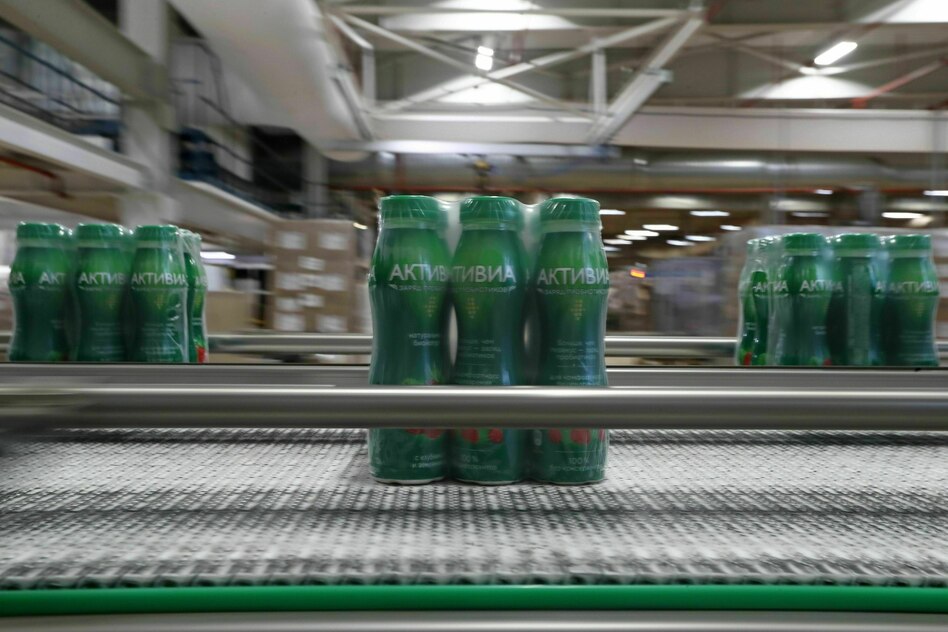
Russian President Vladimir Putin has placed the assets of the German trading group Metro in Russia under temporary state administration. This emerges from a presidential decree published on Monday. The document does not give a reason for the move. The wholesaler still has 91 stores in Russia.
Metro is not an isolated case. If Russian businessmen don't act, their companies will be confiscated. Values of foreign corporations that arouse desire in Russia end up in the clutches of those loyal to the Kremlin. Kremlin ruler Vladimir Putin called the Russian-based subsidiaries of foreign companies acquired in this way a “pretty good inheritance” - especially in terms of the equipment, infrastructure, trained staff and Western business processes they acquired.
While the EU is shying away from using the hundreds of billions of euros of Russian assets frozen in Europe for Ukraine, Putin's deputy in the National Security Council, Dmitry Medvedev, wants to gain even more loot: One should "remember the first acts of Soviet power, on the basis of which foreign factories were forcibly transferred into state ownership free of charge. Nobody has ever given anything back," wrote the former Russian President and Prime Minister on his Telegram channel on Saturday last week.
The tide of nationalizations is rising ever higher: Since Russia's full-scale invasion of Ukraine in February 2022, 805 companies with assets worth over 6.5 trillion rubles (68 billion euros at the current exchange rate) have been confiscated by the end of 2025, according to the leading Moscow business law firm Nektors, Savelyev and Partners (NSP).
The legal practice of the NSP lawyers suggests that the nationalizations are rigged games: According to them, “the entire expropriation process takes around two months, the matter is usually decided in a single court hearing” - highly unusual in often complex cases.
Recently, Putin signed a decree according to which “critical infrastructure facilities” could be transferred to the Rosimuzhestvo state property fund if “ineffective measures to counter attacks using unmanned aerial vehicles” were taken.
Recently, refineries - including those of the largest private oil company Lukoil - or logistics centers of online retailers Wildberries and Ozon have been repeatedly hit by Ukrainian drones. According to the decree, the “delayed restoration” of objects can also be a reason for confiscation.
Political scientist Kirill Rogow, however, wonders who should repair a hit refinery if the next drone threatens shortly. He sees Putin's Ukas as an act of "heritage sneakers. The meaning of the decree is: If your object was bombed by Ukrainian drones, it is not Putin who started this war that is to blame - but you yourself."
It was announced at the weekend that the Ukas was to be used for the first time: the Trassa gas station network, the second largest private one in the greater Moscow area, is said to believe in it. This was reported by the Moscow Business Agency. In total, there is a - still secret - list of 167 eligible companies, said Deputy Prime Minister Denis Manturov.
According to the US think tank Institute for the Study of War, the decree creates “conditions for broad nationalization under the pretext of protection against drones.” The aim is “additional income for the budget”.
There will be money in the Kremlin's coffers if the nationalized companies are sold on or if oligarchs pay to ensure that their companies do not fall under state control. There is a “carrot and stick system” for this, says Maria Snegovaya, Russia expert at the Center for Strategic and International Studies: “The Kremlin relies on the unshakable loyalty of its people and the most important actors in the system.” After a meeting with Putin, oligarchs announced that they had “voluntarily donated” 2.3 billion euros to the state budget. Others, like banker Oleg Tinkow, sold practically for kopecks: “I couldn’t negotiate the price.”
Russian media report that the factories of the US packaging company Aptar and the French dairy giant Danone are said to have gone to a nephew of the ruler of the Chechen Republic. Other large foreign subsidiaries and Russian corporations - such as the agricultural holding Rusagro, airports, the largest car dealer Rolf, gold mines, the Swedish furniture retailer Ikea, dozens of ports and others - are said to have ended up in the hands of holdings close to Putin's friends, according to Russian media.
VW - where Chinese cars are now assembled at the Kaluga plant -, the hardware store chain Obi, the French retail chain Auchan and the Swiss food giant Nestlé are to check acquaintances of important Russian officials in Russia today. The redistribution, castigated by economist Rogow as a “shining example of state madness,” is now even being criticized by Central Bank boss Elvira Nabiullina because of the expropriation of small shareholders.
Big business sought to halt the wave of nationalizations that began shortly after the full-scale invasion of Ukraine began and has already become the country's largest reallocation of property since privatization in the 1990s at their annual meeting with Putin. The Kremlin chief refused. And Alexander Shokhin, head of the business association, begged: “If the state needs something, then fine, it should nationalize it – but it should pay for it and buy it from the owner.”
Read the full story at the source
Source: taz