
Politics · taz · · 1h
Israel before the parliamentary election: who is allowed to run - and who is not
Deutsch (original) · Auto-translated to English
The largest parties of the Arab minority in Israel are to be excluded from the upcoming parliamentary elections following a decision by the electoral commission. On Wednesday, at the request of the government coalition, the commission voted to exclude Raam and the United List with the parties Balad, Hadash and Ta'al as well as two individual candidates from the ballot.
The decision still needs to be confirmed by the Supreme Court, which has mostly overturned such exclusions in the past. It can be assumed that this will be the case again this time.
The electoral commission is made up of delegates from the parties represented in parliament. Their decisions reflect the majority in the Knesset - i.e. an overhang to the right. Before elections, Israeli parties regularly try to have the candidacies of their political opponents declared invalid by the electoral commission. Petitions for the exclusion of parties or individuals must be submitted to the Electoral Commission.
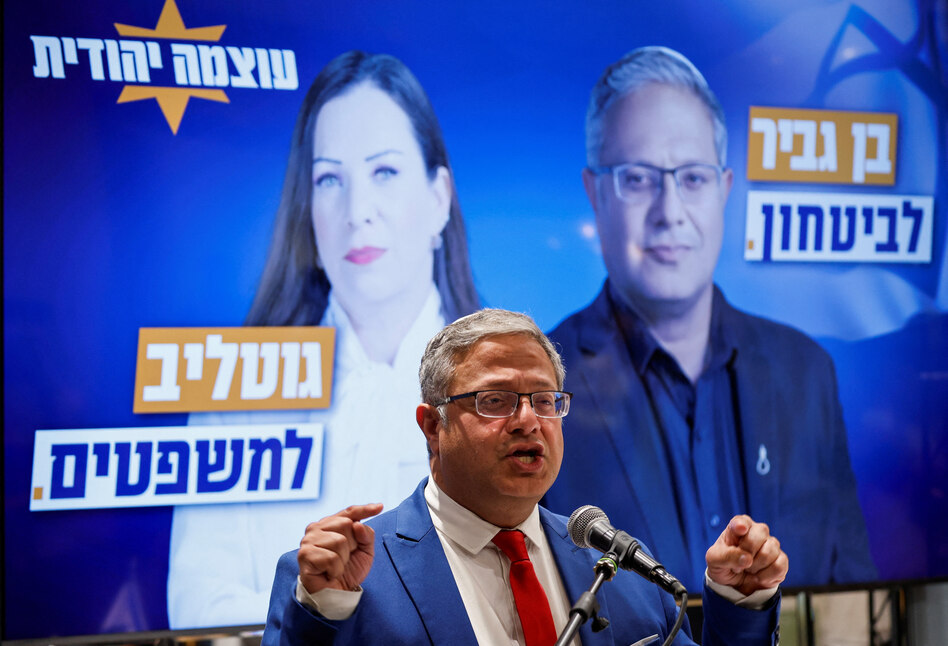
Likud, the party of the ruling Prime Minister Benjamin Netanyahu, made the request to disqualify the United List; The motion against Raam came, among others, from Likud and the right-wing extremist party Otzma Yehudit, to which Internal Security Minister Itamar Ben-Gvir belongs.
The office of Attorney General Gali Baharav-Miara immediately declared that it rejected the disqualification of Raam as well as the United List.
However, one decision of the electoral commission is supported by Baharav-Miara and Supreme Court judge Noam Sohlberg: the exclusion of Balad politician Sami Abu Shehadeh. In an article for the Arab48 portal on October 8, 2023, he spoke of the attack by Palestinian militias in Israel the day before as a “strategic event” whose “results will become apparent as soon as the waves have calmed down”. He also called the October 7 massacres the “Al-Aqsa flood,” in the style of the attackers.
The second person disqualified by the electoral commission is Ofer Cassif. He runs for the United List, is one of Israel's best-known left-wing politicians and a critic of the war in the Gaza Strip. He said the election commission was “politically biased” and he was “convinced the Supreme Court will overturn the decision.”
About 20 percent of Israel's population speaks Arabic natively; they often self-identify as Palestinians. In the election on October 27th, the moderate Islamist party Raam could play the role of kingmaker in forming a government. Polls show the party is likely to win 5 to 6 of the 120 seats in the Knesset. And thus help the anti-Netanyahu camp gain a coalition majority.
Party leader Mansur Abbas recently caused a stir when he announced that former MP and Deputy Police Minister Joav Segalovitz would be the first Jewish Israeli to run for Raam.
Raam had already made history in 2021 when Abbas led the party into the broad governing coalition of Naftali Bennett and Jair Lapid. This was the first time that an independent Arab party took part in an Israeli government majority. The collaboration was controversial among both Arab and Jewish Israelis.
The Electoral Commission's hearings will enter the next round on Thursday. Then, among other things, she hears petitions to exclude the right-wing extremist Otzma Yehudit, the party of Internal Security Minister Itamar Ben-Gvir. (with afp)
Read the full story at the source
Source: taz