
Germany · taz · · 3h
International Dust Archive: “Dust is the total equalizer”
Deutsch (original) · Auto-translated to English
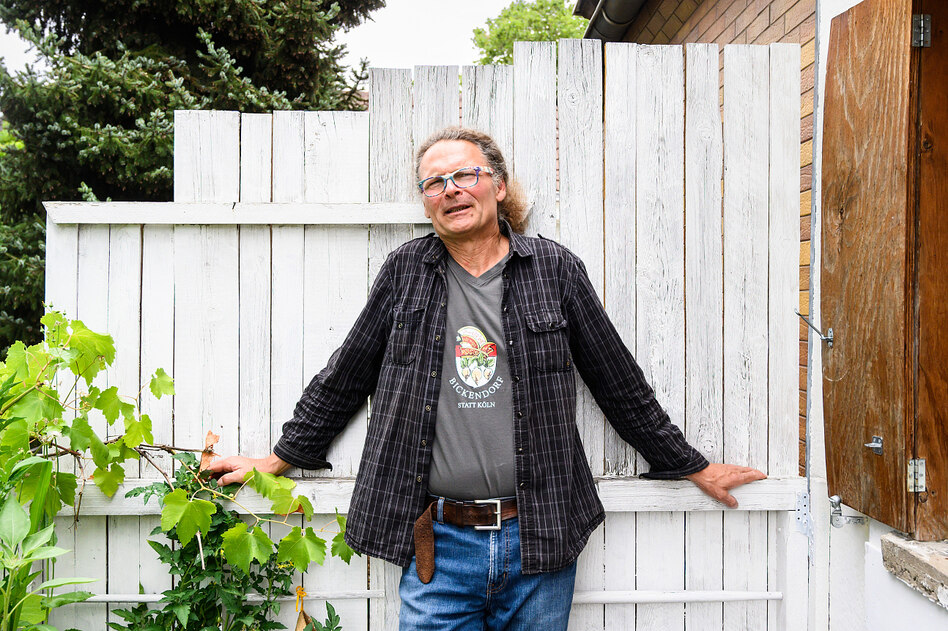
taz: Mr. Stöcker, why are you collecting dust? To defy your own transience?
Wolfgang Stöcker: Who knows… your own transience is something you deal with artistically anyway. And when I deal with dust, then I see: I am not yet dust. I'm still here. Of course I'm happy about that. On the other hand, when dealing with dust, the question of transience arises in general. I collect dust from places that have historical cultural significance and that are continually cleaned. The fact that you still find dust there means: we have to make an effort, otherwise these places will collect dust. I find this height of difference between the great meaning - for example of a cathedral - and the initially annoying dust that dissipates all meaning exciting.
taz: How did this art project start?
Stöcker: Our family has always collected. As a child, my brother collected beer mats and I collected stamps and stones myself. And I still have my grandmother's wonderful collection of postcards today. She also collected sugar cubes. I have hundreds of them. She also, for whatever reason, hoarded kefir cups that I played with as a child. Later I studied history. There is also something collecting about it, because it has to do with archival work and saving things.
Wolfgang Stöcker, born in 1969, is a trained surveyor, studied history and art and did his doctorate on death and burial culture. In 2004 he founded his now internationally operating dust archive. The freelance artist exhibits nationwide, gives lectures and gives workshops. He also organizes dust tours and expeditions on foot and by bike in the Cologne and Bergisch Gladbach areas as well as in the Eifel. He lives with his family in Cologne.
The International Dust Archive consists of countless folders with dust samples from all over the world in small plastic bags. Many were sent upon request, others were collected by the artist himself. A number of samples are supplemented by the corresponding correspondence, a photo of the location where they were found and, in the case of self-collected dust, the date, time and weather during collection. Using wax, Stöcker formed architectural-looking sculptures from some of the dust.
Stöcker: No. My second major was art, and at some point I thought: How can I collect historical buildings? Of course I can take photos of them or buy postcards. But a different, artificial reality emerges. How can I really take a building with me? The dust is obvious. Nobody wants that, I can find it everywhere. I started it in 2004 and initially saw it as a joke: What happens if I say: I have the – as it was called back then – “Deutsche Staubarchiv”, like “Deutsche Bank” or “Deutsche Post”?
Stöcker: I started with churches. Church, relic, dust – they go well together, even dust has something morbid about it. In addition, churches are the buildings that have existed the longest in our culture. Which have the longest continuous, at the same time spiritual use. This is deposited, even in the dust.
Stöcker: The first thing I did was ask the Aachen Cathedral administration in writing for dust. It is one of the oldest buildings north of the Alps in the Rhineland. I wrote it down nine times. At some point the answer came: “We have all received your letters, but what exactly do you do?” So I came into an obligation to explain and became more concerned with dust - with its symbolic value, but also scientifically. In this learning process, I got to know my own work better and expanded it.
taz: How many dust samples do you have now?
Stöcker: I don't know exactly how many plastic bags with dust samples I now have in my file folders. There may be around 700 samples. The idea of starting a collection came about on a whim, I didn't think much of it. When the first reply letters and samples came, I realized: Now I have to keep doing it, otherwise it would just be a flash in the pan. I soon renamed it the “International Dust Archive” because it contains samples from all over the world and I didn’t want to promote “Germanness” in this country. I've been doing it for 20 years now.
Stöcker: Strictly speaking, the correspondence is the actual archive and the dust is by definition a collection. Of course, the texts are an inseparable part of this growing socially plastic work of art.
taz: Do all institutions respond as hesitantly as the ones in Aachen?
Stöcker: No, because the project is now better known and is no longer questioned as much. Most of the time the answers are short. “Here he is.” It's probably a bit annoying for some people. “Here, we hope you are satisfied” it says. Sometimes there are also very nice answers. For example, I wrote to the ten largest German cities and asked for dust from the town halls.
taz: They said there wasn't one?
Stöcker: Yes, they sent everyone. The people of Dortmund were the last and wrote: "You know, as Westphalia we think everything through very carefully. That's why we waited until our new budget was approved. Because if there had been problems, we wouldn't have been able to give anything away from the city." Or if I forget to send the small clamp bag for the dust, some people write that they can't send anything because of it. Or “We have now taken a different bag.”
Stöcker: From Bellevue Palace, the residence of the Federal President, the message has always been: "No, we don't send any dust, there isn't any. It's always totally clean." Which is, of course, nonsense.
This text first appeared in wochentaz, our weekly newspaper from the left!
Every week, wochentaz is about the world as it is – and as it could be. A left-wing weekly newspaper with a voice, attitude and the special taz view of the world. New every Saturday at the kiosk and of course by subscription.
Stocker: Yes. I have never received dust from politicians above the mayor's level. Dust also has something about it: “Oh, there’s dust, they’re lazy, they’re careless…” Once we officially requested dust removal from the Düsseldorf state parliament for a WDR program. Then a letter came back: What were we even thinking? It is a serious institution, no dust is taken from it...
taz: Have you ever asked the White House?
Stöcker: Yes, but there was never an answer. However, I have dust from the Hall of the People in Beijing. Someone brought this to me many years ago. If you stooped to grab a piece of fluff during a tour there today, security would probably come straight away.
taz: What types of dust do you actually collect?
Stöcker: It started with sacred dust from churches, temples and other places of religious worship. Then there is the cultural dust, for example from museums. Musical dust comes from organs, concert halls and opera houses. It can also be a piece of lint from a famous old violin. Culinary dusts usually come from vineyards or wine cellars. These places also have to do with age, dust, minerality... Winegrowers have a very positive approach to this. I would never get dust from a star kitchen! My political dust comes from town halls, parliament buildings, and sometimes even from abandoned bunkers.
taz: What interests you about wine cellar dust?
Stöcker: First of all, I like to drink wine myself. And then a friend of ours is a wine academic. She brought dust samples from well-known wine cellars and wineries around the world. That's fascinating. The production and storage of wine is one of the few human activities where cobwebs and dust are viewed positively. You would never find a schnitzel ad with dust! But in cookbooks from the 1970s you might find a high-quality, dusty, weathered wine bottle with a candle in a cellar.
taz: In contrast, natural dust is unspectacular, right?
Stöcker: On the contrary. These dusts from beaches, mountains or nature reserves have now become almost my favorite dusts. I remember a place in the Oderbruch. There is no such thing as a classic cotton mouse in nature. This only exists in buildings where there are neither natural degradation processes nor wind to carry the dust away. So I was in the Oderbruch and saw a bridge over a canal built in the middle of nature. There were dust particles on the concrete edges. I took some out and then photographed the concrete and the “wilderness”. I always like to show something like this at my lectures.
Stöcker: To illustrate how the view can change: On the one hand, this architectural order, the straight line, the right angle, the smooth surface where particles blow away and remain somewhere. On the other hand, there is amorphous nature in which everything is constantly being transformed and where dust is not even noticeable because it has quickly disappeared or transformed.
Stöcker: For example, the history of such natural places. I have dust from collapsing coastlines that can be used to reflect on the consequences of climate change: the sea is taking back the land. It was all once a sea because everything rises and falls. All these geological processes that create dust - including volcanic places that create huge clouds of dust that settle again and turn into stone over millions of years: these are huge time scales that you can find in such a small fragment.
taz: At what point is a particle even considered dust?
Stöcker: I have a very broad approach. But geologists would only speak of dust if the size is well under a millimeter. Everything else they call rock. Seen this way, I would not have an archive of dust, but rather a rock archive. Or a textile archive, because a wool mouse contains skin particles, wool, hair, garbage - so I could also call it a garbage archive. I also have dusts that contain scraps, small twigs or cobwebs. Actually, one would also have to differentiate between organic and inorganic material. If it mainly contains garbage or plastic parts, it is actually no longer dust, but rather relics in general.
Stöcker: I find it extremely annoying. I like things to be clean here at home, but if you look deeper into the cracks you'll always find something. Dust has many negative properties, and as someone who suffers from hay fever, I can feel that clearly. On the other hand, for example, the Sahara dust that is blown through the land is important for fertilizing the seas. And the sunsets with these beautiful colors only occur because dust particles refract the light. Again: When farmers plow in hot weather and there is dust on the field: then that is erosion, in which good soil is carried away. Dust is a very ambivalent matter.
taz: It represents transience, but itself lasts forever.
Stocker: Yes. The decomposition processes cause it to turn into earth and something is created from it again. It is a constant transformation: something loses its shape, erodes, decays, decays - only to take on a new form at some point.
Stocker: Yes. It pulverized and spread. And then you get it back into shape. We are constantly putting things back in order on buildings, making them square again, plastering them. Then comes rain, frost, heat, cold. Everything chips away again and the rectangular block becomes a small, non-ometric stone. I run it flat and eventually it blows away. Then, for example, the Romanesque and the Gothic no longer have their form. Dust is the total negation of our compositional organization. We humans have an order in our heads, and the dust says: You can create order as much as you want: I decompose, I come back, I mess everything up. The dust is a mess. And perhaps a Democrat in that too.
taz: Although crumbling is the natural course of things.
Stocker: Yes. But then you have icons like Gothic cathedrals, where you retain this composition of forms that generations have worked on. You decide again and again not to let it expire. Civilization means stopping decay.
taz: And why do you feel that dust is a democrat?
Stöcker: Because he is everywhere. He lies down in the thickest villa as well as in the poorest hut. He is the total equalizer. Every surface is dear to him. He doesn't take anything seriously, he always comes back. He is affectionate and patient. And I find it calming.
Stöcker: There is something calming about this letting go, letting go and staying there. Sometimes you enter a place and realize: There used to be something there, and now life has been standing still for years, the coffee cup is still there... There's something eerie about that, but it can also be reassuring in the sense that no one has put it away. That was allowed to stay. It has survived the centuries, been able to sit down and is an infinite peace. A self-sufficient eternity.
taz: Seen this way, dusting would be excessive.
Stocker: Yes. Because a beautifully dusty surface also has something poetic. Like a fur or a hairy something.
taz: Do you actually find dust aesthetic?
Stöcker: Sometimes yes. Around Cologne Cathedral, for example, there are construction sites with dirty, noisy, smelly corners. But if I manage to perceive purely the optics, some forms of decay are highly abstract color experiences.
taz: How transient is your own collection?
Stöcker: I'm 57 now and I'm slowly asking myself the question: What's left of all this stuff - the archive, the drawings, paintings and wax sculptures with dust inside. Some are in private collections and museums, but even that does not guarantee survival. Maybe nothing needs to be left at all. Maybe I'll pass it on to my children and they'll say: What their father did was all nonsense.
Read the full story at the source →
Source: taz