
World taz
Informal EU summit in Dublin: Who speaks for Europe?
The EU meets in Dublin to also talk about Ukraine. The Europeans should finally have a seat at the negotiating table. But who does it? more...
Deutsch (original) ·Auto-translated to English
There is a lot at stake when the EU heads of state and government meet in Dublin this Friday. Can the European Union find a common position on the Ukraine issue? Will she manage to agree on a negotiating representative? And can financing for further aid for Ukraine be secured?
A few days after the talks in Abu Dhabi between Ukrainian and Russian delegations and the USA, the Russian side has now made an offer on the table that the Europeans should also sit at the table. Although European representatives were on site in Abu Dhabi, they were not directly present at the discussions. They were only informed in advance and afterwards.
The Irish EU Council Presidency has now invited people to an informal summit this Friday. EU Council President António Costa actually wanted to talk about AI, but the war in Ukraine has actually become the top topic. More than 45 representatives of the European Political Community met in Dublin on Thursday.
The question of the European voice that should represent the Europeans in Ukraine negotiations was raised again last week by Italian Prime Minister Giorgia Meloni. She wrote an angry letter to Costa and demanded that this issue be put on the agenda in Dublin. Now the Europeans should actually be involved in the next round of negotiations. So speed is required to make a decision about who should or should actually sit at the table.
It is currently unclear when the next talks will take place. But at least there is movement in the negotiations. The “major prisoner exchange,” which was the most important outcome of the talks in Abu Dhabi, also still has many question marks. The number of prisoners is not known, nor is it known when and where the whole thing will take place.
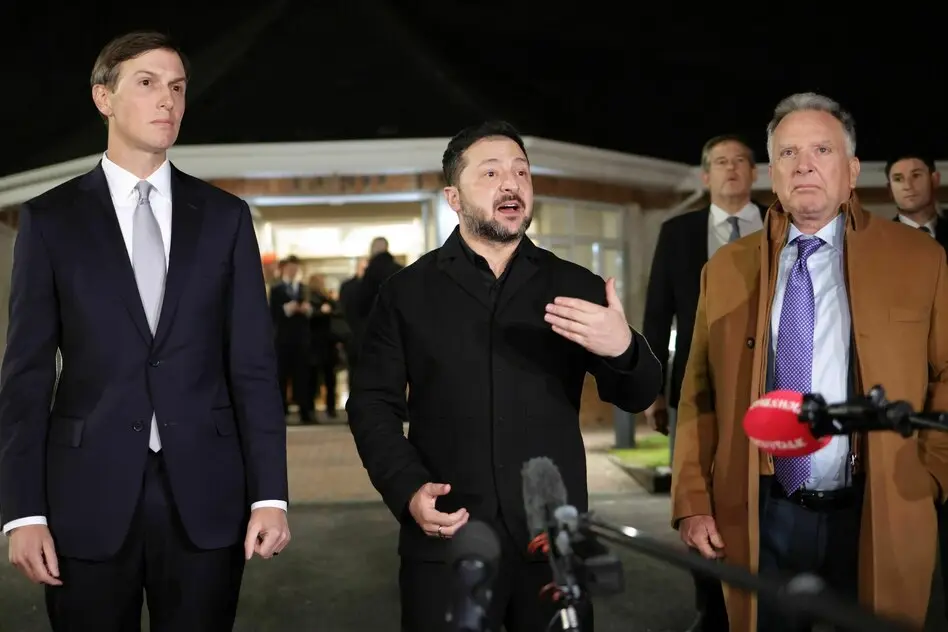
Following the talks in Abu Dhabi, US negotiators Jared Kushner and Steve Wittkoff traveled to Moscow to speak with Russian President Vladimir Putin. We then went on to Dublin for talks with the Europeans and Ukrainian President Volodymyr Zelensky.
Europe can now have a say, but questions about the European security architecture will become more than sensitive. Putin also made it clear that he would not tolerate any European troops in Ukraine after a possible ceasefire. Such a deployment is “absolutely unacceptable” for Russia.
Thanks to German Chancellor Friedrich Merz, tough talks on the medium and long-term financing of aid to Ukraine have landed on the agenda in Dublin. An agreement should be reached by the end of the year so that payments for 2027 are secured. Merz linked this question to the discussions about the next EU budget and promptly received sharp criticism. Four states – Slovakia, the Czech Republic, Bulgaria and Hungary – have already announced resistance, and the word “blackmail” was also used in this context.
Meanwhile, the fighting continues undeterred. Since the Russian army is primarily attacking civilian infrastructure, including the energy supply, in Ukraine and the next harsh winter is just around the corner, the federal government announced so-called “winter aid” on Friday. The Foreign Office and the Development Ministry are providing a further 200 million euros in the short term, and the Budget Committee has approved this. The money is intended to go towards stabilizing water and energy supplies and is intended as part of humanitarian aid.
“It will be decided in Ukraine whether it will be possible to restore the security order in Europe and find a return to peace,” explained Foreign Minister Johann Wadephul on the occasion of the commitment. “Russia’s targeted attacks on Ukraine’s civil infrastructure only allow one conclusion: Instead of finally focusing on serious negotiations, Moscow believes the winter cold is on its side.”