
World taz
European Political Community: Struggling for a Strong Voice
One day after the end of the negotiations in Abu Dhabi, the European Political Community meets in Dublin. Ukraine is the focus. more...
Deutsch (original) ·Auto-translated to English
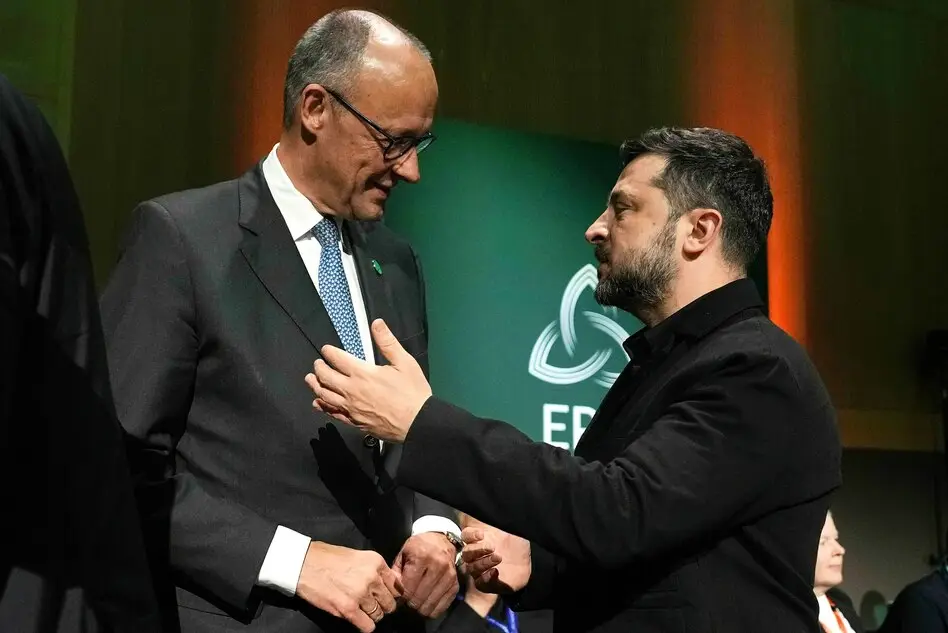
The world is watching Dublin these days. 47 heads of state and government, 500 political staff, 800 journalists and thousands of aid workers are currently on site; the Irish capital has become a fortress. The reason for the distinguished visit are two peaks. The European Political Community met this Thursday and the heads of state and government of the European Union will meet on Friday.
Above all, the two meetings have a high political symbolic value, which is so immense that even the Irish unions have changed their strike schedule. In the current collective bargaining disputes, the police union had already decided before the illustrious visit not to take part in a strike in order to protect the distinguished guests.
A maritime exclusion zone off the coast is in effect until Saturday. The city center has become a no-go area, you are not even allowed to walk into the center, and local public transport has more or less come to a standstill. But there are a few loopholes: a group of exiled Albanians actually managed to throw an egg at Albanian Prime Minister Edi Rama when he arrived in Dublin. The protesters are demanding more accountability from the government in Tirana.
Albania will probably not really be discussed at the meeting. The top topic is – once again – the war in Ukraine. Ukrainian President Volodymyr Zelensky is now a regular guest at such meetings and is also visiting Dublin for the third time this year. He held talks with Irish Prime Minister Micheál Martin about selling drone technology from Ukraine. Canadian Prime Minister Mark Carney also came back to Ireland. He had only traveled to his home county of Mayo in the west of the island in the summer.
The summit comes just a day after the end of negotiations in Abu Dhabi on a possible ceasefire in Ukraine. At the initiative of the US government, delegations from Ukraine and Russia met there. The result of the talks: a major prisoner exchange and a lot of turmoil among the Europeans.
US negotiators Jared Kushner and Steve Witkoff were on their way to Moscow on Thursday to speak with Russian leader Vladimir Putin in Moscow. Kushner and Witkoff were then supposed to travel to Dublin for a meeting with Ukrainian President Volodymyr Zelensky and the Europeans.
Who will be informed about which details of the negotiations, when, and who is allowed to make demands and have a say - that is the crucial question that the Europeans are currently struggling to answer. Last Friday, Italian Prime Minister Giorgia Meloni sent an angry letter to EU Council President António Costa, calling for a clear position and a mediator to represent Europe in the Ukraine negotiations. Meloni hasn't gotten what she wanted yet - but has put the topic on the agenda of both meetings.
This does not seem to be a big problem for German Chancellor Friedrich Merz. When he arrived in Dublin on Thursday, he brushed off Meloni's anger with a reference to the so-called E3 format. He sees Germany, Great Britain and France as a “tried and tested format”. There are also five representatives on the road - including Poland and Italy. "I don't see any problem at all with it staying that way. What's important is that Russia comes to the table and that Russia is willing to talk. Everything else will then fall into place." After Abu Dhabi, Merz is betting that Putin must now “finally agree that there are joint talks.”
No more cat food for the Europeans, no more bilateral agreements between Russia and the USA over Ukraine's head, but rather joint negotiations. Meanwhile, Merz has opened another barrel: financing further aid to Ukraine for 2027 and beyond. While the German Chancellor demands that the EU jointly provide money, the EU member states Czech Republic, Bulgaria, Slovakia and Hungary see it completely differently.
Even before the heads of state and government of the European Union meet on Friday, EU Commission President Ursula von der Leyen and EU Council President Costa rushed forward on Thursday to leave no doubt about the position of the member states. After a meeting with Zelensky, both of them not only asserted their solidarity, but also that the budget issues should be clarified at a special summit at the end of November. Ukraine must negotiate from a position of strength.