
Germany · taz · · 2h
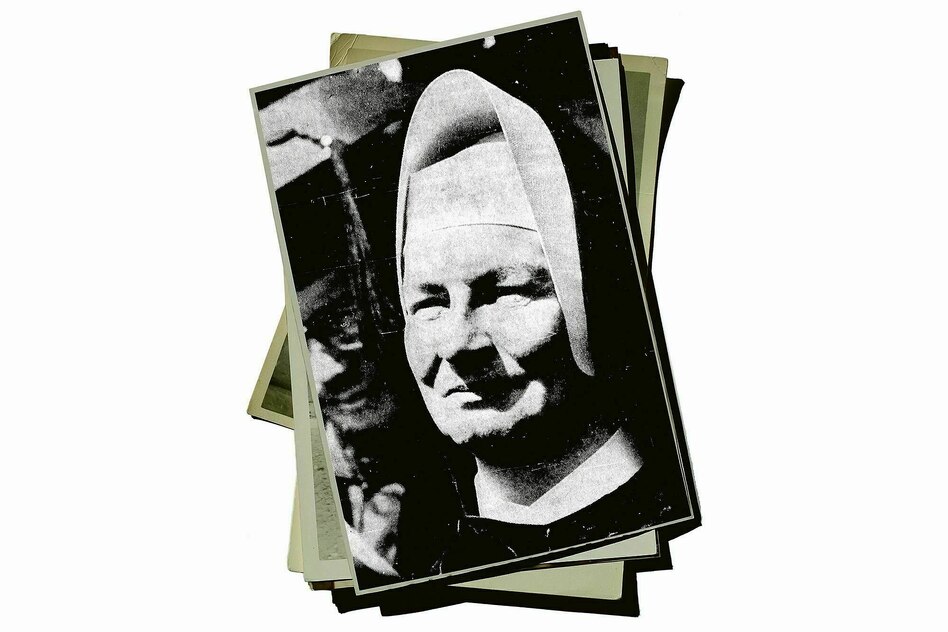
Computer science pioneer Mary Kenneth Keller: Programming on behalf of the Lord
Deutsch (original) · Auto-translated to English
When technology becomes advanced enough, it can no longer be distinguished from magic. That's what the science fiction writer Arthur C. Clarke said. And it's a sentence that people like to remember when a particularly astonishing technology changes everyday life: How, if not magically, must wireless high-speed internet affect someone who may not have been able to use electricity for long?
But what fascinates a Catholic nun, of all people, about such an innovation? So much so that this God-believing woman even becomes her first professor for a subject that is still taking shape, such as “Computer Science”.
This text first appeared in wochentaz, our weekly newspaper from the left!
Every week, wochentaz is about the world as it is – and as it could be. A left-wing weekly newspaper with a voice, attitude and the special taz view of the world. New every Saturday at the kiosk and of course by subscription.
Born in 1913 in the American Midwest, Evelyn Marie Keller found faith at the age of 19 and joined the Sisters of Charity of the Blessed Virgin Mary, an unusually open-minded, educationally-oriented order. In 1940 she took her vows and finally became Sister Mary Kenneth Keller - everyone there was called her after the Blessed Mother Mary.
Unlike his parents, the second of four children had attended high school and then college. In 1943, Sister Mary Kenneth earned a Master of Science in mathematics, and again ten years later a degree in physics.
She “just went off to look at a computer” – and never came back: that’s how Sister Mary Kenneth later described it. She came into contact with the bulky devices, which at that time were far from being found in every household or even in every trouser pocket, at a summer workshop for “Computer Education” at Dartmouth College; Back then, it didn't even accept female students, actually.
Another sentence has been handed down: It looked to her as if the computer would be “the most revolutionary tool that I would have at my disposal for mathematics.” And by that, the long-time school teacher also meant “revolutionary” for the transfer of knowledge: at what is now Clarke University, she co-founded the computer science chair and encouraged women to study there - and to learn to program the devices that would foreseeably change so many things.
Was Sister Mary Kenneth involved in the development of the Basic programming language – something her “father” Thomas E. Kurtz denied? Or just very important for popularization?
What is undisputed is that the first two doctorates in “Computer Science” were awarded in the USA in 1965. Sister Mary Kenneth received one at the University of Wisconsin. She has to share her pioneering role with a man who received his doctorate in St. Louis literally on the same day. Does anyone else remember him?
Read the full story at the source →
Source: taz