
World · taz · · 40m
Indigenous Congress in Nairobi: Accusation: Green colonialism
Deutsch (original) · Auto-translated to English
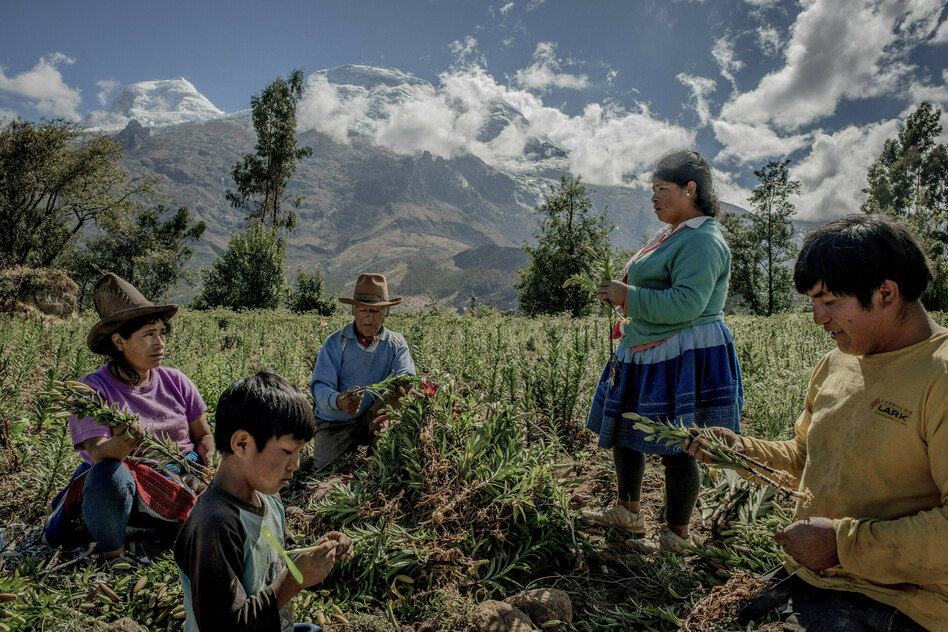
“We have come together to defend our lives and our territories,” said Marisol García Apagüeño at a congress of indigenous representatives in Nairobi, Kenya, last Friday. “Stop commercializing our country and criminalizing us,” she shouts.
Apagüeño is from the Kichwa people of Peru. According to Apagüeño, the community was displaced in 2001 when the Cordillera Azul National Park was opened on their territory. Later, so-called CO2 compensation projects were added.
Through these projects, companies can receive credits for greenhouse gas emissions. So you buy CO2 certificates, also called carbon credits, which, for example, finance forest protection projects to bind emissions. The Maasai in Tanzania, for example, have committed to changing their grazing routes for 40 years so that grasses can grow better and then store carbon. Volkswagen, for example, purchased CO2 certificates through this project.
Apagüeño is one of around 60 indigenous representatives from 16 countries and 4 continents who are in Nairobi denouncing nature conservation and CO2 compensation projects as green colonialism. The congress was organized by the organizations Conservation Solutions Africa and Survival International. Together, the indigenous representatives present the “Nairobi Declaration”, in which they demand the return of their territories and the preservation of their rights.
“Our territories are being sold through carbon markets, biodiversity credits and carbon offset programs that disguise the destructive behavior of transnational corporations as environmentally friendly,” it says. "We demand self-determination and self-government. Conservation must be led by indigenous peoples because we know better."
From the Kichwa in Peru to the Karen in Thailand or the Baka in Cameroon – the stories of the indigenous peoples in Nairobi sound similar. The representatives talk about their contribution to nature and climate protection in a total of 6 languages. They describe how environmental associations, other non-governmental organizations, companies, investors and governments declare their land as protected areas that are henceforth managed elsewhere and are supposed to protect nature and animals, bind or reduce emissions.
They criticize a lack of information about compensation projects and an abuse of the “principle of free, prior and informed consent” (FPIC) to which such projects are subject. They talk about corruption, police violence and criminalization and about expulsion from their areas. And they talk about their resistance, protests and court cases.
The human rights organization Global Witness regularly reports that indigenous people are among the most persecuted and killed environmental defenders worldwide. Pranab Doley, for example, who was supposed to speak at the congress, was arrested in mid-July while protesting against a luxury hotel in Kaziranga, India. He is now being held under the National Security Law, which allows authorities to detain people for long periods of time without trial.
The congress shows a video message from Doley from 2019. He sits in a group of women, men and children and says in English: "In the euphoria of celebrating the success of wildlife conservation, do not forget that the greatest champions of wildlife conservation are the indigenous peoples."
It is thanks to them, says Doley, that Kaziranga has the highest population of rhinos and that elephants and tigers have been protected here. “I am sending you an SOS, an emergency call: we are being treated like criminals, our land has been taken away from us by various authorities in the name of conservation and industry.”
Many studies support the claims of indigenous representatives that they are better conservationists. Scientists at the University of British Columbia published an analysis of 111 studies in May. The bottom line: Indigenous peoples protected biodiversity and carbon stores equal to or better than government-designated protected areas. In the Bolivian Amazon, scientists found in 2012 that there was six times less deforestation in indigenously managed areas than in nature reserves.
On the other hand, there are doubts about how effective CO2 compensation projects are. A 2024 evaluation of 65 studies in the journal Nature Communications found that only around 16 percent of emissions from CO2 certificates were actually avoided.
At the same time, the compensation business is worth billions and is growing. Many heads of state in the Global South want to do business with it. At the end of 2025, the European Union decided that in order to achieve the climate target for 2040, EU member states would be allowed to compensate a small part by purchasing CO2 climate certificates from 2036.
In Nairobi, representatives of the indigenous peoples warn against promises from governments, organizations or entrepreneurs who want to sell such projects to them. They often argue that the residents get a share of the income. But what they receive is small and not compensation for the loss of their land.
Read the full story at the source
Source: taz